 Histamine Tracker
Lemongrass Ginger Tea

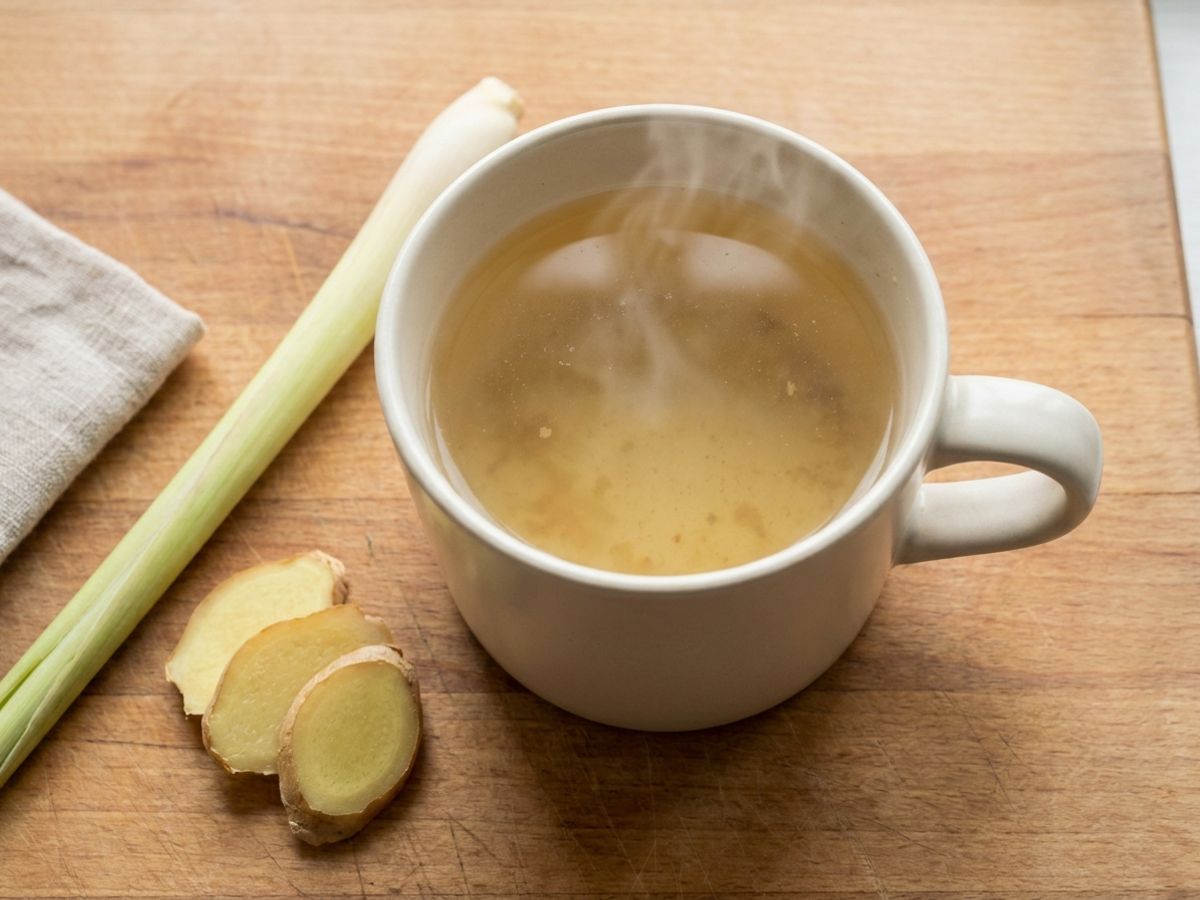
A low histamine lemongrass ginger tea with bruised lemongrass stalks, fresh ginger, water, and honey.
Ingredients
- 2 stalks fresh lemongrass
- 1 inch fresh ginger, peeled and thinly sliced
- 3 cups water
- 2 teaspoons honey, to taste (optional)
- Ice cubes (optional, for the iced version)
Instructions
Trim and Bruise the Lemongrass
- Cut off the dry, woody top of each stalk and the hard knob at the root end. What you want is the pale lower 4 to 6 inches.
- Peel away the dried, papery outer layers until you reach the smooth, pale green core underneath.
- Lay each stalk flat on a board and press down hard along its length with the flat side of a wide knife, a rolling pin, or the back of a wooden spoon. Keep going until the stalk splits along its fibers and the scent comes up at you. This is the step that gets the oils into the water, and skipping it leaves you with pale, thin tea.
- Cut the bruised stalks crosswise into 1 inch pieces.
Simmer
- Bring the 3 cups of water to a boil in a small pot.
- Add the lemongrass pieces and the sliced ginger, then turn the heat down until the water is barely moving.
- Simmer uncovered for 5 to 7 minutes. Keep it at a light simmer rather than a hard boil, which drives the oils off in the steam.
- Take the pot off the heat, cover it, and let it sit for 2 minutes.
Strain and Serve
- Pour the tea through a fine mesh sieve into two mugs or a heatproof jug.
- Stir in the honey while the tea is hot so it dissolves.
- For the hot version, drink now. For iced, let the tea cool briefly, refrigerate it promptly until cold, then divide it between two glasses of ice cubes.
Tips & Substitutions
- Pick stalks that feel firm and heavy. A stalk that bends easily or looks dried at the cut end has lost its oils, and no amount of bruising brings them back. Look for a tight, pale base and a fresh cut.
- Freeze what you do not use. Lemongrass goes limp in the fridge within a week. Bruise and cut the whole bunch at once, spread the pieces on a tray, freeze them, then bag them. Frozen pieces go straight into the pot with no thawing.
- Make the iced version stronger. Ice dilutes the tea as it melts, so if you are going cold, use 3 stalks instead of 2 and simmer the full 7 minutes.
- Swap honey for maple syrup. Honey tolerance varies from person to person, and maple syrup makes the tea vegan. The tea is also fine with no sweetener at all.
- Adjust the ginger to taste. Half an inch gives a background note. Two inches makes it properly spicy, the way an iced ginger mint tea is. Use fresh root rather than powder.
- Add a sprig of rosemary or a few mint leaves. Both are commonly used low histamine herbs and both sit well with lemongrass. Add them off the heat with the lid on so they do not turn bitter.
 Get the Histamine Recipes app
250+ low histamine recipes, every ingredient rated.


Why This Works
Lemongrass. Generally considered low histamine and a staple herb in Southeast Asian cooking. It gives a bright, grassy, citrus-like flavor with no citrus fruit involved, which is the reason it shows up so often in drinks for people avoiding acidic fruit. Tolerance varies.
Fresh ginger. Commonly tolerated and a fixture on low histamine spice lists. Fresh root steeps cleaner than dried ginger powder.
Bruising, not chopping. Lemongrass keeps its flavor locked in tough fibers. Crushing the stalk breaks those fibers open so the hot water can reach the oils, which is why a bruised stalk gives you far more flavor than a finely sliced one.
Honey, used lightly. Generally well tolerated in small amounts, though some sources flag it for its pollen content. Start with a teaspoon per mug and adjust.
Storage
Best the day it is made. Cool the strained tea briefly and refrigerate it promptly in a covered glass jar rather than leaving it on the counter. Make what you will drink now. If a pot is left, cover it, refrigerate it, and finish it within the day, rewarmed gently or poured over ice. Trimmed raw stalks keep about a week in the fridge in a loose bag, or 3 months bruised and frozen.
Not sure about an ingredient?
Histamine tolerance is personal, and most of working it out comes down to knowing where individual foods stand. Our low histamine food list rates 4,500+ foods and explains the reasoning behind each rating, including the foods whose level depends on how fresh they are or how they were stored. It is worth a look before you swap anything in this recipe.
Before you eat
A lot of people with histamine intolerance take a DAO enzyme supplement 15 to 30 minutes before a meal. DAO is the enzyme your body uses to break down the histamine in food, and taking it with meals supports that natural process. Curious how it works? See do DAO supplements actually work.
Affiliate link: if you buy through it, we may earn a commission at no extra cost to you. These statements have not been evaluated by the Food and Drug Administration. This product is not intended to diagnose, treat, cure, or prevent any disease.
For educational purposes only. Not medical advice. Consult a healthcare professional for personal guidance.
References
- Lemongrass Ginger Tea — Through The Fibro Fog
- Low Histamine Teas (and Coffee Alternatives) with Recipes — Through The Fibro Fog
- 19 Low Histamine Spices & Herbs (and How To Use Them) — Low Histamine Eats
- Histamine and histamine intolerance — Maintz & Novak (2007)
- Histamine Intolerance: The Current State of the Art — Comas-Basté et al. (2020)
- Biogenic Amines in Plant-Origin Foods: Are They Frequently Underestimated in Low-Histamine Diets? — Sánchez-Pérez et al. (2021)
- Diamine Oxidase Supplementation Improves Symptoms in Patients with Histamine Intolerance — Schnedl et al. (2019)
- Histamine Intolerance — A Comprehensive Review — Jochum (2024)