 Histamine Tracker
Nettle Tea

A low histamine nettle tea with dried nettle leaves, water, and an optional spoonful of maple syrup.
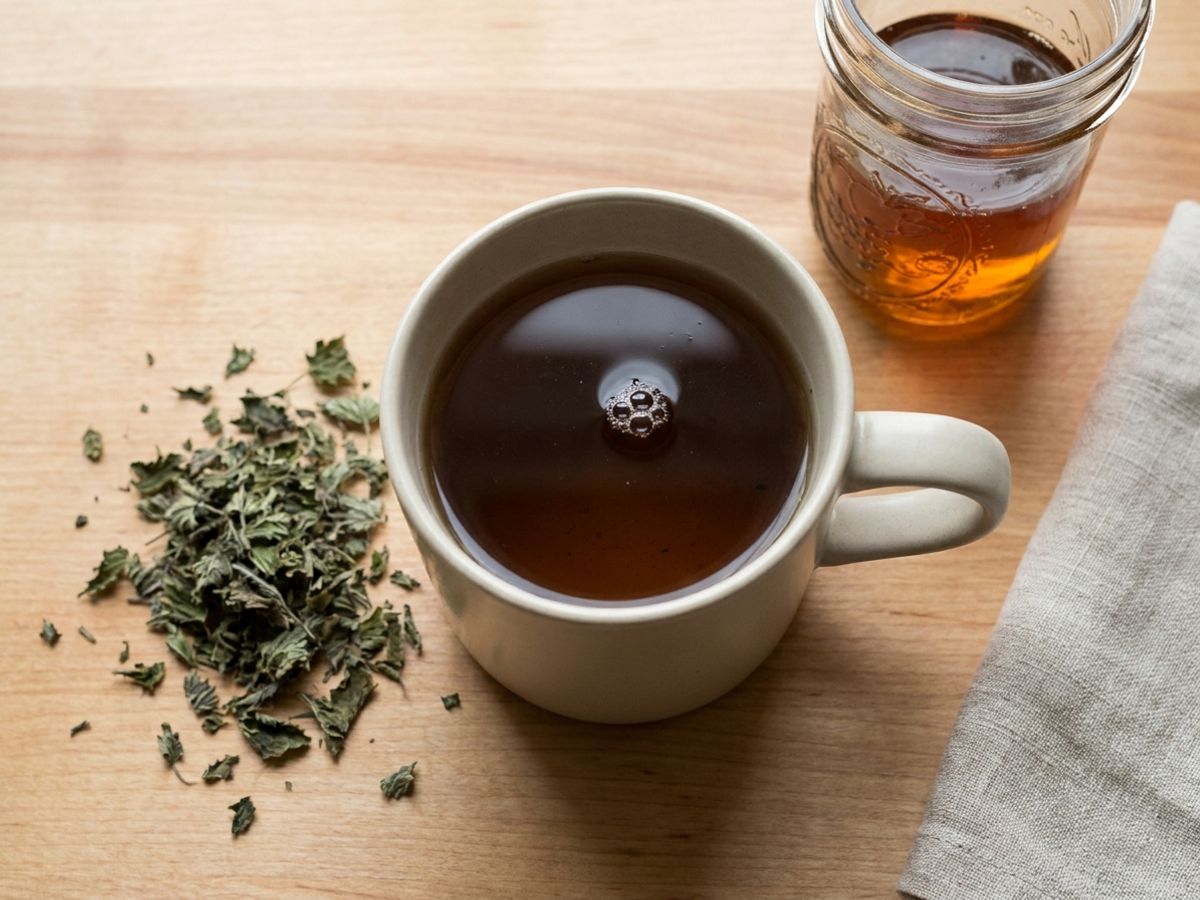
Ingredients
- 2 tablespoons dried nettle leaves (or 2 plain nettle tea bags with nettle as the only ingredient)
- 2 cups water
- 2 teaspoons pure maple syrup, to taste (optional)
- Ice cubes (optional, for the iced version)
Instructions
- Bring the water to a boil. It takes about 3 to 4 minutes in a kettle or a small covered pot.
- Put the dried nettle leaves in a small teapot or a heatproof jar that holds at least 2 1/2 cups (600 ml). A standard mug is too small for the full batch, so if a mug with an infuser is all you have, split the leaves and the water between two of them and steep each one separately.
- Pour the water over the leaves at a full boil and cover right away. Nettle is a sturdy leaf, so it does not need the water to stand and cool first.
- Steep covered for 10 to 15 minutes. Ten minutes gives a light grassy cup, fifteen gives a deeper green one closer to a broth.
- Strain through a fine mesh sieve into two mugs, pressing the leaves against the sieve with the back of a spoon. If you steeped in two mugs, lift the infusers out instead.
- Stir in the maple syrup if you are using it, and drink hot.
- For iced tea, steep the full 15 minutes, then let the pot stand off the heat for another 15 to cool. Divide it between two glasses of ice.
Tips & Substitutions
- Give it the long steep. Five minutes gets you pale water. Nettle needs 10 to 15 minutes with a lid on, and unlike mint it does not turn bitter at the far end of that range, it just goes deeper and greener. If the cup still tastes thin at 15 minutes, add more leaf next time rather than more time.
- Buy plain leaf and read the ingredient line. A lot of what is sold as nettle tea is a blend, and the usual additions are hibiscus, licorice root, or citrus peel. Citrus is one of the first things most low histamine guides tell you to drop, so a peel in the blend is worth catching. The other two are their own ingredients to judge on their own terms, and a blend makes it hard to tell what you actually reacted to. Turn the box over and look for one word on the list: nettle.
- Fresh nettles need gloves. The stinging hairs are the whole reason for the name, so wear gloves to pick and rinse them, and never eat or handle them raw. Heating, drying, or thoroughly crushing the leaves disables the hairs, so either blanch them in boiling water for a minute first or drop them straight into the pot and steep. Use about 1 loosely packed cup of fresh leaves in place of the 2 tablespoons dried.
- Bags and loose leaf both work. The nettle in a bag is cut finer, so it gives up its flavor faster and 10 minutes is usually enough. Loose leaf makes a fuller cup and lets you see what you bought. Keep either one in a sealed jar out of the light.
- Honey instead of maple. Honey is the other common sweetener here and rounds off the grassy edge in the same way. It is the swap to make if you are not keeping the recipe vegan.
- Alternate it with something lighter. Nettle is green and heavy, and one cup is often enough for a day. Fresh peppermint tea and lemon balm tea both steep in about five minutes and taste like the opposite end of the shelf.
 Get the Histamine Recipes app
250+ low histamine recipes, every ingredient rated.


Why This Works
Dried nettle leaves. Nettle appears on several low histamine food lists and is commonly suggested in some histamine intolerance resources, which is why people on a restricted diet ask about it so often. Guides do not all agree, and some are cautious about it, so treat it as a tea to try on its own rather than a default. Tolerance varies, so start with one cup and see how it sits.
A full boil and a covered pot. Nettle leaf is tougher than mint or chamomile, so it takes boiling water and a long steep to give up much of anything. The lid matters as much as the time, since an uncovered mug loses heat fast and a cooling steep pulls less out of the leaf.
Maple syrup. Commonly tolerated as a sweetener and enough on its own to soften the grassy flavor without hiding it. Individual tolerance to sweeteners varies, so start with a teaspoon per cup and adjust. Plain dried nettle leaf is also caffeine-free, so the time of day is up to you.
One ingredient, bought well. The leaf is the entire recipe, so the shop you buy it from is most of the quality. Fresh, well-stored stock tastes green and smells like hay, while old leaf tastes like dust and makes a flat cup no matter how long you steep it.
Storage
Nettle tea is best in the first hour, and it takes about 20 minutes to make, so there is little reason to brew ahead. Make what you will drink now. If a pot is left, cover it, refrigerate it, and finish it within the day, rewarmed gently or poured over ice. Keep dried leaves in an airtight jar away from heat and light, where they hold their color and flavor for about a year.
Not sure about an ingredient?
Histamine tolerance is personal, and most of working it out comes down to knowing where individual foods stand. Our low histamine food list rates 4,500+ foods and explains the reasoning behind each rating, including the foods whose level depends on how fresh they are or how they were stored. It is worth a look before you swap anything in this recipe.
Before you eat
A lot of people with histamine intolerance take a DAO enzyme supplement 15 to 30 minutes before a meal. DAO is the enzyme your body uses to break down the histamine in food, and taking it with meals supports that natural process. Curious how it works? See do DAO supplements actually work.
Affiliate link: if you buy through it, we may earn a commission at no extra cost to you. These statements have not been evaluated by the Food and Drug Administration. This product is not intended to diagnose, treat, cure, or prevent any disease.
For educational purposes only. Not medical advice. Consult a healthcare professional for personal guidance.
References
- Guide to 13 Low Histamine Tea Options & Recipes — Low Histamine Eats
- 6 Evidence-Based Benefits of Stinging Nettle — Healthline
- Low Histamine Foods List for Mast Cell Activation Syndrome (MCAS) and Histamine Intolerance — Mast Cell 360
- Histamine and histamine intolerance — Maintz & Novak (2007)
- Histamine Intolerance: The Current State of the Art — Comas-Basté et al. (2020)
- Biogenic Amines in Plant-Origin Foods: Are They Frequently Underestimated in Low-Histamine Diets? — Sánchez-Pérez et al. (2021)
- Diamine Oxidase Supplementation Improves Symptoms in Patients with Histamine Intolerance — Schnedl et al. (2019)
- Histamine Intolerance — A Comprehensive Review — Jochum (2024)