 Histamine Tracker
Lemon Balm Tea

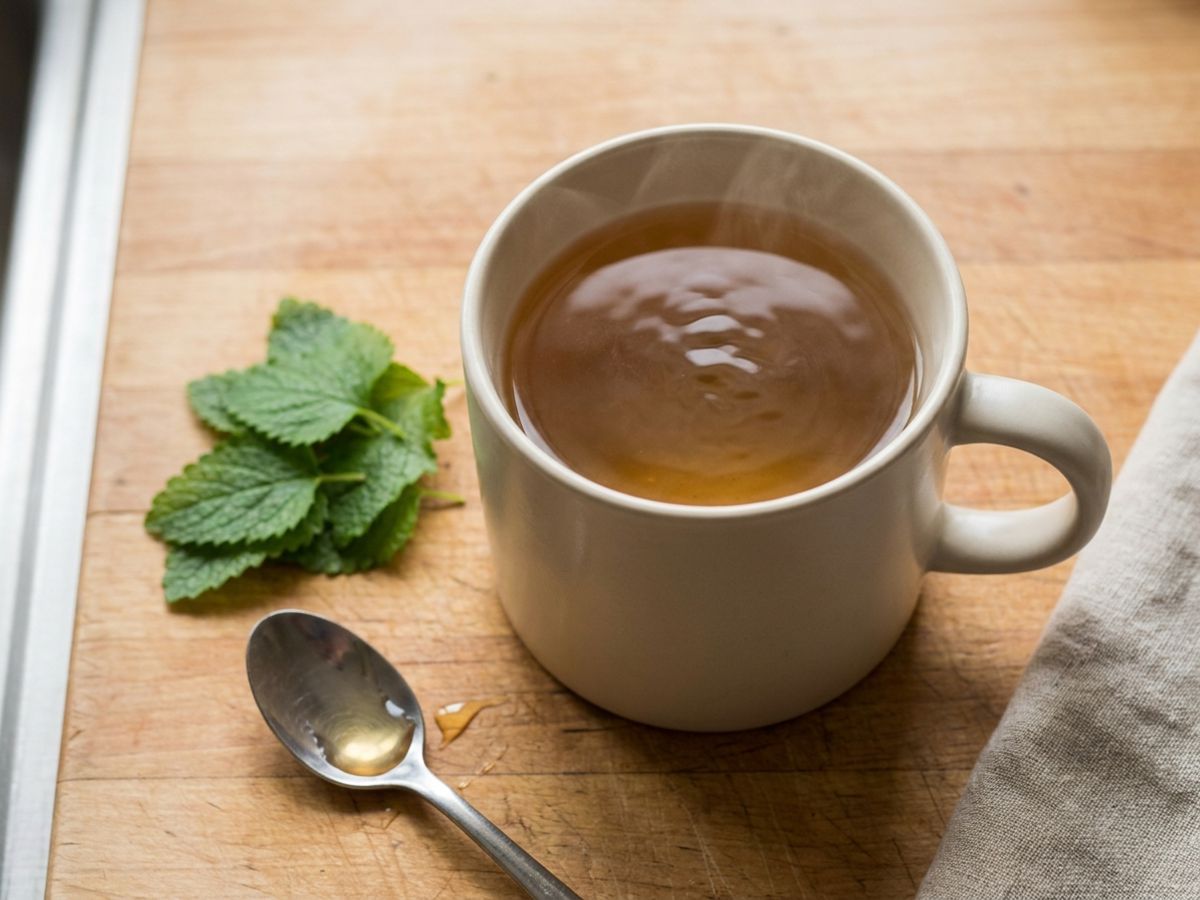
A low histamine lemon balm tea with fresh lemon balm leaves, water, and a little honey.
Ingredients
- 1 cup water
- A small handful of fresh lemon balm leaves, about 20 leaves (or 1 to 2 teaspoons dried lemon balm)
- 1 teaspoon honey, to taste (optional)
Instructions
Pick and Rinse the Leaves
- Cut stems from the plant just above a pair of leaves so the plant keeps putting out new growth. Late morning, once the dew has dried, gives you the strongest scent.
- Rinse the leaves under cool running water and pat them dry with a towel. Strip the leaves off the stems and set the stems aside for the compost.
- Tear or chop each leaf in half. Breaking the leaf opens up the oils that carry the flavor into the water.
Steep Off the Heat
- Bring the cup of water to a boil in a small pot, then turn off the heat.
- Add the torn leaves and stir once so every leaf is wet and submerged.
- Put the lid on and steep for 7 to 10 minutes. Past 10 minutes the tea turns bitter, so set a timer.
Strain and Sweeten
- Pour the tea through a fine mesh sieve into a mug.
- Stir in the honey while the tea is still hot so it dissolves fully.
- Drink right away, while the scent is at its strongest.
Tips & Substitutions
- Dried leaves need a much smaller amount. Dried lemon balm is concentrated, so 1 to 2 teaspoons replaces the whole handful of fresh. Pour water that has come off the boil over the dried leaves rather than water at a rolling boil, and steep for the same 7 to 10 minutes.
- It tastes citrusy but it is not citrus. Lemon balm is a member of the mint family with a bright, sharp scent in the leaf. That means you get the flavor people usually reach for a citrus slice to get, from a herb instead. Do not add any citrus fruit to it.
- Grow it in a pot. Lemon balm spreads fast in a garden bed and will take over a border in two seasons. A pot on a windowsill keeps it contained and puts fresh leaves within reach year round.
- Pair it with mint or chamomile. A few mint leaves in the pot make it sharper, and the flowers from a chamomile latte make it rounder. Both keep the drink caffeine-free.
- Swap the honey for maple syrup. Honey tolerance varies from person to person, and maple syrup makes the tea vegan. Plenty of people drink this one plain.
- Serve it over ice. Steep a double batch, strain, chill it in the fridge, and pour it over ice the same way you would an iced ginger mint tea. Make only what you will finish that day.
- Blend it with nettle. A teaspoon of dried lemon balm with a teaspoon of dried nettle is a common pairing; the full method for the plain cup is in nettle tea.
 Get the Histamine Recipes app
250+ low histamine recipes, every ingredient rated.


Why This Works
Lemon balm. Generally considered low histamine and widely used as a single-herb tea. It is a member of the mint family, and the mints are commonly tolerated by people watching histamine. Tolerance varies, so start with one cup and see how you do.
Fresh leaves. Picking leaves and steeping them the same hour is about as fresh as an ingredient gets. Freshness matters with herbs, and a leaf that has sat in a bag for a year is a different ingredient than one off the plant.
Honey. Generally well tolerated in small amounts, though some sources flag it because of its pollen content. Use a light hand, or leave it out entirely.
Caffeine-free. This is a herbal infusion, so there is no caffeine in it. Many people drink it in the evening.
Storage
Best the moment it is strained. The scent fades within the hour, and a mug left on the counter tastes flat by the time it is cold. Make what you will drink now. If a pot is left, cover it, refrigerate it, and finish it within the day, rewarmed gently or poured over ice. Fresh lemon balm leaves themselves keep about 4 days in the fridge, wrapped in a damp paper towel inside a bag.
Not sure about an ingredient?
Histamine tolerance is personal, and most of working it out comes down to knowing where individual foods stand. Our low histamine food list rates 4,500+ foods and explains the reasoning behind each rating, including the foods whose level depends on how fresh they are or how they were stored. It is worth a look before you swap anything in this recipe.
Before you eat
A lot of people with histamine intolerance take a DAO enzyme supplement 15 to 30 minutes before a meal. DAO is the enzyme your body uses to break down the histamine in food, and taking it with meals supports that natural process. Curious how it works? See do DAO supplements actually work.
Affiliate link: if you buy through it, we may earn a commission at no extra cost to you. These statements have not been evaluated by the Food and Drug Administration. This product is not intended to diagnose, treat, cure, or prevent any disease.
For educational purposes only. Not medical advice. Consult a healthcare professional for personal guidance.
References
- 6 Benefits of Lemon Balm — Cleveland Clinic
- How to Make Tea With Lemon Basil (Fresh or Dried) — Low Histamine Eats
- Antihistamine Tea Blend — The Histamine Friendly Kitchen
- Histamine and histamine intolerance — Maintz & Novak (2007)
- Histamine Intolerance: The Current State of the Art — Comas-Basté et al. (2020)
- Biogenic Amines in Plant-Origin Foods: Are They Frequently Underestimated in Low-Histamine Diets? — Sánchez-Pérez et al. (2021)
- Diamine Oxidase Supplementation Improves Symptoms in Patients with Histamine Intolerance — Schnedl et al. (2019)
- Histamine Intolerance — A Comprehensive Review — Jochum (2024)