 Histamine Tracker
Caffeine-Free Rooibos Chai

A low histamine rooibos chai with fresh ginger, cardamom pods, fennel seeds, coconut milk, and maple syrup.
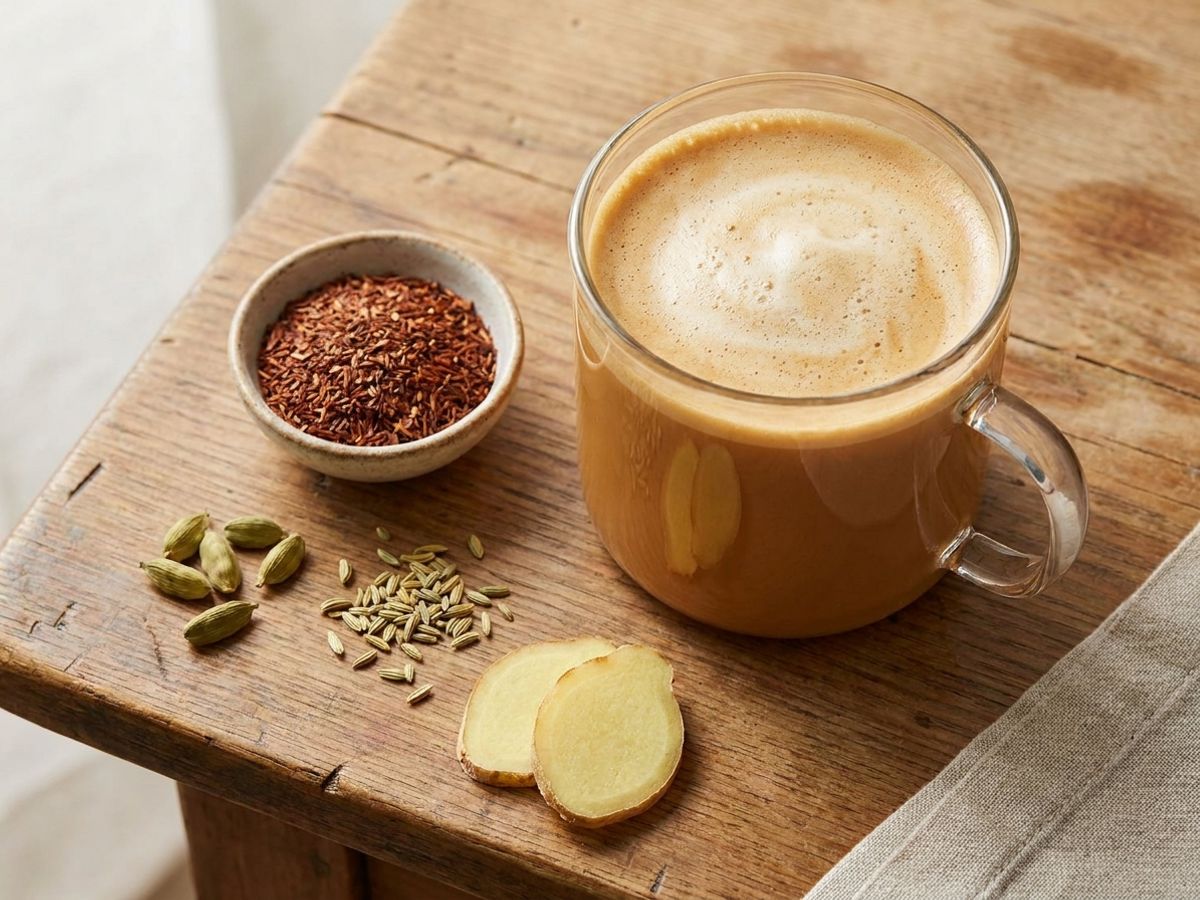
Ingredients
- 2 teaspoons loose rooibos (or 2 plain rooibos tea bags)
- 1 inch fresh ginger root, peeled and sliced into thin coins
- 4 green cardamom pods, lightly crushed
- 1/2 teaspoon fennel seeds
- 1 cup water
- 1 cup full-fat coconut milk (no guar gum or carrageenan)
- 2 teaspoons maple syrup, to taste
- Pinch of salt
Instructions
Build the Spice Base
- Crush the cardamom pods under the flat of a knife until they split. You want them open, not ground.
- Put the water, ginger coins, cardamom pods, and fennel seeds in a small saucepan.
- Bring to a boil over medium-high heat, then drop the heat and simmer for 5 minutes.
Steep the Rooibos
- Take the pan off the heat and add the rooibos.
- Cover and steep for 5 minutes. Rooibos does not turn bitter the way tea leaves do, so an extra minute or two only makes it stronger.
Finish with Coconut Milk
- Return the pan to low heat. Pour in the coconut milk and add the salt.
- Warm for 2 to 3 minutes, stirring now and then. Do not let it boil or the coconut milk will separate.
- Strain through a fine mesh sieve into two mugs, pressing the spices with the back of a spoon.
- Stir in the maple syrup and drink it hot.
Tips & Substitutions
- No cinnamon and no cloves, by design. They are the two spices most people picture in chai. Both are a trigger for some people with histamine intolerance, so they are left out; if you already know cinnamon sits fine for you, add a small stick to the spice base. This version builds the same shape of flavor out of ginger, cardamom, and fennel instead.
- No black pepper by default either. Traditional masala chai carries pepper. It is a trigger for some people with histamine intolerance, so it is left out; if you already know it sits fine for you, add a tiny pinch at the end.
- Cardamom and fennel do the heavy lifting. Cardamom brings the floral, slightly citrusy note that reads as chai, and fennel seeds bring a mild anise sweetness underneath it. Crush the cardamom and leave the fennel whole.
- Check the rooibos label. Rooibos is generally considered low histamine, though some sources flag it, partly because red rooibos is oxidized during processing while green rooibos is not. Buy plain, unflavored rooibos with nothing blended in and see how your own tolerance sits before you make it a habit.
- Honey instead of maple. Honey works and suits the spices well, though it makes the recipe no longer vegan. Maple is the default here for that reason.
- Make it iced. Skip the coconut milk in the pan, chill the strained spiced tea, then pour it over ice and top with cold coconut milk.
- For a coffee-shaped cup instead, dandelion root tea takes the same coconut milk and maple finish and tastes roasted rather than spiced.
 Get the Histamine Recipes app
250+ low histamine recipes, every ingredient rated.


Why This Works
Rooibos. A caffeine-free herbal infusion from a South African shrub, generally considered low histamine and sweeter and rounder in flavor than most herbs. It stands up to milk and spice, which is what makes a chai base out of it. Tolerance varies, and plain rooibos is the version to start with.
Fresh ginger. A commonly tolerated aromatic that gives the cup the heat chai is supposed to have, doing the job that black pepper and cloves usually do.
Cardamom and fennel seeds. Both are generally considered low histamine, and together they carry most of what people recognize as chai flavor. Whole pods and whole seeds hold their aroma far longer than the ground versions.
Coconut milk. Often well tolerated as a creamy stand-in for dairy milk, and full-fat is what gives this the body of a latte. Check the can for guar gum and carrageenan if additives are an issue for you. For the turmeric version of the same idea, see the golden turmeric latte.
Storage
Best in the first hour, straight from the pan. Make what you will drink now. If a batch is left, cover it, refrigerate it, and finish it within the day, rewarmed on low heat and never boiled. The coconut milk will separate as it chills, so whisk it back together as it warms. Whole cardamom pods and fennel seeds keep in a sealed jar for about a year.
Not sure about an ingredient?
Histamine tolerance is personal, and most of working it out comes down to knowing where individual foods stand. Our low histamine food list rates 4,500+ foods and explains the reasoning behind each rating, including the foods whose level depends on how fresh they are or how they were stored. It is worth a look before you swap anything in this recipe.
Before you eat
A lot of people with histamine intolerance take a DAO enzyme supplement 15 to 30 minutes before a meal. DAO is the enzyme your body uses to break down the histamine in food, and taking it with meals supports that natural process. Curious how it works? See do DAO supplements actually work.
Affiliate link: if you buy through it, we may earn a commission at no extra cost to you. These statements have not been evaluated by the Food and Drug Administration. This product is not intended to diagnose, treat, cure, or prevent any disease.
For educational purposes only. Not medical advice. Consult a healthcare professional for personal guidance.
References
- Iced Rooibos Tea Latte — Through The Fibro Fog
- Guide to 13 Low Histamine Tea Options & Recipes — Low Histamine Eats
- Low Histamine Foods List for Mast Cell Activation Syndrome (MCAS) and Histamine Intolerance — Mast Cell 360
- Histamine and histamine intolerance — Maintz & Novak (2007)
- Histamine Intolerance: The Current State of the Art — Comas-Basté et al. (2020)
- Biogenic Amines in Plant-Origin Foods: Are They Frequently Underestimated in Low-Histamine Diets? — Sánchez-Pérez et al. (2021)
- Diamine Oxidase Supplementation Improves Symptoms in Patients with Histamine Intolerance — Schnedl et al. (2019)
- Histamine Intolerance — A Comprehensive Review — Jochum (2024)