 Histamine Tracker
Iced Ginger Mint Tea

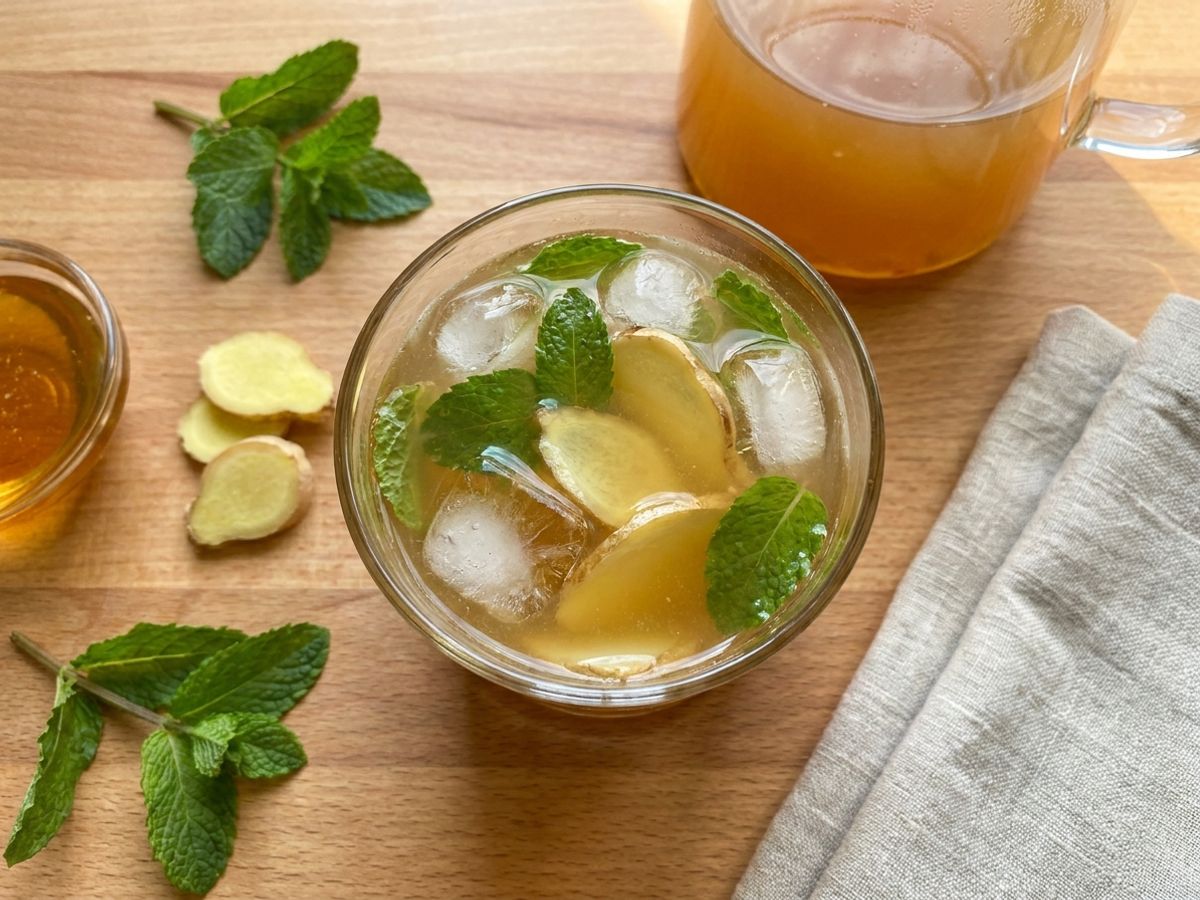
A low histamine iced tea of fresh ginger and mint steeped in water with honey, topped with sparkling water.
Ingredients
- 2 inches fresh ginger root, peeled and thinly sliced
- 12-15 fresh mint leaves, plus more for garnish
- 3 cups water
- 1-2 tablespoons honey, to taste (optional)
- Ice cubes
- Sparkling water, chilled (optional, for topping)
Instructions
Steep the Tea
- Add the sliced ginger to a small saucepan with 3 cups of water.
- Bring to a gentle boil over medium-high heat, then reduce to a low simmer.
- Simmer uncovered for 8-10 minutes to draw out the ginger flavor.
- Remove the pan from the heat and add the fresh mint leaves.
- Cover and let steep for 5 minutes. Steeping the mint off the heat keeps the flavor bright and avoids bitterness.
Sweeten and Cool
- Strain the tea through a fine mesh strainer into a heatproof pitcher or jar.
- Stir in the honey while the tea is still warm so it dissolves easily.
- Let the tea cool briefly, then transfer to the fridge promptly. Chill until cold, about 1 hour.
Build the Drink
- Fill two tall glasses with ice cubes.
- Pour the chilled tea over the ice, leaving a little room at the top if you plan to add sparkling water.
- Top with a splash of chilled sparkling water for a light fizz, if you like.
- Garnish with a fresh mint sprig and a thin slice of ginger.
- Serve immediately.
Tips & Substitutions
- Adjust the ginger. For a milder tea, use 1 inch of ginger and simmer for 6-7 minutes. For a stronger, spicier tea, use 3 inches and simmer the full 10 minutes.
- A note on honey. Honey tolerance varies between people. Some low histamine sources flag it as higher histamine because of pollen content, while others tolerate it well in small amounts. If honey doesn't work for you, pure maple syrup is a good swap, or skip the sweetener entirely.
- Cold brew option. Combine sliced ginger and mint with cold water in a jar and refrigerate immediately for 6-8 hours, then strain. The flavor is gentler and slightly less spicy.
- Try each flavor on its own. Fresh peppermint tea and fresh ginger tea are both served hot and use a single ingredient each, which makes them useful for testing your tolerance.
- Use a glass or stainless steel pitcher. Plastic can hold onto ginger and mint oils over time.
- Make it sparkling. Skip the still water entirely and serve the concentrated tea over ice topped with sparkling water for a fizzier drink.
- Skip the fizz if needed. If carbonation tends to trigger symptoms for you, leave out the sparkling water and serve straight over ice.
 Get the Histamine Recipes app
250+ low histamine recipes, every ingredient rated.


Why This Works
Fresh ginger. Often included on low histamine herb and spice lists and generally well tolerated, though individual response varies. Start with a smaller amount if you're sensitive to spicy ingredients.
Fresh mint. Members of the mint family are commonly listed as low histamine herbs. Using fresh leaves rather than dried keeps the flavor bright and avoids storage concerns. Freshness matters with herbs as much as with proteins.
No black tea. This recipe skips black, green, and white tea, which can act as histamine liberators for some people. Caffeine can also affect histamine sensitivity in some individuals.
Honey, used sparingly. Honey tolerance varies between people. Some sources flag it as higher histamine because of pollen content, while others tolerate it well in small amounts. Use a light hand, or swap in maple syrup if honey doesn't sit well.
Storage
Best enjoyed the day it's made. Cool the tea briefly and refrigerate promptly rather than leaving it at room temperature. Covered in the fridge it will keep for up to 24 hours, but the mint flavor fades and the ginger becomes more pronounced over time. If adding sparkling water, do so just before serving to keep the fizz lively.
Not sure about an ingredient?
Histamine tolerance is personal, and most of working it out comes down to knowing where individual foods stand. Our low histamine food list rates 4,500+ foods and explains the reasoning behind each rating, including the foods whose level depends on how fresh they are or how they were stored. It is worth a look before you swap anything in this recipe.
Before you eat
A lot of people with histamine intolerance take a DAO enzyme supplement 15 to 30 minutes before a meal. DAO is the enzyme your body uses to break down the histamine in food, and taking it with meals supports that natural process. Curious how it works? See do DAO supplements actually work.
Affiliate link: if you buy through it, we may earn a commission at no extra cost to you. These statements have not been evaluated by the Food and Drug Administration. This product is not intended to diagnose, treat, cure, or prevent any disease.
For educational purposes only. Not medical advice. Consult a healthcare professional for personal guidance.
References
- 19 Low Histamine Spices & Herbs (and How To Use Them) — Low Histamine Eats
- Histamine & Sugar (7 Best Low Histamine Sweeteners) — Low Histamine Eats
- 50+ Natural Antihistamine Foods (to Lower Histamine) — Low Histamine Eats
- Histamine and histamine intolerance — Maintz & Novak (2007)
- Histamine Intolerance: The Current State of the Art — Comas-Basté et al. (2020)
- Biogenic Amines in Plant-Origin Foods: Are They Frequently Underestimated in Low-Histamine Diets? — Sánchez-Pérez et al. (2021)
- Diamine Oxidase Supplementation Improves Symptoms in Patients with Histamine Intolerance — Schnedl et al. (2019)
- Histamine Intolerance — A Comprehensive Review — Jochum (2024)