 Histamine Tracker
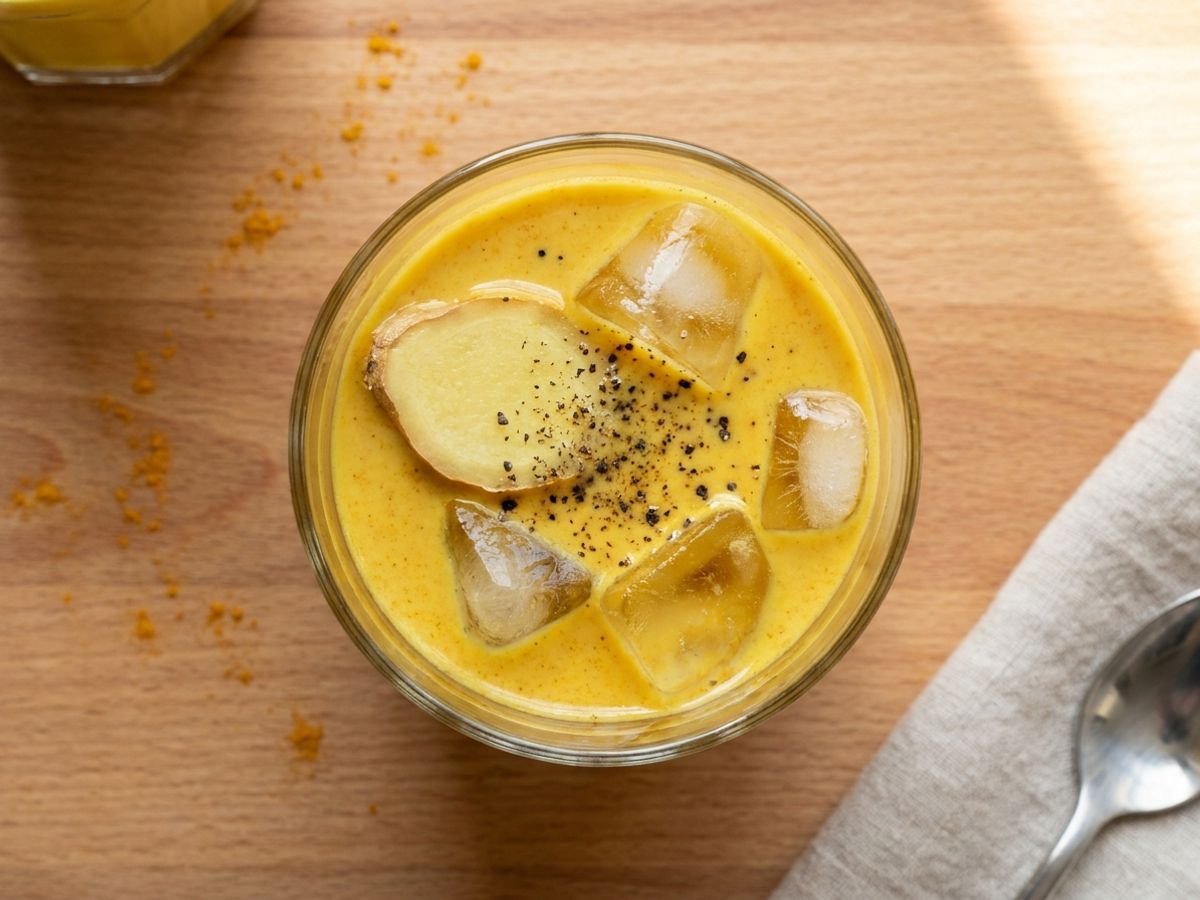
Golden Turmeric Latte

A low histamine golden latte of coconut milk simmered with turmeric, fresh ginger, cardamom, and honey.
Ingredients
- 1 cup full-fat coconut milk
- 1/2 teaspoon ground turmeric
- 1/2 inch piece fresh ginger, peeled and thinly sliced (or 1/4 teaspoon ginger powder)
- 1/2 teaspoon coconut oil
- 1 teaspoon honey (or maple syrup)
- 1/8 teaspoon ground cardamom (optional)
- Tiny pinch of black pepper (optional, see notes)
- Pinch of salt
Instructions
Warm the Base
- Add the coconut milk to a small saucepan over low heat.
- Add the sliced fresh ginger, ground turmeric, coconut oil, cardamom (if using), and salt.
- Whisk to combine and break up any clumps of turmeric.
Simmer Gently
- Bring the mixture to a very light simmer over low heat. Do not let it boil.
- Whisk occasionally and let it warm for 5 to 7 minutes so the ginger infuses.
- Keep the heat low so the coconut milk does not separate.
Sweeten and Serve
- Remove from heat. Stir in the honey until dissolved.
- If using black pepper, add the tiny pinch now and whisk.
- Strain through a fine mesh sieve into a mug to catch the ginger slices.
- Drink while warm.
Tips & Substitutions
- Skip the black pepper if you are sensitive. Black pepper (piperine) is traditionally added to golden milk to boost turmeric absorption, but it can be a trigger for some people with histamine intolerance. Fat from the coconut milk and coconut oil helps a bit too, so leaving the pepper out is fine.
- No cinnamon by design. Many golden milk recipes use cinnamon, but it can be a trigger for some people, including those sensitive to certain spices or salicylates. This recipe leaves it out.
- Make a quick turmeric slurry. If your turmeric clumps when added to the warm milk, stir it into a teaspoon of coconut milk first to make a smooth paste, then whisk that into the pan.
- Check your coconut milk label. Look for full-fat coconut milk without guar gum or carrageenan if you are sensitive to additives. Coconut and water as the only ingredients is ideal.
- Fresh ginger over powder. Fresh ginger gives the cleanest flavor and infuses gently into the milk. Use ginger powder only if fresh is not on hand, and skip the straining step in that case.
- Skip the milk entirely. Ginger turmeric tea is the water-based version, lighter on the stomach and quicker to put together.
- For a spiced latte without the turmeric, the same coconut milk base carries a rooibos chai built on ginger, cardamom, and fennel seeds.
- Try maple syrup. Maple syrup makes this vegan and is a more neutral choice if honey doesn't sit well with you.
 Get the Histamine Recipes app
250+ low histamine recipes, every ingredient rated.


Why This Works
Coconut milk. Often well tolerated as a creamy, dairy-free alternative to dairy milk. Tolerance varies, especially with canned versions that include additives.
Turmeric. Generally considered low histamine and traditionally used in anti-inflammatory cooking. Some people with histamine intolerance find turmeric helpful, while others react to it. Start small and see how your body responds.
Fresh ginger. A commonly tolerated low histamine spice with a long history of use for digestion and warmth. It pairs naturally with turmeric.
No fermented ingredients. This drink stays simple. Fresh ingredients only, with no aged or fermented components.
Storage
Best enjoyed fresh and warm. The flavors are at their brightest right after simmering. If you have leftovers, refrigerate for up to one day and gently rewarm on the stove. Avoid the microwave and do not boil. Some people are sensitive even to refrigerated leftovers, so making a single serving at a time is the safest approach.
Not sure about an ingredient?
Histamine tolerance is personal, and most of working it out comes down to knowing where individual foods stand. Our low histamine food list rates 4,500+ foods and explains the reasoning behind each rating, including the foods whose level depends on how fresh they are or how they were stored. It is worth a look before you swap anything in this recipe.
Before you eat
A lot of people with histamine intolerance take a DAO enzyme supplement 15 to 30 minutes before a meal. DAO is the enzyme your body uses to break down the histamine in food, and taking it with meals supports that natural process. Curious how it works? See do DAO supplements actually work.
Affiliate link: if you buy through it, we may earn a commission at no extra cost to you. These statements have not been evaluated by the Food and Drug Administration. This product is not intended to diagnose, treat, cure, or prevent any disease.
For educational purposes only. Not medical advice. Consult a healthcare professional for personal guidance.
References
- Vegan Turmeric Milk (Golden Milk Without Cinnamon) — Low Histamine Eats
- Low Histamine Golden Milk — The Histamine Friendly Kitchen
- 19 Low Histamine Spices & Herbs (and How To Use Them) — Low Histamine Eats
- Histamine and histamine intolerance — Maintz & Novak (2007)
- Histamine Intolerance: The Current State of the Art — Comas-Basté et al. (2020)
- Biogenic Amines in Plant-Origin Foods: Are They Frequently Underestimated in Low-Histamine Diets? — Sánchez-Pérez et al. (2021)
- Diamine Oxidase Supplementation Improves Symptoms in Patients with Histamine Intolerance — Schnedl et al. (2019)
- Histamine Intolerance — A Comprehensive Review — Jochum (2024)