 Histamine Tracker
Zucchini Noodles

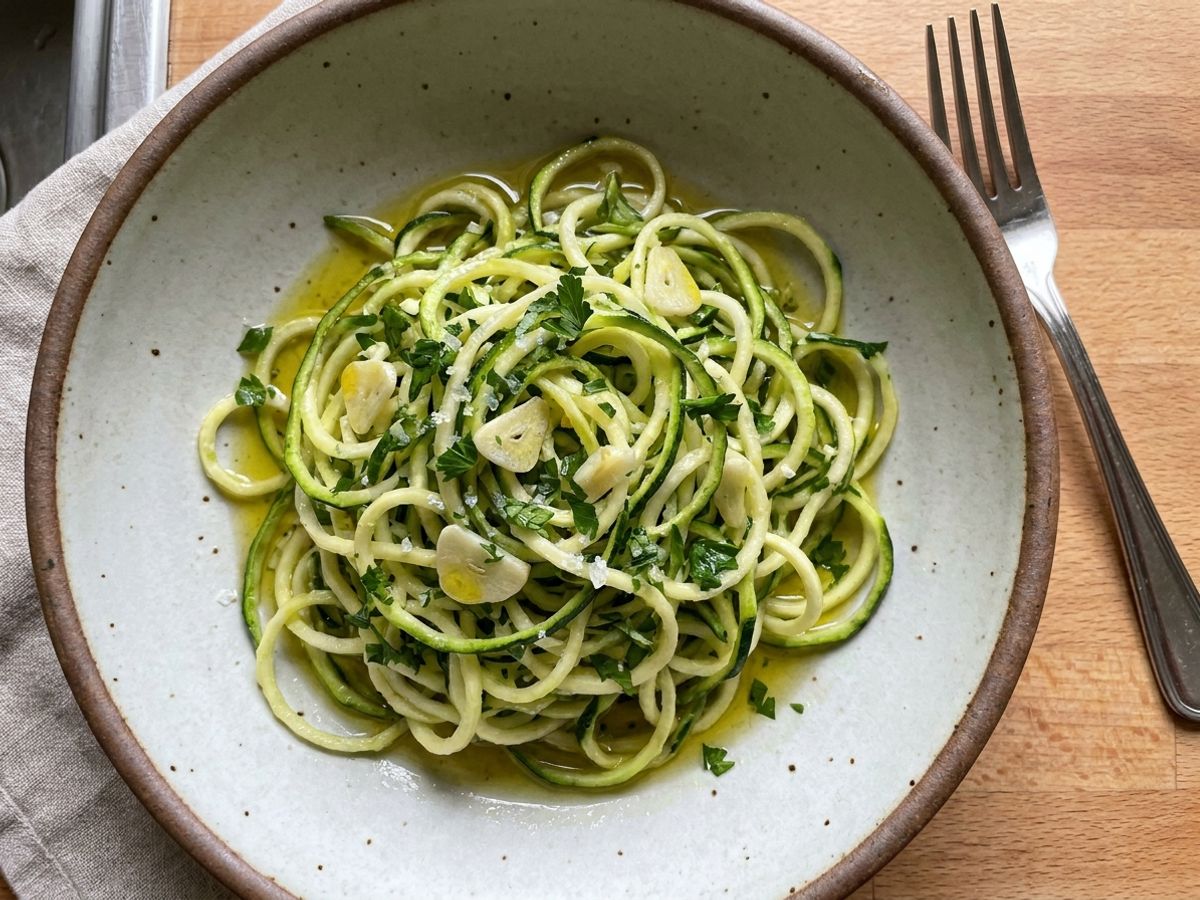
A low histamine side of spiralized zucchini with olive oil, fresh garlic, sea salt, and parsley.
Ingredients
- 4 medium zucchini (about 2 pounds), ends trimmed
- 1/2 teaspoon sea salt, for drawing out water
- 2 tablespoons olive oil
- 2 cloves garlic, thinly sliced
- 1/4 teaspoon sea salt, for the pan
- 2 tablespoons fresh parsley or basil, chopped (optional)
Instructions
Cut the Noodles
- Run each zucchini through a spiralizer, or drag a julienne peeler down the length of it to make long strands. A regular vegetable peeler gives you wide ribbons, which work the same way.
- Stop when you reach the soft seedy core and turn the zucchini to a new side. The core holds most of the water and turns to mush in the pan.
- Cut the strands with kitchen shears once or twice so they are easier to eat.
Salt and Drain
- Pile the noodles in a colander set over a bowl and toss them with the 1/2 teaspoon of sea salt.
- Let them sit for 20 minutes. Beads of water will collect on the strands and drip through.
- Press the noodles gently between two clean kitchen towels and pat them dry. Do not rinse them, which only puts the water back.
Toss Over High Heat
- Heat the olive oil in your widest skillet over medium-high heat until it shimmers.
- Add the garlic and cook for 20 to 30 seconds, just until you can smell it.
- Add the noodles and toss constantly with tongs for 1 to 2 minutes, 3 at the most. They should still have some bite.
- Take the pan off the heat and tip the noodles straight onto plates. A hot pan keeps pulling water out of them.
- Season with the remaining 1/4 teaspoon of sea salt, scatter the herbs over the top, and serve right away.
Tips & Substitutions
- The whole method is about water. Zucchini is around 95 percent water, so the three things that keep noodles from going soupy are salting and draining first, a wide pan on medium-high heat, and pulling them out early. Skip any one of them and you get a puddle at the bottom of the bowl.
- Serve them raw for the driest result. Salt and drain the strands, dry them well, then pour something warm over them instead of cooking them. They soften in about a minute from the heat of the sauce alone.
- Sauce them on the plate, not in the pan. Toss cooked noodles with basil pesto after they leave the skillet, or with garlic butter sauce if you eat dairy. Sauce added to the pan pulls out more water and thins itself out.
- Buy small zucchini. Smaller zucchini have fewer seeds and firmer flesh, so they give you more usable strands and less liquid. Two small ones beat one very large one.
- Do not crowd the skillet. Four zucchini is a lot of volume. If the noodles pile up more than an inch deep, cook them in two batches so they fry rather than steam. Split the oil, the garlic, and the pan salt in half and run the whole garlic-then-noodles sequence for each batch, so no garlic sits scorching in the pan while the first batch cooks.
- Use the seedy cores. Dice what is left of each zucchini and cook it as sauteed zucchini instead of throwing it out.
 Get the Histamine Recipes app
250+ low histamine recipes, every ingredient rated.


Why This Works
Zucchini. Generally considered low histamine and commonly tolerated as a fresh vegetable. Buy it firm and unblemished and cook it within a couple of days, since freshness matters as much as the food itself.
Olive oil. A commonly tolerated fat that carries the garlic flavor and helps the strands brown instead of stew. Tolerance varies, and coconut oil works the same way if olive oil does not sit well with you.
Fresh garlic. Generally considered low histamine when used fresh rather than as a jarred or roasted paste. Tolerance varies, so start with one clove if garlic is new to your rotation.
Sea salt. Salt does double duty here. It pulls water out of the raw strands before cooking, then seasons them at the end.
Storage
Zucchini noodles are best the moment they leave the pan. Raw, undressed strands hold up better than cooked ones: store them dry in an airtight container in the fridge for up to 1 day and dress them right before eating. Cooked noodles keep releasing water in the fridge and turn limp within a few hours, so cook only what you plan to eat. Some people are sensitive even to refrigerated raw strands, so consider making only a single meal at a time.
Not sure about an ingredient?
Histamine tolerance is personal, and most of working it out comes down to knowing where individual foods stand. Our low histamine food list rates 4,500+ foods and explains the reasoning behind each rating, including the foods whose level depends on how fresh they are or how they were stored. It is worth a look before you swap anything in this recipe.
Before you eat
A lot of people with histamine intolerance take a DAO enzyme supplement 15 to 30 minutes before a meal. DAO is the enzyme your body uses to break down the histamine in food, and taking it with meals supports that natural process. Curious how it works? See do DAO supplements actually work.
Affiliate link: if you buy through it, we may earn a commission at no extra cost to you. These statements have not been evaluated by the Food and Drug Administration. This product is not intended to diagnose, treat, cure, or prevent any disease.
For educational purposes only. Not medical advice. Consult a healthcare professional for personal guidance.
References
- Zoodles with Low Histamine Pesto and Turmeric Chicken — The Histamine Friendly Kitchen
- Easy Herb-Roasted Zucchini Disks — Low Histamine Eats
- 43+ Low Histamine Vegetables to Add to Your Diet — Low Histamine Eats
- Histamine and histamine intolerance — Maintz & Novak (2007)
- Histamine Intolerance: The Current State of the Art — Comas-Basté et al. (2020)
- Biogenic Amines in Plant-Origin Foods: Are They Frequently Underestimated in Low-Histamine Diets? — Sánchez-Pérez et al. (2021)
- Diamine Oxidase Supplementation Improves Symptoms in Patients with Histamine Intolerance — Schnedl et al. (2019)
- Histamine Intolerance — A Comprehensive Review — Jochum (2024)