 Histamine Tracker
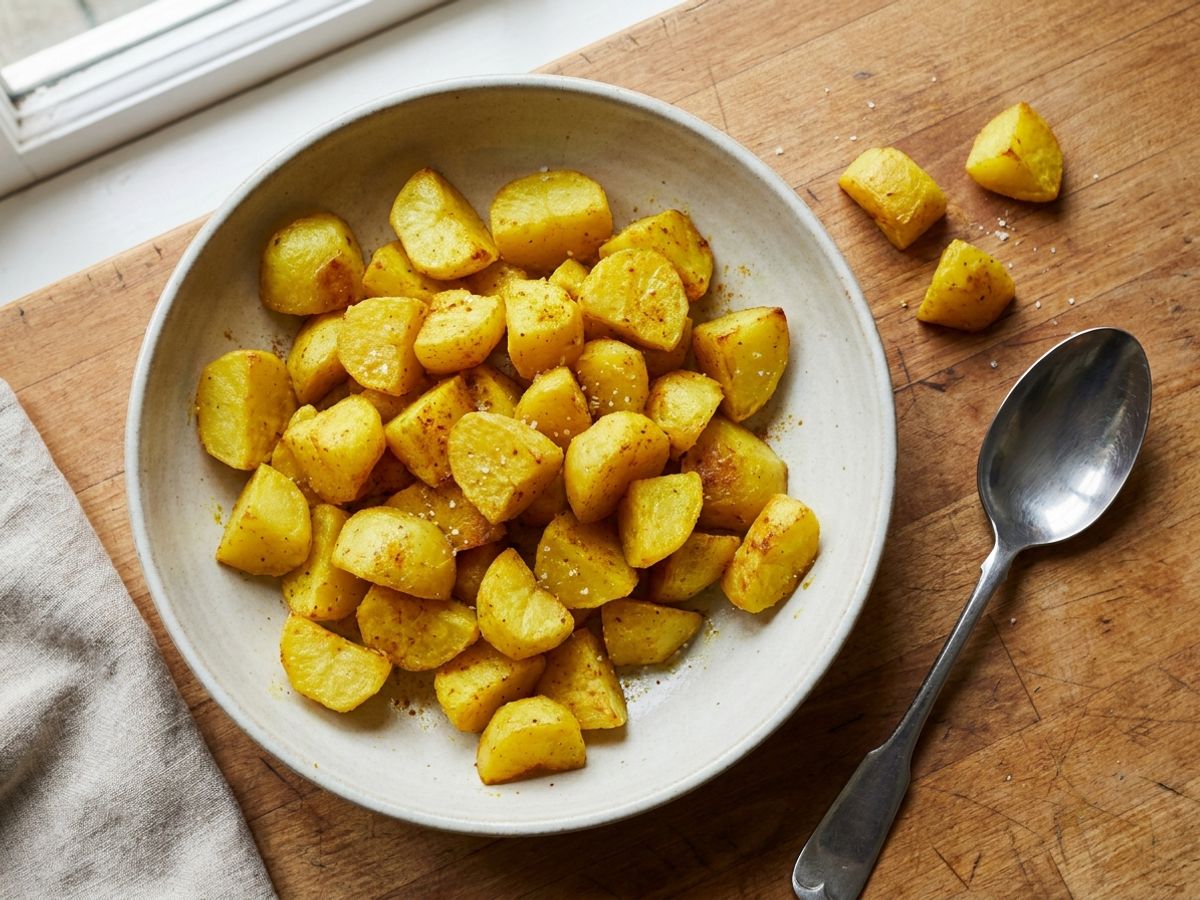
Turmeric Roasted Potatoes

Low histamine roasted potatoes with olive oil, ground turmeric, and sea salt.
Ingredients
- 2 pounds potatoes (Yukon Gold or red potatoes), cut into 1-inch chunks
- 3 tablespoons olive oil
- 1 teaspoon ground turmeric
- 1/2 teaspoon sea salt
- Black pepper (optional)
Instructions
- Preheat your oven to 425°F (220°C).
- Cut fresh potatoes into 1-inch chunks. Keep the pieces uniform for even cooking.
- Pat the potato chunks dry, then toss with olive oil, turmeric, salt, and pepper if using, until every piece is evenly coated and bright yellow.
- Spread in a single layer on a large baking sheet. Do not overcrowd.
- Roast for 30-35 minutes, flipping once halfway through, until crisp and deep golden.
- Serve immediately.
Tips & Substitutions
- Waxy potatoes hold their shape. Yukon Gold or red potatoes give creamy centers with crisp edges. Russets get crispier but can dry out, so watch them closely toward the end.
- Mix the turmeric into the oil first. Stir the turmeric and salt into the olive oil to make a loose slurry before adding the potatoes. This coats every piece evenly and keeps the turmeric from clumping in dry spots.
- Add fresh ginger for extra warmth. Grate about a teaspoon into the oil before tossing. Ginger sits slightly higher than turmeric on some histamine lists but is often tolerated in small amounts, so start light and see how you feel.
- Garlic is optional. A clove or two roasted alongside adds depth. Garlic contains small amounts of quercetin, a compound sometimes discussed in mast cell research, but it can also act as a histamine liberator for sensitive people, so use a little or swap in garlic-infused oil.
- Skip pre-made curry powder and spice blends. They often include ingredients that are harder to tolerate. Plain ground turmeric gives you the golden color and warm flavor without the guesswork.
- Pair it with a main. These are a natural side for low histamine chicken curry or a simple protein like baked cod. For a herb-forward version instead, try classic roasted potatoes with rosemary.
 Get the Histamine Recipes app
250+ low histamine recipes, every ingredient rated.


Why This Works
Potatoes. Naturally low in histamine and generally well tolerated. Roasting fresh potatoes yourself keeps the dish simple and avoids the additives found in processed potato products, and freshness matters more than food lists when managing histamine intolerance.
Turmeric. A low histamine spice for most people, though a few histamine lists rate it higher, so individual tolerance varies. Its active compound, curcumin, is sometimes discussed for anti-inflammatory properties, but most research uses concentrated supplement doses rather than the small amount found in food, so treat it as flavor first and any benefit as a maybe.
Olive oil. A fresh, unfermented fat commonly used in low histamine cooking. It helps the potatoes crisp up without introducing problematic ingredients.
Storage
Best served immediately while crisp. Leftovers can be refrigerated in an airtight container and eaten within 24 hours, though leftovers gradually accumulate histamine, especially protein-containing dishes. Reheat in a hot oven at 425°F (220°C) for 5-10 minutes to restore crispness rather than microwaving.
Not sure about an ingredient?
Histamine tolerance is personal, and most of working it out comes down to knowing where individual foods stand. Our low histamine food list rates 4,500+ foods and explains the reasoning behind each rating, including the foods whose level depends on how fresh they are or how they were stored. It is worth a look before you swap anything in this recipe.
Before you eat
A lot of people with histamine intolerance take a DAO enzyme supplement 15 to 30 minutes before a meal. DAO is the enzyme your body uses to break down the histamine in food, and taking it with meals supports that natural process. Curious how it works? See do DAO supplements actually work.
Affiliate link: if you buy through it, we may earn a commission at no extra cost to you. These statements have not been evaluated by the Food and Drug Administration. This product is not intended to diagnose, treat, cure, or prevent any disease.
For educational purposes only. Not medical advice. Consult a healthcare professional for personal guidance.
References
- Baked Crispy Turmeric Potatoes — Low Histamine Eats
- Are Potatoes High in Histamine? — Low Histamine Eats
- 10 Health Benefits of Turmeric and Curcumin — Healthline
- Histamine and histamine intolerance — Maintz & Novak (2007)
- Histamine Intolerance: The Current State of the Art — Comas-Basté et al. (2020)
- Biogenic Amines in Plant-Origin Foods: Are They Frequently Underestimated in Low-Histamine Diets? — Sánchez-Pérez et al. (2021)
- Diamine Oxidase Supplementation Improves Symptoms in Patients with Histamine Intolerance — Schnedl et al. (2019)
- Histamine Intolerance — A Comprehensive Review — Jochum (2024)