 Histamine Tracker
Chicken Curry

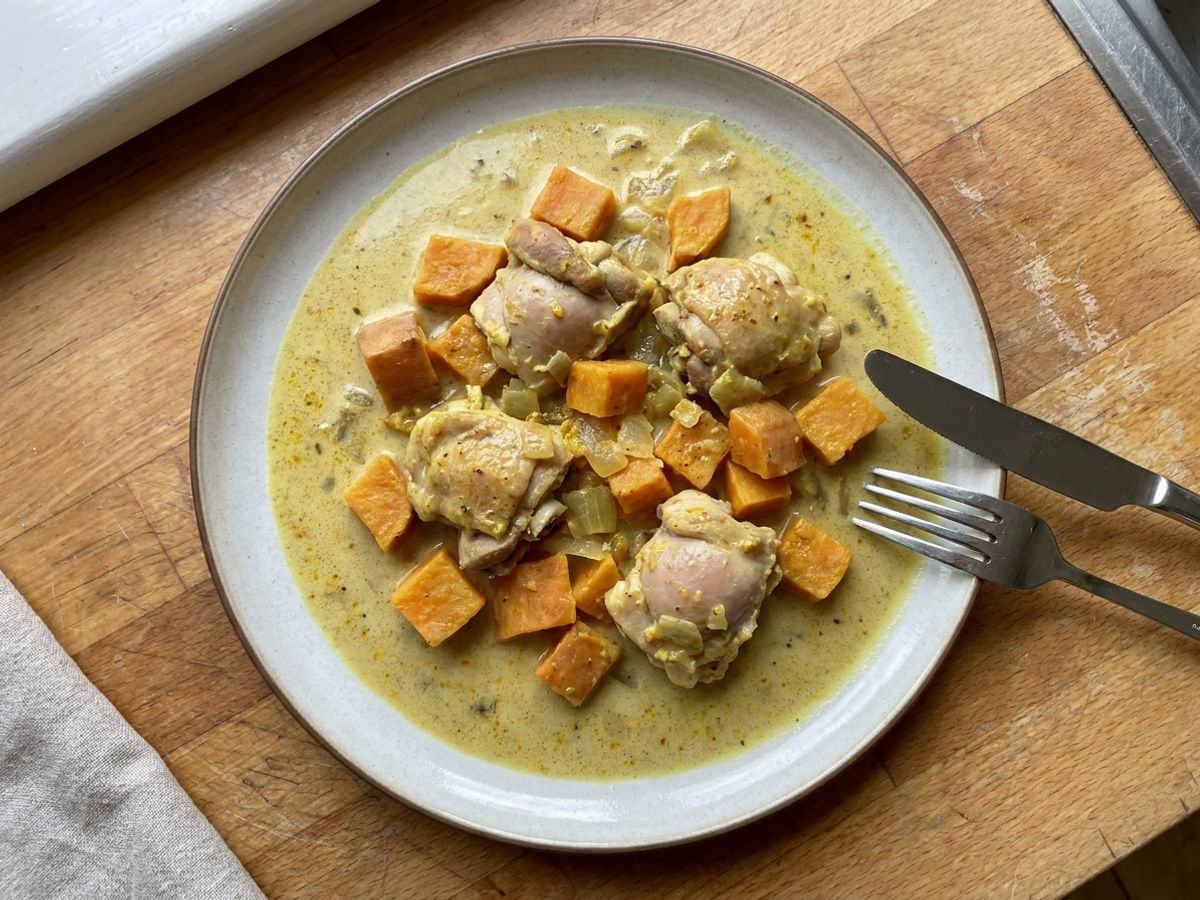
A low histamine coconut milk curry with chicken thighs, sweet potato, cauliflower, kale, turmeric, ginger, and cardamom.
Ingredients
- 2 tablespoons coconut oil (or ghee)
- 1 small yellow onion, diced (optional)
- 2 cloves garlic, minced (optional)
- 2 tablespoons freshly grated ginger
- 2 teaspoons ground turmeric
- 1 teaspoon ground coriander
- 1/2 teaspoon ground cardamom
- 1/4 teaspoon freshly ground black pepper (optional)
- 1 1/2 pounds very fresh boneless skinless chicken thighs, cut into 1-inch pieces
- 1 medium sweet potato, peeled and cut into 1/2-inch cubes
- 1/2 medium cauliflower, cut into small florets (about 3 cups)
- 1 medium carrot, sliced into thin rounds
- 1 can (13.5 ounces) full-fat coconut milk
- 1/2 cup water (or short-simmered same-day chicken broth, if tolerated)
- 1/2 teaspoon fine sea salt, plus more to taste
- 2 cups packed kale, stems removed, torn into bite-sized pieces
- 2 tablespoons fresh cilantro or basil, chopped (for finishing)
- Cooked white rice, for serving
Instructions
Toast the Spices
- Heat the coconut oil in a large heavy pot or Dutch oven over medium heat.
- Add the onion (if using) and cook 4 to 5 minutes, stirring occasionally, until softened and just starting to turn golden.
- Add the garlic (if using), ginger, turmeric, coriander, cardamom, and black pepper. Stir constantly for 30 to 60 seconds, until the spices smell fragrant and slightly toasted. Do not let them scorch.
Brown the Chicken
- Add the chicken pieces and stir to coat in the spices. Cook 4 to 5 minutes, stirring occasionally, until the outside of the chicken turns opaque. It does not need to brown deeply.
Simmer
- Add the sweet potato, cauliflower, carrot, coconut milk, water or broth, and salt. Stir to combine.
- Bring to a gentle simmer, then reduce the heat to low. Cover partially with the lid slightly ajar.
- Simmer for 18 to 22 minutes, stirring occasionally, until the sweet potato is fork-tender and the chicken is cooked through (165°F / 74°C internal).
- Stir in the kale and cook 1 to 2 more minutes, just until wilted.
Finish and Serve
- Taste and adjust salt.
- Spoon over white rice and top with fresh cilantro or basil.
Tips & Substitutions
- Buy the chicken the same day you cook it. Freshness is the single biggest factor in how chicken sits with histamine intolerance. If you have to buy ahead, freeze it the same day and thaw overnight in the fridge.
- Chicken breast works too. Use boneless skinless breasts cut into 1-inch pieces, and reduce the simmer time by 4 to 5 minutes so they do not turn dry. Thighs are more forgiving.
- Skip the curry powder. Premade curry powder and garam masala blends vary widely and often include chili, paprika, or other spices that some people with histamine intolerance react to. Toasting single spices yourself gives you more control over the final flavor.
- Cumin is borderline. Some recipes lean on cumin, but it appears on many histamine sensitivity lists as moderate. Skip it or use a small pinch only if you know you tolerate it.
- Swap in other low histamine vegetables. Butternut squash, zucchini, or green beans all work in place of the cauliflower or carrot. Keep the total volume similar.
- Skip onion and garlic if they are triggers. The ginger and turmeric still carry the flavor.
- Make it spicier. A small piece of fresh ginger added at the end gives a bright heat without using chili. Some people tolerate a tiny pinch of fresh black pepper, others do not.
- Vegan-adaptable. Swap the chicken for extra vegetables (more cauliflower, zucchini, or green beans work well) or a tolerated protein you already know you do well with. Beans are a common trigger for many people with histamine intolerance and IBS, so only use them if you have tested your own tolerance.
- Coconut milk choice. Look for a brand without guar gum or carrageenan if you can find one. Full-fat gives the creamiest texture.
- Want a creamy chicken dish without curry spices? Chicken florentine uses the same coconut-milk base with kale and fresh herbs instead.
 Get the Histamine Recipes app
250+ low histamine recipes, every ingredient rated.


Why This Works
Fresh chicken thighs. Chicken is generally well tolerated when very fresh. Thighs stay tender during the simmer, where breasts can dry out quickly.
Coconut milk. A dairy-free base that is generally well tolerated on a low histamine diet. It carries the spices and gives the curry its body without using yogurt or cream.
Turmeric and ginger. Both are commonly used in low histamine cooking and are sometimes discussed for their anti-inflammatory potential, though individual response varies. Together they create the warm, fragrant base of a classic curry without needing a premade blend.
Single-note spices. Coriander and cardamom add depth without the aged or fermented components found in many curry powders and garam masala mixes. Spice tolerance is individual, so use the smallest amount that gives you the flavor you want.
Sweet potato, cauliflower, and carrot. All commonly tolerated low histamine vegetables. Sweet potato thickens the sauce as it simmers, and cauliflower soaks up the spices.
No tomato. Tomatoes are a common trigger in histamine intolerance. The coconut milk plus root vegetables gives the curry richness and color without them.
Storage
Best eaten fresh from the pot. Like other simmered protein dishes, the chicken in this curry accumulates histamine as it sits. If you need to store leftovers, cool quickly, refrigerate within 30 minutes, and eat within 24 hours. For longer storage, portion into single servings and freeze immediately after cooking. Some sensitive people react even to frozen leftovers, so notice how your body responds.
Not sure about an ingredient?
Histamine tolerance is personal, and most of working it out comes down to knowing where individual foods stand. Our low histamine food list rates 4,500+ foods and explains the reasoning behind each rating, including the foods whose level depends on how fresh they are or how they were stored. It is worth a look before you swap anything in this recipe.
Before you eat
A lot of people with histamine intolerance take a DAO enzyme supplement 15 to 30 minutes before a meal. DAO is the enzyme your body uses to break down the histamine in food, and taking it with meals supports that natural process. Curious how it works? See do DAO supplements actually work.
Affiliate link: if you buy through it, we may earn a commission at no extra cost to you. These statements have not been evaluated by the Food and Drug Administration. This product is not intended to diagnose, treat, cure, or prevent any disease.
For educational purposes only. Not medical advice. Consult a healthcare professional for personal guidance.
References
- Warming Chicken Curry Without Garam Masala — Low Histamine Eats
- Thai Coconut Chicken - Low Histamine — Ann Shippy MD
- Easy Low-Histamine Curry (Thai-Style) — Creative in My Kitchen
- Histamine and histamine intolerance — Maintz & Novak (2007)
- Histamine Intolerance: The Current State of the Art — Comas-Basté et al. (2020)
- Biogenic Amines in Plant-Origin Foods: Are They Frequently Underestimated in Low-Histamine Diets? — Sánchez-Pérez et al. (2021)
- Diamine Oxidase Supplementation Improves Symptoms in Patients with Histamine Intolerance — Schnedl et al. (2019)
- Histamine Intolerance — A Comprehensive Review — Jochum (2024)