 Histamine Tracker
Cauliflower Rice

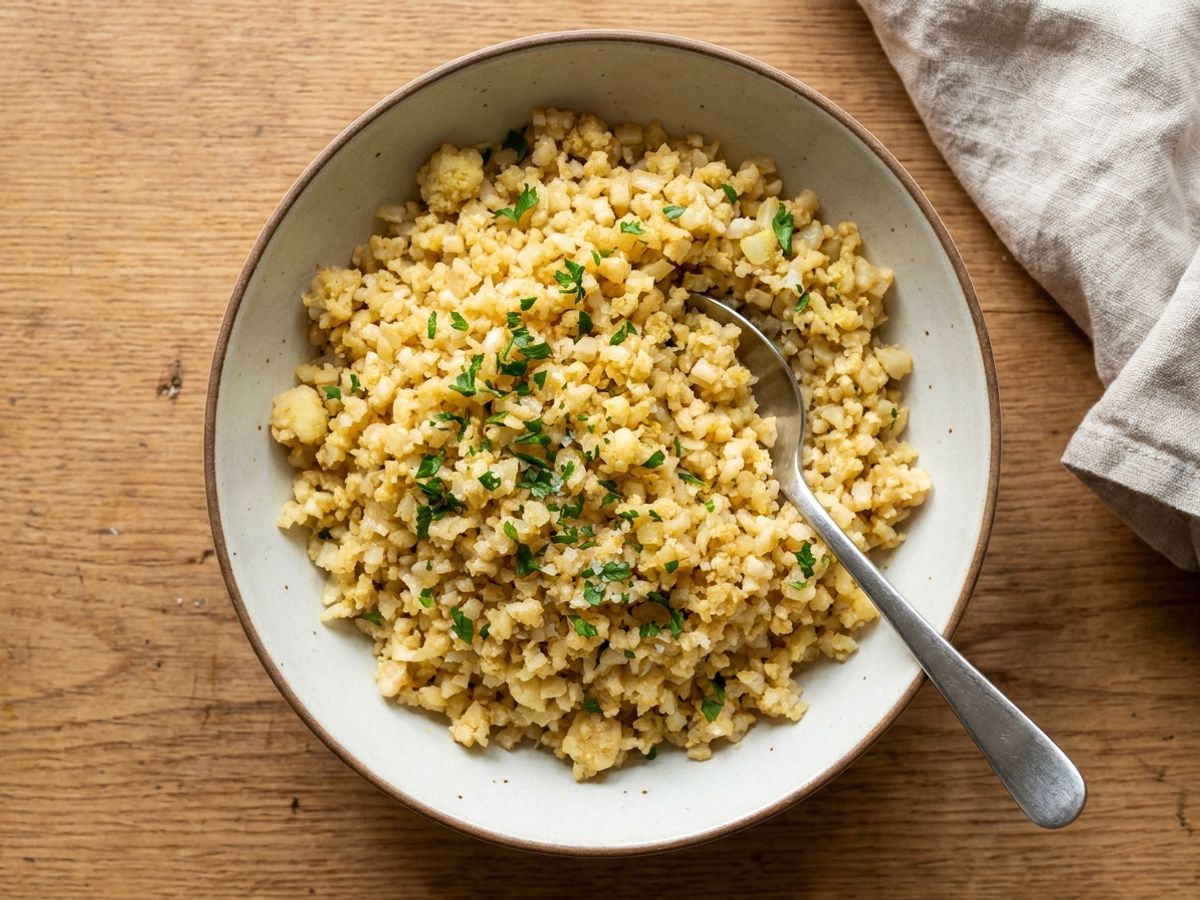
Low histamine cauliflower rice cooked in olive oil with sea salt and fresh parsley, cilantro, or chives.
Ingredients
- 1 medium head fresh cauliflower (about 1 1/2 pounds), or 1 (12-oz) bag fresh-frozen riced cauliflower
- 2 tablespoons extra-virgin olive oil (or ghee)
- 1/2 teaspoon sea salt, plus more to taste
- 2 tablespoons fresh parsley, cilantro, or chives, finely chopped
- Optional: 1/2 teaspoon ground turmeric
- Optional: 1 small clove fresh garlic, minced (see notes)
Instructions
Rice the Cauliflower
- If starting with a whole head, remove the leaves and core, then break the cauliflower into large florets.
- Pulse the florets in a food processor in batches until they look like rice grains, about 8 to 10 short pulses per batch. Stop before they turn into paste.
- If you do not have a food processor, grate the florets on the large holes of a box grater. Skip this step if you are using pre-riced cauliflower.
Cook
- Heat the olive oil in a large skillet over medium heat until it shimmers.
- If using fresh garlic, add it now and cook for 20 to 30 seconds, stirring, until fragrant but not browned. Lower the heat slightly if it threatens to brown.
- Add the cauliflower rice and the salt. Stir to coat in the oil.
- Cook, stirring every minute or two, for 6 to 8 minutes, until the cauliflower is tender but still has a little bite and looks lightly golden in spots.
- If using turmeric, sprinkle it in during the last minute of cooking and stir to coat.
Finish
- Turn off the heat and stir in the fresh herbs.
- Taste and add more salt if needed. Serve warm.
Tips & Substitutions
- Don't crowd the pan. A wide skillet lets moisture evaporate so the cauliflower browns instead of steams. If your pan is small, cook in two batches.
- Drain pre-riced cauliflower. Bagged riced cauliflower releases extra water as it thaws. Spread it on a clean towel, press lightly, and pat dry before it hits the pan.
- Skip the garlic if you are FODMAP-sensitive. Cauliflower itself is high-FODMAP at this serving size, so this is not a low-FODMAP recipe. If you tolerate cauliflower in small amounts but not garlic, swap in 1/4 teaspoon garlic-infused olive oil for a similar flavor. A pinch of certified gluten-free asafoetida (hing) is another option, though many commercial hing powders contain wheat flour.
- Frozen vs fresh. Both work. Fresh tends to brown more easily and has a cleaner flavor. Frozen needs an extra minute or two on the stove to drive off moisture.
- Turmeric variation. For a warmer flavored rice that pairs with curries and stews, add the turmeric option plus a pinch of ginger powder.
- Use it as a base. Top with pan-seared chicken breast, simple baked salmon, or ground beef stir fry for a quick low-carb meal. Or fold it into a burrito bowl in place of regular rice.
- Turn it into a meal on its own. Add eggs, carrot, and green onions to the pan and you have cauliflower fried rice.
 Get the Histamine Recipes app
250+ low histamine recipes, every ingredient rated.


Why This Works
Cauliflower. Naturally low in histamine and generally well tolerated. It is one of the more flexible low histamine vegetables and works as a stand-in for grains in low-carb meals. Some people react more to bagged or pre-cut cauliflower, often because it has been sitting longer or has been through processing and packaging, so a fresh whole head is the safer choice if you are sensitive.
Olive oil. A simple cooking fat with no preservatives or additives, generally well tolerated. Ghee works the same way and adds a buttery flavor; many people with histamine intolerance tolerate ghee even when they react to butter, since most of the milk proteins are removed. Choose fresh, additive-free ghee and check your own response.
Garlic (optional). Garlic is a mixed-bag ingredient. It contains small amounts of quercetin, a compound sometimes discussed in mast cell research, but it can also act as a histamine liberator for sensitive people. Use it in small amounts or leave it out and lean on fresh herbs instead.
Fresh herbs. Parsley, cilantro, and chives are low histamine and add brightness without needing a sauce. Use them within a few days of cutting for the best freshness and flavor.
Storage
Cauliflower rice is best fresh. Cooked cauliflower can develop off flavors quickly in the fridge, and like any cooked food, it builds up amines over time. If you must store it, refrigerate in a sealed container and finish within 24 hours, or freeze in a flat layer the same day and reheat single portions in a hot skillet. Some people are sensitive even to frozen leftovers, especially when paired with proteins, so cook small batches when you can.
Not sure about an ingredient?
Histamine tolerance is personal, and most of working it out comes down to knowing where individual foods stand. Our low histamine food list rates 4,500+ foods and explains the reasoning behind each rating, including the foods whose level depends on how fresh they are or how they were stored. It is worth a look before you swap anything in this recipe.
Before you eat
A lot of people with histamine intolerance take a DAO enzyme supplement 15 to 30 minutes before a meal. DAO is the enzyme your body uses to break down the histamine in food, and taking it with meals supports that natural process. Curious how it works? See do DAO supplements actually work.
Affiliate link: if you buy through it, we may earn a commission at no extra cost to you. These statements have not been evaluated by the Food and Drug Administration. This product is not intended to diagnose, treat, cure, or prevent any disease.
For educational purposes only. Not medical advice. Consult a healthcare professional for personal guidance.
References
- Cauliflower Rice (low histamine, lectin, oxalate and carbohydrate) — Holly Charlton Dietitian
- Low Histamine Turmeric Roasted Cauliflower Rice — Dr. Hagmeyer
- Crispy Baked Cauliflower (Cauliflower & Histamine) — Low Histamine Eats
- Histamine and histamine intolerance — Maintz & Novak (2007)
- Histamine Intolerance: The Current State of the Art — Comas-Basté et al. (2020)
- Biogenic Amines in Plant-Origin Foods: Are They Frequently Underestimated in Low-Histamine Diets? — Sánchez-Pérez et al. (2021)
- Diamine Oxidase Supplementation Improves Symptoms in Patients with Histamine Intolerance — Schnedl et al. (2019)
- Histamine Intolerance — A Comprehensive Review — Jochum (2024)