 Histamine Tracker
Basil Pesto

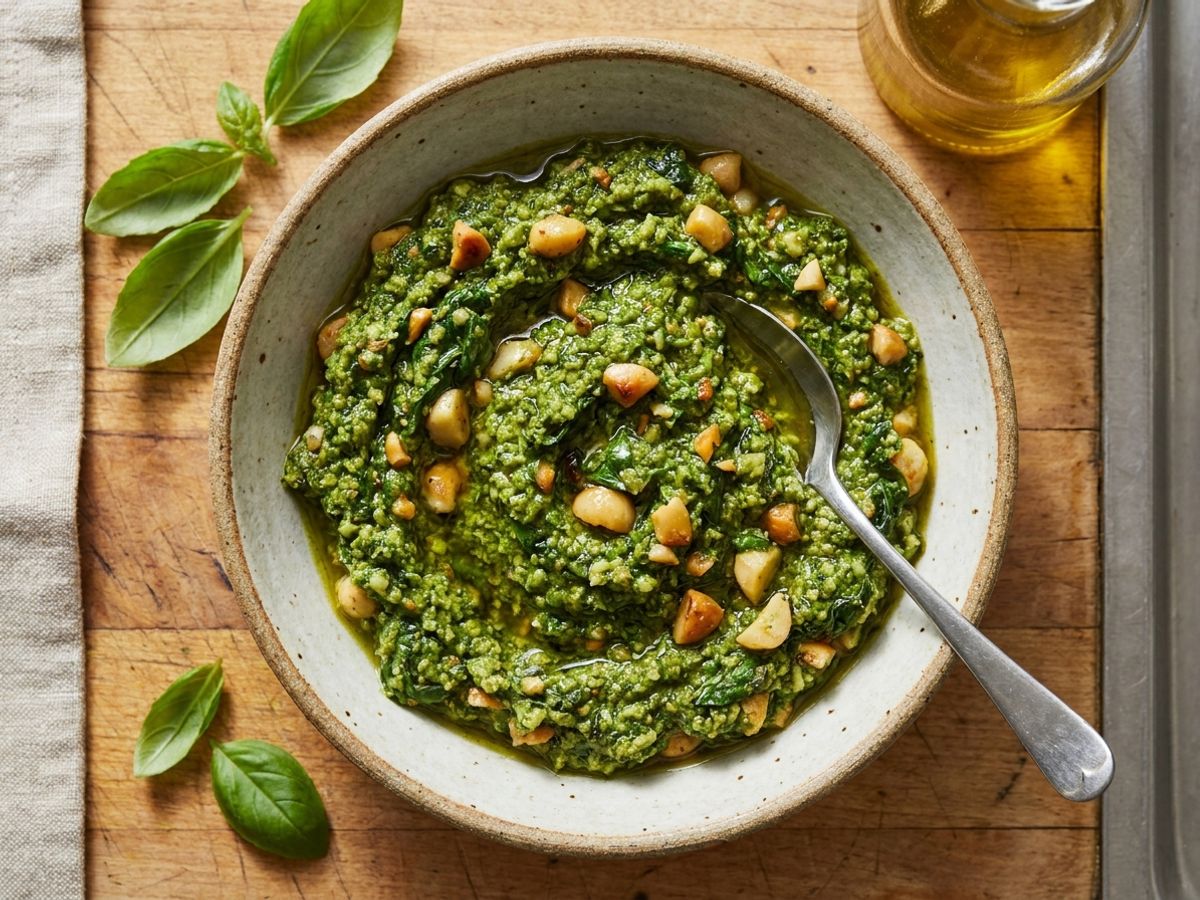
A low histamine cheese-free pesto made with fresh basil, macadamia nuts, olive oil, garlic, and mint.
Ingredients
- 1 cup fresh basil leaves, lightly packed
- 1/2 cup raw macadamia nuts
- 1/4 cup extra virgin olive oil, plus more to thin if needed
- 1 small clove garlic, peeled (optional)
- 1/4 teaspoon salt, plus more to taste
- 1 tablespoon fresh mint leaves (optional)
Instructions
Toast the Nuts
- Add the macadamia nuts to a dry skillet over low heat.
- Toast for 4-5 minutes, stirring often, until lightly golden and fragrant.
- Remove from the heat and let cool completely. Toasting is optional but adds depth.
Prep the Basil
- Gently wash the basil leaves in cold water.
- Pat thoroughly dry with a clean kitchen towel or salad spinner. Wet leaves will dilute the pesto.
Blend
- Add the cooled macadamia nuts to a food processor or high-speed blender. Pulse a few times to break them up.
- Add the basil, garlic (if using), salt, and mint (if using).
- Pulse a few times to begin chopping.
- Stream in the olive oil and blend until you reach a thick, spoonable consistency. Scrape down the sides as needed.
- Taste and adjust salt. Add more olive oil if you want it looser.
Serve
Toss with warm pasta, spread on flatbread, dollop on roasted cauliflower or other roasted vegetables, or stir into a no-tomato pasta sauce for extra herb flavor.
Tips & Substitutions
- Skip the garlic if it bothers you. Garlic can act as a histamine liberator for some people. The basil and macadamias carry the recipe well on their own.
- Swap the nuts if needed. Pecans or pistachios work in place of macadamias. Avoid pine nuts, which sit on the borderline for many people, and walnuts and cashews, which are commonly less well tolerated.
- No cheese needed. Traditional pesto uses aged parmesan, but aged cheeses are high in histamine. The macadamias add enough richness on their own.
- No lemon needed. Skipping the lemon avoids citrus, which can be a trigger for some people. The fresh basil and good olive oil carry the flavor.
- Toss it with zucchini noodles. Two or three spoonfuls coat a single serving without watering the sauce down.
- Use a food processor for best texture. A high-speed blender works too, but you may need to add the oil first and stop to scrape down the sides more often.
 Get the Histamine Recipes app
250+ low histamine recipes, every ingredient rated.


Why This Works
Fresh basil. Typically well tolerated when very fresh, and the heart of any pesto. Tolerance for individual herbs varies, so go by how you feel.
Macadamia nuts. Often better tolerated than many other nuts, though individual responses vary. They are also creamy and mild, which makes them a natural stand-in for pine nuts.
Extra virgin olive oil. Commonly tolerated and provides the richness that aged cheese would normally bring.
No aged cheese. Aged cheeses like parmesan are high in histamine because of how they are made. Leaving them out keeps the recipe friendly for most people with histamine intolerance.
No lemon juice. Most pesto recipes call for citrus to brighten the flavor, but it can be a trigger for some people. Fresh basil and good olive oil do the job here.
Garlic (optional). Can act as a histamine liberator or general trigger for some people. It is listed as optional for that reason.
Storage
Best used fresh the day you make it. It will keep in a sealed jar in the refrigerator for up to 2 days, with a thin layer of olive oil poured on top to slow oxidation. For longer storage, freeze in small portions (an ice cube tray works well) for up to 2 months. Histamine buildup is a lower risk with herb sauces than with meat or fish dishes, but sensitive people may still react to leftovers. If that is you, freeze any extra portions the same day you make it.
Not sure about an ingredient?
Histamine tolerance is personal, and most of working it out comes down to knowing where individual foods stand. Our low histamine food list rates 4,500+ foods and explains the reasoning behind each rating, including the foods whose level depends on how fresh they are or how they were stored. It is worth a look before you swap anything in this recipe.
Before you eat
A lot of people with histamine intolerance take a DAO enzyme supplement 15 to 30 minutes before a meal. DAO is the enzyme your body uses to break down the histamine in food, and taking it with meals supports that natural process. Curious how it works? See do DAO supplements actually work.
Affiliate link: if you buy through it, we may earn a commission at no extra cost to you. These statements have not been evaluated by the Food and Drug Administration. This product is not intended to diagnose, treat, cure, or prevent any disease.
For educational purposes only. Not medical advice. Consult a healthcare professional for personal guidance.
References
- Low Histamine Pesto Recipe — Mast Cell 360
- Dairy-Free Macadamia Pesto (Low FODMAP, AIP) — Low Histamine Eats
- Macadamia Nut Pesto — Through The Fibro Fog
- Histamine and histamine intolerance — Maintz & Novak (2007)
- Histamine Intolerance: The Current State of the Art — Comas-Basté et al. (2020)
- Biogenic Amines in Plant-Origin Foods: Are They Frequently Underestimated in Low-Histamine Diets? — Sánchez-Pérez et al. (2021)
- Diamine Oxidase Supplementation Improves Symptoms in Patients with Histamine Intolerance — Schnedl et al. (2019)
- Histamine Intolerance — A Comprehensive Review — Jochum (2024)