 Histamine Tracker
Mashed Cauliflower

Low histamine mashed cauliflower with olive oil, coconut cream, garlic, chives, and parsley.
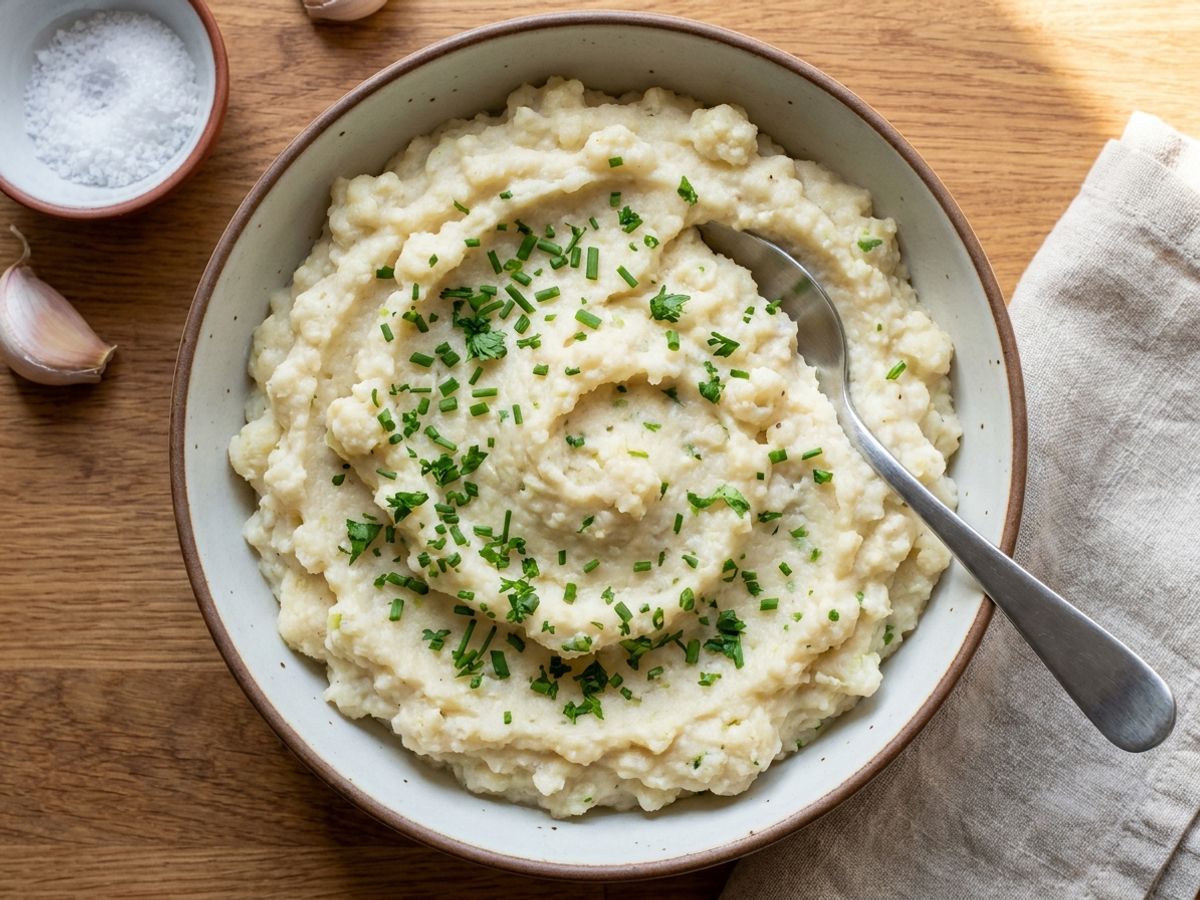
Ingredients
- 1 medium head cauliflower (about 2 pounds), cut into florets
- 3 tablespoons olive oil
- 2 to 4 tablespoons coconut cream (additive-free, no guar gum or carrageenan)
- 1 clove fresh garlic, minced (optional)
- 1/2 teaspoon sea salt
- 1 tablespoon fresh chives, finely chopped
- 1 teaspoon fresh parsley, chopped
- Black pepper (optional)
Instructions
Steam the Cauliflower
- Set up a large pot with a steamer basket and about 1 inch of water.
- Add the cauliflower florets, cover, and bring to a boil over high heat.
- Reduce to medium and steam for 15 to 20 minutes until very tender when pierced with a fork.
Mash
- Drain the cauliflower well in a colander. Press gently with a clean towel or the back of a spoon to remove as much water as possible. This step is the difference between creamy and watery.
- Transfer to a food processor along with the olive oil, 2 tablespoons of the coconut cream, garlic if using, and salt.
- Pulse until smooth and creamy, scraping down the sides as needed. Add more coconut cream a tablespoon at a time if you want it richer. For a chunkier mash, use a potato masher instead.
Serve
- Taste and adjust salt. Stir in the chives and parsley.
- Top with a drizzle of olive oil and black pepper if using. Serve immediately alongside simple roast chicken, steak, or any roasted protein.
Tips & Substitutions
- Steam, do not boil. Boiling waterlogs the florets and washes out flavor and nutrients. Steaming gives a thicker, fluffier mash.
- Drain thoroughly. Cauliflower holds a lot of water. Pressing it after draining is the single biggest factor in the final texture.
- Butter swap. If you tolerate dairy, swap the olive oil for fresh unsalted butter and skip the coconut cream. Butter is typically lower histamine than aged dairy, but dairy can still be a trigger for some people, so test your tolerance.
- Skip the garlic. Garlic acts as a histamine liberator for some people. Leave it out or use just a small amount the first time you make this.
- Other fresh herbs. Thyme or dill work well in place of parsley. Add at the end so they keep their flavor.
 Get the Histamine Recipes app
250+ low histamine recipes, every ingredient rated.


Why This Works
Cauliflower. Naturally low in histamine and generally well tolerated. It makes a lighter, lower-carb base than potatoes and takes on the flavor of whatever you add to it.
Olive oil. A fresh, unfermented fat commonly used in low histamine cooking. It adds richness without dairy and helps the mash blend smoothly.
Coconut cream. Generally well tolerated when you choose an additive-free brand. Many supermarket brands include guar gum or carrageenan, which can be triggers for some people, so check the label.
Fresh herbs. Chives and parsley are commonly tolerated and add fresh flavor without needing aged or fermented seasonings. Freshness matters more than food lists when managing histamine intolerance.
Garlic (optional). Contains small amounts of quercetin, a compound sometimes discussed in mast cell research, though individual response varies. Garlic can also act as a histamine liberator for sensitive individuals, so test in a small amount first.
Storage
Best served fresh right after making. If you have leftovers, refrigerate in an airtight container and eat within 24 hours, though the texture softens. For very sensitive people, cool quickly and freeze portions instead, then reheat from frozen with a splash of water or extra olive oil to loosen it back up.
Not sure about an ingredient?
Histamine tolerance is personal, and most of working it out comes down to knowing where individual foods stand. Our low histamine food list rates 4,500+ foods and explains the reasoning behind each rating, including the foods whose level depends on how fresh they are or how they were stored. It is worth a look before you swap anything in this recipe.
Before you eat
A lot of people with histamine intolerance take a DAO enzyme supplement 15 to 30 minutes before a meal. DAO is the enzyme your body uses to break down the histamine in food, and taking it with meals supports that natural process. Curious how it works? See do DAO supplements actually work.
Affiliate link: if you buy through it, we may earn a commission at no extra cost to you. These statements have not been evaluated by the Food and Drug Administration. This product is not intended to diagnose, treat, cure, or prevent any disease.
For educational purposes only. Not medical advice. Consult a healthcare professional for personal guidance.
References
- Low Histamine Cauliflower Mash with Kale: Colcannon Inspired — Mast Cell 360
- Cauliflower - the versatile vegetable — Is Food Making You Sick?
- Hydroxytyrosol and oleuropein of olive oil inhibit mast cell degranulation induced by immune and non-immune pathways — Persia et al. (2014), Phytomedicine
- Histamine and histamine intolerance — Maintz & Novak (2007)
- Histamine Intolerance: The Current State of the Art — Comas-Basté et al. (2020)
- Biogenic Amines in Plant-Origin Foods: Are They Frequently Underestimated in Low-Histamine Diets? — Sánchez-Pérez et al. (2021)
- Diamine Oxidase Supplementation Improves Symptoms in Patients with Histamine Intolerance — Schnedl et al. (2019)
- Histamine Intolerance — A Comprehensive Review — Jochum (2024)