 Histamine Tracker
Simple Roast Chicken

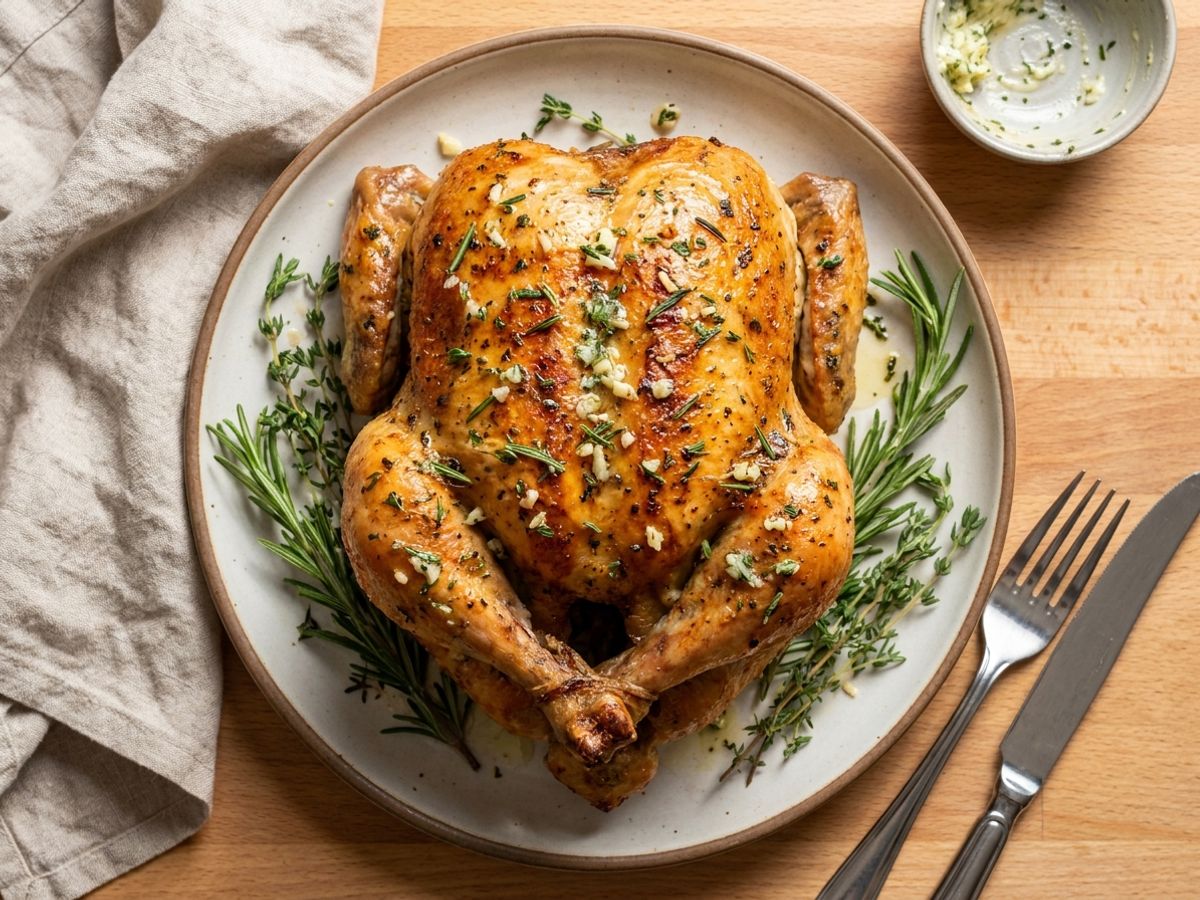
A low histamine whole roast chicken with rosemary, thyme, and garlic herb butter.
Ingredients
- 1 whole fresh chicken (3.5-4 lbs), as freshly butchered as possible (avoid "enhanced" or brined birds with added solutions)
- 4 tablespoons unsalted butter, softened (or olive oil for dairy-free)
- 2 tablespoons fresh rosemary leaves, finely chopped
- 2 tablespoons fresh thyme leaves
- 2 cloves fresh garlic, minced (optional, see Tips)
- 1 1/2 teaspoons fine sea salt
- 1/4 teaspoon black pepper (optional)
- 1 tablespoon olive oil
Instructions
Prep
- Take the chicken out of the fridge 20-30 minutes before cooking so it loses some of its chill.
- Preheat the oven to 425°F (220°C).
- Pat the chicken completely dry inside and out with paper towels. Dry skin is what gives you crispy skin.
- In a small bowl, mash the softened butter with the rosemary, thyme, garlic if using, salt, and pepper if using.
Season
- Gently slide your fingers under the breast skin to loosen it, working from the cavity end. Try not to tear the skin.
- Push about half of the herb butter under the skin and spread it over the breast meat with your fingers from the outside.
- Rub the remaining herb butter all over the outside of the bird.
- Drizzle the olive oil over the skin and rub it in. Tie the legs together loosely with kitchen twine if you have it. Tuck the wing tips under the body.
Roast
- Place the chicken breast-side up in a roasting pan or oven-safe skillet. Leave the cavity empty. Do not stuff with citrus, onion, or anything else.
- Roast at 425°F (220°C) for 15 minutes to get the skin going.
- Lower the temperature to 375°F (190°C) and continue roasting for about 60 more minutes. For the juiciest result, pull the bird when the breast hits 160-165°F (71-74°C) and the thigh hits 170-175°F (77-79°C) at the thickest part, not touching bone. A 4 lb bird usually takes 70-80 minutes total. Smaller birds cook faster.
- If the skin is browning too fast, tent loosely with foil or parchment for the last 20 minutes.
Rest and Carve
- Move the chicken to a cutting board and let it rest for 15-20 minutes before carving. Carryover heat will finish the cooking, and the juices stay in the meat.
- Carve and serve right away.
Tips & Substitutions
- Freshness matters more than anything else. Buy your chicken the same day you plan to cook it, ideally from a butcher who can tell you the pack or processing date. Pasture-raised or organic from a trusted source is usually freshest. Sell-by dates are not the same as pack dates, so ask if you can. Keep the bird very cold on the way home and cook it the same day.
- No citrus in the cavity. Many roast chicken recipes call for a halved lemon stuffed inside the bird. Skip it. Some people with histamine intolerance find citrus triggering, and the herb butter brings plenty of flavor on its own.
- Skip the garlic if it bothers you. Garlic is left optional because some people with histamine intolerance or MCAS do not tolerate it well, and it can also bother sensitive digestion. For the gentlest version, season with just salt, rosemary, and thyme.
- Use olive oil for dairy-free. Rub the herbs and oil under the skin the same way you would the butter. Ghee is worth knowing about too, since the milk solids are removed and some people who react to butter still tolerate it, but ghee is made from butter and is still dairy.
- Use a meat thermometer. A whole bird is hard to judge by eye. Aim for 160-165°F (71-74°C) in the breast and 170-175°F (77-79°C) in the thigh, not touching bone. The juices should run clear.
- Serving ideas. Pair with mashed cauliflower for a lower-carb plate, or mashed potatoes and roasted carrots for a classic roast dinner. For a holiday plate, add herb bread stuffing and simple gravy.
 Get the Histamine Recipes app
250+ low histamine recipes, every ingredient rated.


Why This Works
Fresh whole chicken. Fresh, properly handled chicken is generally well tolerated. Histamine builds up in poultry as it sits, so cooking a same-day bird keeps the freshness load low.
Butter (or olive oil). Fresh, unsalted dairy like butter is commonly tolerated by people who can handle some dairy. Olive oil keeps the recipe dairy-free and is generally well tolerated. Ghee is another option for people who react to milk solids specifically, though it is made from butter and still counts as dairy.
Fresh rosemary and thyme. Fresh herbs are generally well tolerated and bring big flavor without needing marinades or fermented seasonings.
Garlic (optional). Some people with histamine intolerance or MCAS do not tolerate garlic well, and it can also bother sensitive digestion. Leaving it out is fine.
Sea salt. A simple, well-tolerated seasoning that brings out the flavor of the chicken and herbs.
Storage
Best eaten the same day, ideally within an hour or two of pulling it out of the oven. Chicken is a protein that accumulates histamine as it sits, so try to plan portions for one meal. If you have extra meat, pull it off the bones right away, spread it in shallow containers so it cools fast, and freeze in single-serve portions within an hour. Some people still react to frozen chicken leftovers, so go by your own tolerance.
Not sure about an ingredient?
Histamine tolerance is personal, and most of working it out comes down to knowing where individual foods stand. Our low histamine food list rates 4,500+ foods and explains the reasoning behind each rating, including the foods whose level depends on how fresh they are or how they were stored. It is worth a look before you swap anything in this recipe.
Before you eat
A lot of people with histamine intolerance take a DAO enzyme supplement 15 to 30 minutes before a meal. DAO is the enzyme your body uses to break down the histamine in food, and taking it with meals supports that natural process. Curious how it works? See do DAO supplements actually work.
Affiliate link: if you buy through it, we may earn a commission at no extra cost to you. These statements have not been evaluated by the Food and Drug Administration. This product is not intended to diagnose, treat, cure, or prevent any disease.
For educational purposes only. Not medical advice. Consult a healthcare professional for personal guidance.
References
- Super Easy Low Histamine Roast Chicken — Mast Cell 360 (Beth O'Hara)
- Fish and Fishery Products Hazards and Controls Guidance (Chapter 7: Scombrotoxin Formation) — U.S. Food and Drug Administration (2022)
- Low Histamine Herbs and Spices (and Recipes to Enjoy!) — Through The Fibro Fog
- Histamine and histamine intolerance — Maintz & Novak (2007)
- Histamine Intolerance: The Current State of the Art — Comas-Basté et al. (2020)
- Biogenic Amines in Plant-Origin Foods: Are They Frequently Underestimated in Low-Histamine Diets? — Sánchez-Pérez et al. (2021)
- Diamine Oxidase Supplementation Improves Symptoms in Patients with Histamine Intolerance — Schnedl et al. (2019)
- Histamine Intolerance — A Comprehensive Review — Jochum (2024)