 Histamine Tracker
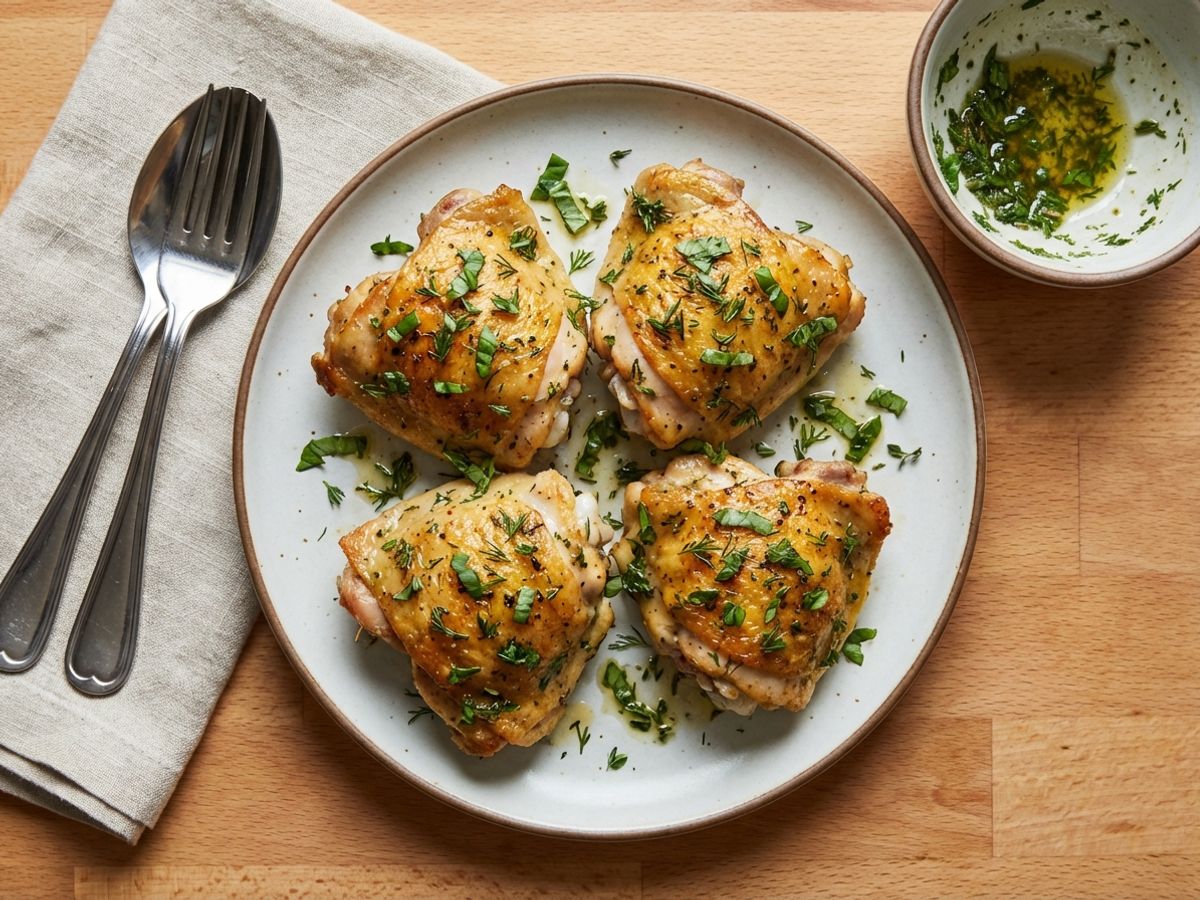
Fresh Herb Chicken Thighs

Low histamine chicken thighs roasted with olive oil, fresh basil, dill, and thyme.
Ingredients
- 4 bone-in, skin-on chicken thighs (about 2 pounds)
- 2 tablespoons olive oil
- 2 tablespoons fresh basil, finely chopped
- 2 tablespoons fresh dill, finely chopped
- 1 teaspoon fresh thyme leaves (optional)
- 1/2 teaspoon sea salt
- 1/4 teaspoon black pepper (optional)
Instructions
Prep
- Pat the chicken thighs dry with paper towels. This helps the skin crisp up.
- In a small bowl, mix the olive oil with the chopped basil, dill, thyme if using, salt, and pepper if using.
- Rub the herb mixture all over the chicken thighs, including under the skin if possible.
Oven Method
- Preheat your oven to 400°F (200°C).
- Place the chicken thighs skin side up on a baking sheet lined with parchment paper.
- Bake for 25-35 minutes until the chicken reaches 165°F (74°C) internal temperature in the thickest part (not touching bone) and the skin is golden and crispy.
- Let rest for 5 minutes before serving.
Air Fryer Method
- Preheat your air fryer to 380°F (193°C).
- Place the chicken thighs skin side up in the air fryer basket, leaving space between them.
- Air fry for 20-26 minutes, flipping halfway through, until the chicken reaches 165°F (74°C) internal temperature. Time varies by air fryer model and thigh size.
- Let rest for 5 minutes before serving.
Tips & Substitutions
- Use fresh chicken. Buy same-day from a trusted source for the lowest histamine load.
- Bone-in thighs stay moist during cooking. Boneless thighs work but cook 5-8 minutes faster. Check the internal temperature.
- Rub the herbs under the skin to keep them from burning and to infuse more flavor into the meat.
- For extra crispy skin, increase oven temperature to 425°F (218°C) for the last 5 minutes of baking.
- Swap the herbs freely. Parsley, oregano, or chives work well if you prefer them over basil and dill.
 Get the Histamine Recipes app
250+ low histamine recipes, every ingredient rated.


Why This Works
Fresh chicken. When bought fresh and cooked right away, chicken is generally well tolerated. The bone-in cut retains moisture during roasting.
Fresh basil and dill. Fresh herbs are generally well tolerated and provide robust flavor without relying on marinades, sauces, or fermented seasonings that can be triggers.
Olive oil. A well-tolerated fat that helps the herbs adhere to the chicken and promotes even browning during cooking.
Fresh thyme (optional). Another well-tolerated fresh herb that adds an earthy note. Fresh thyme has great flavor, and if you are sensitive to dried herbs or spices, fresh may be easier to tolerate.
Storage
Best eaten fresh from the oven. Chicken is a protein that accumulates histamine as it sits, so serve immediately when possible. If you need to store leftovers, refrigerate within 30 minutes and eat within 24 hours. You can also freeze portions immediately after cooking for longer storage.
Not sure about an ingredient?
Histamine tolerance is personal, and most of working it out comes down to knowing where individual foods stand. Our low histamine food list rates 4,500+ foods and explains the reasoning behind each rating, including the foods whose level depends on how fresh they are or how they were stored. It is worth a look before you swap anything in this recipe.
Before you eat
A lot of people with histamine intolerance take a DAO enzyme supplement 15 to 30 minutes before a meal. DAO is the enzyme your body uses to break down the histamine in food, and taking it with meals supports that natural process. Curious how it works? See do DAO supplements actually work.
Affiliate link: if you buy through it, we may earn a commission at no extra cost to you. These statements have not been evaluated by the Food and Drug Administration. This product is not intended to diagnose, treat, cure, or prevent any disease.
For educational purposes only. Not medical advice. Consult a healthcare professional for personal guidance.
References
- Fish and Fishery Products Hazards and Controls Guidance (Chapter 7: Scombrotoxin Formation) — U.S. Food and Drug Administration (2022)
- Low Histamine Herbs and Spices (and Recipes to Enjoy!) — Through The Fibro Fog
- Your Guide to Safe Spices for Histamine Intolerance — Eat Healthy 365
- Histamine and histamine intolerance — Maintz & Novak (2007)
- Histamine Intolerance: The Current State of the Art — Comas-Basté et al. (2020)
- Biogenic Amines in Plant-Origin Foods: Are They Frequently Underestimated in Low-Histamine Diets? — Sánchez-Pérez et al. (2021)
- Diamine Oxidase Supplementation Improves Symptoms in Patients with Histamine Intolerance — Schnedl et al. (2019)
- Histamine Intolerance — A Comprehensive Review — Jochum (2024)