 Histamine Tracker
Meatloaf

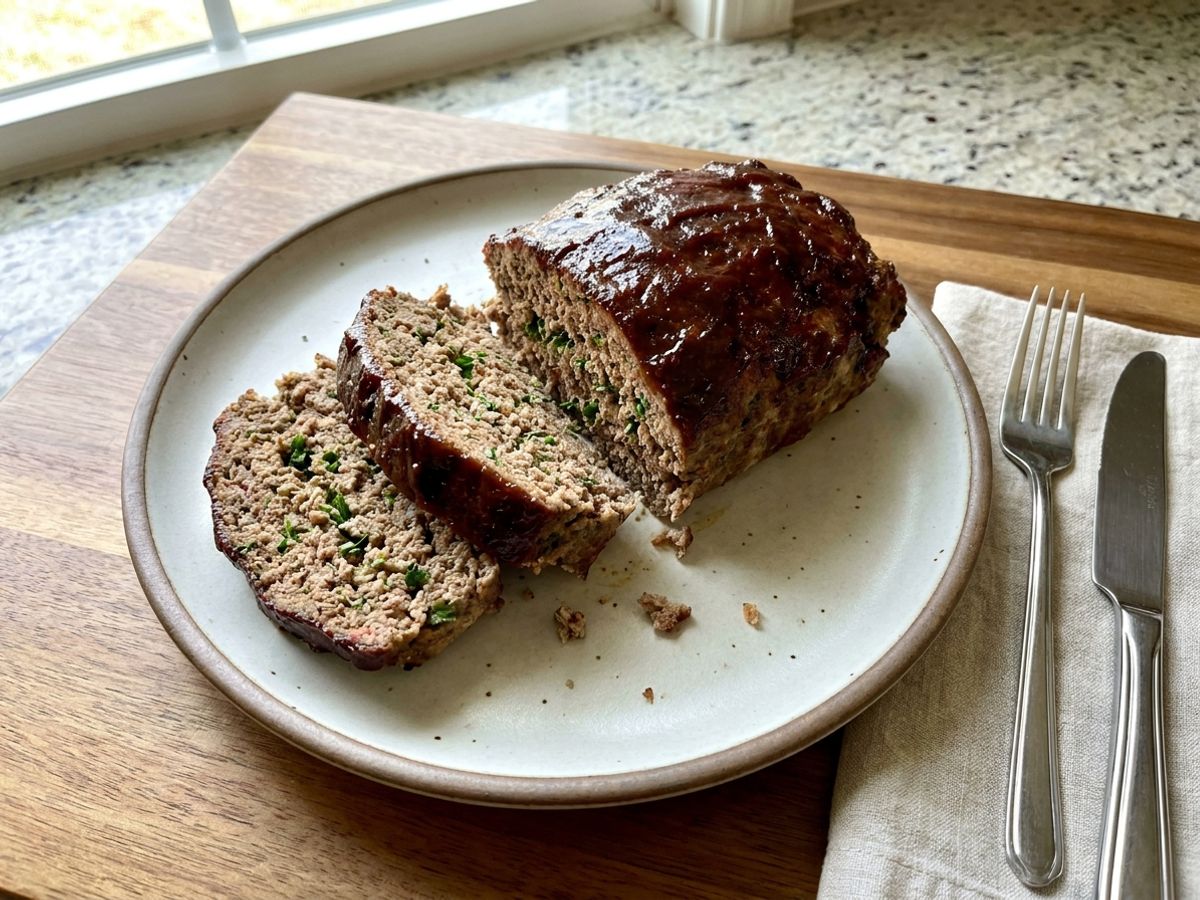
A low histamine meatloaf made with fresh ground beef, cassava flour, onion, parsley, thyme, and oregano under a no-tomato ketchup glaze.
Ingredients
Meatloaf
- 2 pounds fresh ground beef (85/15 or 90/10)
- 1 large egg, lightly beaten
- 1/3 cup cassava flour (or 1/2 cup gluten-free rice breadcrumbs)
- 1/2 small onion, finely grated (about 1/4 cup)
- 2 cloves garlic, finely minced
- 2 tablespoons fresh parsley, finely chopped
- 1 tablespoon fresh thyme leaves
- 1 teaspoon fresh oregano, finely chopped
- 1 teaspoon sea salt
- 1/4 teaspoon black pepper (optional)
- 3 tablespoons water or cold chicken broth
Glaze
- 1/3 cup no-tomato ketchup
- 1 tablespoon pure maple syrup
Instructions
Prep
- Preheat your oven to 350°F (175°C).
- Line a rimmed baking sheet with parchment paper, or lightly oil a 9x5-inch loaf pan.
Mix the Meatloaf
- In a large bowl, combine the cassava flour and water. Stir into a thick paste and let sit for 1 minute. This hydrates the flour so it binds without drying the meat.
- Add the egg, grated onion, garlic, parsley, thyme, oregano, salt, and pepper if using. Whisk together.
- Add the fresh ground beef. Mix gently with your hands until just combined. Do not overmix or the loaf will turn dense.
Shape and Glaze
- Transfer the mixture to the prepared pan or shape it into a free-form loaf about 9 inches long and 4 inches wide on the baking sheet.
- In a small bowl, stir together the no-tomato ketchup and maple syrup.
- Spread about half the glaze evenly over the top of the loaf. Reserve the rest for later.
Bake
- Bake for 40 minutes.
- Remove from the oven and brush the remaining glaze over the top.
- Return to the oven for another 10-15 minutes, until the internal temperature reaches 160°F (71°C) at the center.
- Let the meatloaf rest for 10 minutes before slicing. This helps the juices settle so the slices hold together.
Serve
- Slice into 6 thick portions.
- Serve warm with mashed potatoes, mashed cauliflower, or roasted potatoes. A spoonful of simple gravy over the slice is the classic finish.
Tips & Substitutions
- Use meat ground today. Freshness matters more for ground meat than whole cuts because of the extra surface area. Ask your butcher to grind to order, or grind your own at home. Avoid pre-ground meat that's been sitting in the tray.
- Grate the onion, don't chop it. Grated onion melts into the meat and keeps the texture tender. Large chopped pieces create pockets that fall apart when slicing.
- Swap cassava flour for tapioca or arrowroot starch. All three work as gentle binders. If using tapioca or arrowroot, start with 2 tablespoons of water and add up to 3 as needed, since those starches gel more quickly.
- Try ground turkey or a beef-pork blend. Half ground beef and half ground pork gives a classic meatloaf texture. Both options should be freshly ground.
- Sensitive to onion or garlic? Leave both out and double the fresh herbs. Onion and garlic can trigger symptoms in some people for reasons unrelated to histamine, such as FODMAP sensitivity.
- Egg-free option. If eggs are a trigger, swap the egg for a gelatin egg (1 tablespoon unflavored gelatin stirred into 3 tablespoons warm water). The texture will be a little softer but the loaf still holds.
- Don't overmix. Stop as soon as the meat and seasonings are just combined. Overmixing develops the proteins and gives you a rubbery loaf.
- Free-form bakes faster than a loaf pan. Shaping on a baking sheet exposes more surface to heat and shaves about 10 minutes off the cook time. A loaf pan may need an extra 5-15 minutes. Go by internal temperature, not the clock.
 Get the Histamine Recipes app
250+ low histamine recipes, every ingredient rated.


Why This Works
Fresh ground beef. Naturally low in histamine when purchased and cooked fresh. Because ground meat has far more surface area than a whole cut, freshness matters more here, so cook it the same day when possible.
Cassava flour and egg. Together they act as a binder without needing breadcrumbs soaked in milk. Both are commonly well tolerated and keep the loaf gluten-free and dairy-free.
Fresh parsley, thyme, and oregano. Fresh herbs deliver the savory flavor that traditional recipes get from Worcestershire sauce or spice blends. Fresh herbs are simple and additive-free, while some premade spice blends can include anti-caking agents or natural flavors that are harder to tolerate.
Grated onion and garlic. Onion and garlic are generally well tolerated in small, cooked amounts, but both can trigger symptoms in some people (often because of FODMAP sensitivity rather than histamine). If either bothers you, skip them and lean harder on the fresh herbs.
No-tomato ketchup glaze. The classic meatloaf glaze is built on tomato ketchup. Tomatoes and tomato-based condiments are common triggers, and ketchup can be higher risk because of processing and storage. This version uses the no-tomato ketchup (beets, carrots, apple, no vinegar) with a touch of maple syrup so it caramelizes on top under the oven heat.
Storage
Meatloaf is best eaten fresh the day it's made. Cooked ground beef accumulates histamine over time, even in the fridge. If you want to save portions, slice the loaf once it has cooled a little, wrap individual slices tightly, and freeze right away rather than refrigerating. Thaw and reheat only what you'll eat, and skip the fridge-leftover route if you tend to react to stored meat.
Not sure about an ingredient?
Histamine tolerance is personal, and most of working it out comes down to knowing where individual foods stand. Our low histamine food list rates 4,500+ foods and explains the reasoning behind each rating, including the foods whose level depends on how fresh they are or how they were stored. It is worth a look before you swap anything in this recipe.
Before you eat
A lot of people with histamine intolerance take a DAO enzyme supplement 15 to 30 minutes before a meal. DAO is the enzyme your body uses to break down the histamine in food, and taking it with meals supports that natural process. Curious how it works? See do DAO supplements actually work.
Affiliate link: if you buy through it, we may earn a commission at no extra cost to you. These statements have not been evaluated by the Food and Drug Administration. This product is not intended to diagnose, treat, cure, or prevent any disease.
For educational purposes only. Not medical advice. Consult a healthcare professional for personal guidance.
References
- Biogenic Amines in Meat and Meat Products: A Review of the Science and Future Perspectives — Schirone et al. (2022), Foods
- 13+ Low Histamine Flours & Grains — Low Histamine Eats
- Low Histamine Lasagna — The Histamine Friendly Kitchen
- Histamine and histamine intolerance — Maintz & Novak (2007)
- Histamine Intolerance: The Current State of the Art — Comas-Basté et al. (2020)
- Biogenic Amines in Plant-Origin Foods: Are They Frequently Underestimated in Low-Histamine Diets? — Sánchez-Pérez et al. (2021)
- Diamine Oxidase Supplementation Improves Symptoms in Patients with Histamine Intolerance — Schnedl et al. (2019)
- Histamine Intolerance — A Comprehensive Review — Jochum (2024)