 Histamine Tracker
Pot Roast

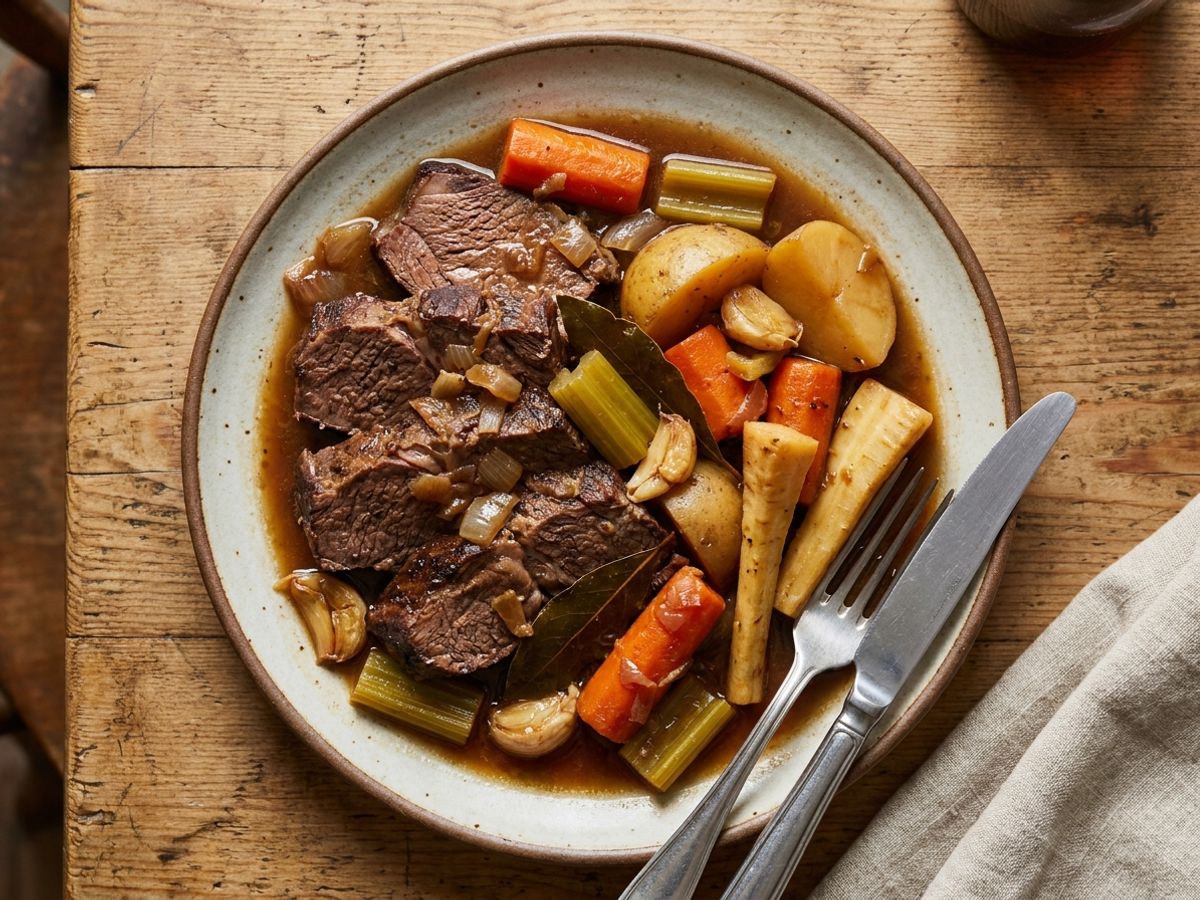
A low histamine pot roast of beef chuck braised with carrots, parsnips, potatoes, rosemary, and thyme in fresh broth.
Ingredients
Beef
- 3 to 3 1/2 pounds fresh beef chuck roast, well marbled (see Tips for sourcing)
- 1 1/2 teaspoons sea salt
- 1/4 teaspoon black pepper (optional)
- 2 tablespoons cassava flour or arrowroot starch (for dredging)
- 2 tablespoons olive oil
Aromatics
- 1 small yellow onion, cut into wedges (optional, see Tips)
- 3 cloves garlic, smashed (optional)
- 2 celery stalks, cut into 2-inch pieces
Broth & Seasoning
- 3 cups fresh chicken or beef broth (homemade preferred, see Tips)
- 1 bay leaf
- 2 sprigs fresh rosemary
- 3 sprigs fresh thyme (or 1/2 teaspoon dried)
Vegetables
- 5 medium carrots, peeled and cut into 2-inch chunks
- 2 medium parsnips, peeled and cut into 2-inch chunks
- 1 1/2 pounds Yukon Gold potatoes, peeled and cut into 2-inch chunks
Gravy
- 1 tablespoon arrowroot starch (or cassava or rice flour)
- 2 tablespoons cold water
- 2 tablespoons fresh parsley, chopped
Instructions
Sear
- Take the roast out of the fridge 30 minutes before cooking so it loses some of its chill. Pat it completely dry with paper towels. A dry surface is what gives you a good sear.
- Preheat the oven to 300°F (150°C).
- Season the roast all over with the salt and pepper if using, then dust it lightly with the cassava flour.
- Heat the olive oil in a large Dutch oven over medium-high heat until shimmering. Sear the roast 3 to 4 minutes per large side and 1 to 2 minutes on the ends, until deeply browned all over. Transfer to a plate.
Braise
- Reduce heat to medium. Add the onion wedges if using and cook 4 to 5 minutes until they start to soften and color.
- Add the garlic if using and the celery and cook 1 minute until fragrant.
- Pour in the broth and scrape up the browned bits from the bottom of the pot with a wooden spoon. Those bits carry most of the flavor.
- Return the roast and any juices to the pot. Tuck in the bay leaf, rosemary, and thyme. The liquid should come about halfway up the meat. Add a splash more broth or water if needed.
- Bring just to a gentle simmer, then cover and transfer to the oven. Braise for 2 hours.
- Add the carrots, parsnips, and potatoes around the roast. Cover and continue braising for another 60 to 90 minutes, until the beef is fork-tender and pulls apart easily and the vegetables are soft. The roast is done when it shreds with light pressure, around 200°F (93°C) internal.
Make the Gravy
- Move the roast and vegetables to a serving platter and tent loosely with foil. Discard the bay leaf and herb stems.
- Set the pot over medium heat and bring the braising liquid to a simmer. Skim off any excess fat from the top.
- Whisk the arrowroot with the cold water to make a smooth slurry. Stir it into the simmering liquid and cook 1 to 2 minutes until the gravy thickens and turns glossy.
- Taste and adjust salt. Stir in the fresh parsley.
- Slice or pull the roast, spoon the gravy over the meat and vegetables, and serve.
Tips & Substitutions
- Beef freshness matters more than anything else. Most beef sold in stores is aged for tenderness, often 7 to 21 days, and that aging is exactly what raises histamine. Many cuts are also wet-aged in their packaging by default, so ask your butcher for the freshest available roast, with the shortest time since the cut or pack date, and not dry-aged. Tell them you need it as fresh as possible, keep it cold on the way home, and cook it the same day or freeze it right away. If you freeze it, thaw it in the fridge and cook it promptly. Specialty suppliers like Northstar Bison and TruBeef sell unaged beef frozen soon after slaughter. See why freshness matters more than food lists.
- Cook it sooner rather than later. The less time the meat spends thawed before it hits the pot, the better. Plan to cook your roast the day you buy it, or thaw a frozen one in the fridge the night before and braise it the next day.
- Use fresh broth. A quick broth simmered the same day works best. Long-simmered bone broth can be higher in histamine, so if you are sensitive, use a short-simmered meat broth or just water with an extra pinch of salt and a couple more herb sprigs. If you use store-bought, check labels for yeast extract, "natural flavors," or other additives that some people react to.
- Onion and garlic are optional. They give pot roast its traditional depth, but some people with histamine intolerance or MCAS do not tolerate them. The roast still works with just celery as the aromatic base. Leave them out if either is a known trigger for you.
- No parsnips? Swap in turnip, rutabaga, or extra carrots. All hold their shape through a long braise.
- Pressure cooker version. A fresh chuck roast cooks in roughly 60 to 75 minutes under pressure, which keeps the total cooking time short. Add the vegetables for the last 10 minutes. Cool and refrigerate or freeze any leftovers right away rather than holding them warm.
- Serving ideas. Spoon the gravy over mashed potatoes or serve roasted carrots alongside. If you want a thinner pour-over sauce, our simple gravy uses the same arrowroot method. For another braised beef option, try our beef stew.
 Get the Histamine Recipes app
250+ low histamine recipes, every ingredient rated.


Why This Works
Fresh beef. Very fresh beef is typically lower in histamine than aged or processed meats, but the aging most beef goes through for tenderness raises that load, and a chuck roast can sit in the case a while. Tolerance varies, and aging and storage can both push histamine up. A fresh-cut or frozen-at-slaughter roast keeps the load lower, which makes a long braise like this a real option again. When fresh beef is hard to find, freezing a fresh roast yourself and thawing it in the fridge is the next best thing.
Carrots, parsnips, and potatoes. All naturally low in histamine and commonly tolerated. They give pot roast its classic body and gentle sweetness without needing tomato paste, red wine, or a packet of onion-soup mix.
Fresh rosemary and thyme. Fresh herbs are generally well tolerated and let you build deep, savory flavor without the high-histamine seasoning blends and bottled sauces that most pot roast recipes rely on.
Arrowroot gravy. Thickening the braising liquid with an arrowroot slurry, rather than a wheat-flour roux, keeps the dish gluten-free and avoids the red-wine or tomato-paste reductions that traditional gravies often use.
Onion and garlic (optional). Both contain small amounts of quercetin, a compound sometimes discussed in mast cell research, though individual response varies. They can also act as histamine liberators for sensitive people, so leave them out if they bother you. See why freshness matters more than food lists.
Storage
Best eaten fresh, ideally the day you cook it. Pot roast is one of those dishes people claim tastes better the next day, but protein-based leftovers accumulate histamine quickly, so it pays to plan portions for one meal. Do not leave the pot at room temperature or on a warm setting to cool. If you have extra, portion it into shallow containers so it chills fast, refrigerate quickly, and eat within 24 hours, or freeze single servings right after cooking. Some sensitive people react even to frozen leftovers, so go by your own tolerance.
Not sure about an ingredient?
Histamine tolerance is personal, and most of working it out comes down to knowing where individual foods stand. Our low histamine food list rates 4,500+ foods and explains the reasoning behind each rating, including the foods whose level depends on how fresh they are or how they were stored. It is worth a look before you swap anything in this recipe.
Before you eat
A lot of people with histamine intolerance take a DAO enzyme supplement 15 to 30 minutes before a meal. DAO is the enzyme your body uses to break down the histamine in food, and taking it with meals supports that natural process. Curious how it works? See do DAO supplements actually work.
Affiliate link: if you buy through it, we may earn a commission at no extra cost to you. These statements have not been evaluated by the Food and Drug Administration. This product is not intended to diagnose, treat, cure, or prevent any disease.
For educational purposes only. Not medical advice. Consult a healthcare professional for personal guidance.
References
- Biogenic Amines in Meat and Meat Products: A Review of the Science and Future Perspectives — Schirone et al. (2022), Foods
- Low Histamine Pot Roast Recipe — The Healing Connective
- A Guide to Meat and Poultry on a Low Histamine Diet — Tolerance
- Histamine and histamine intolerance — Maintz & Novak (2007)
- Histamine Intolerance: The Current State of the Art — Comas-Basté et al. (2020)
- Biogenic Amines in Plant-Origin Foods: Are They Frequently Underestimated in Low-Histamine Diets? — Sánchez-Pérez et al. (2021)
- Diamine Oxidase Supplementation Improves Symptoms in Patients with Histamine Intolerance — Schnedl et al. (2019)
- Histamine Intolerance — A Comprehensive Review — Jochum (2024)