 Histamine Tracker
Lasagna

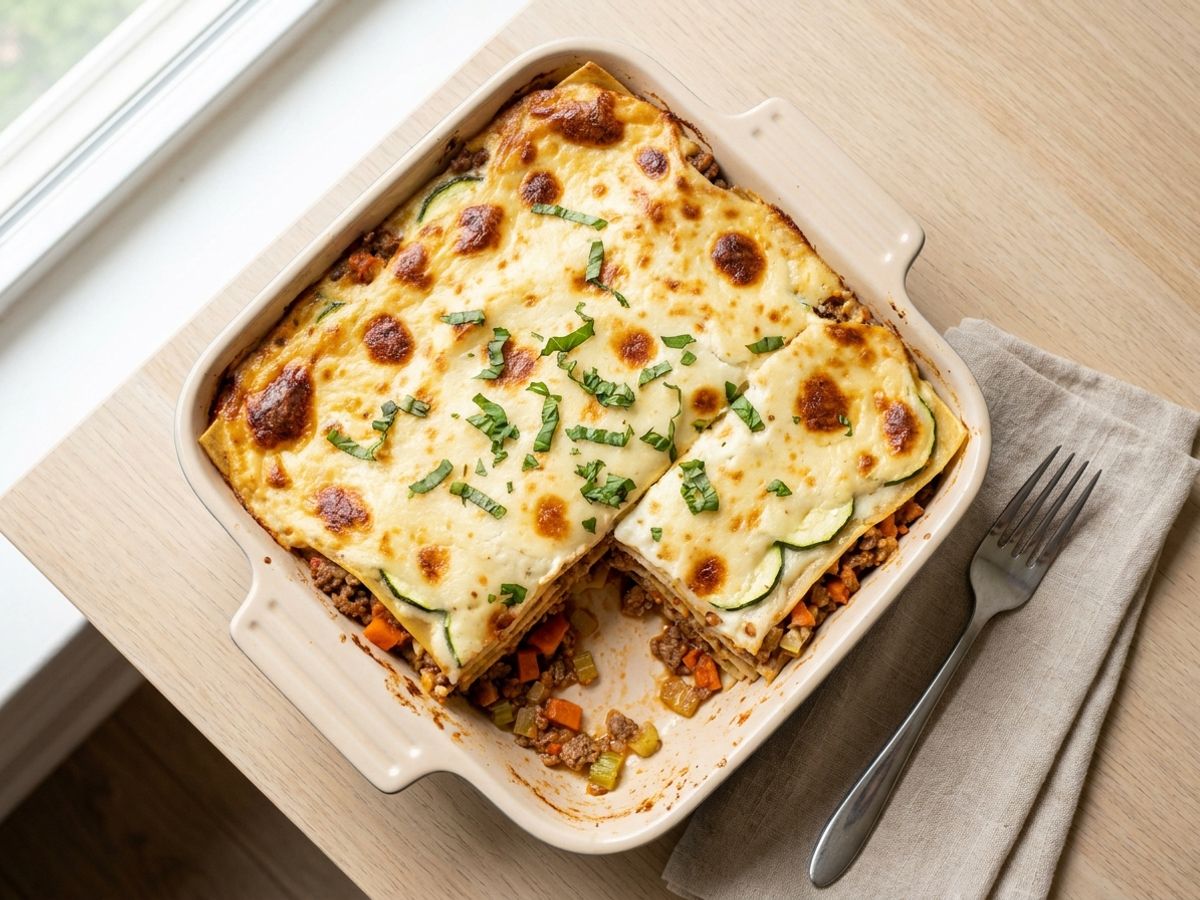
A low histamine lasagna with ground beef in no-tomato sauce, a brown rice flour and almond milk white sauce, zucchini, and gluten-free noodles.
Ingredients
For the Meat Sauce
- 1 lb fresh ground beef
- 1 tablespoon olive oil
- 1/2 onion, finely diced
- 2 cloves garlic, minced
- 1 medium carrot, grated
- 1 celery stalk, finely diced
- 2 cups no-tomato pasta sauce
- 1 teaspoon dried oregano
- 1 teaspoon dried basil
- 1/2 teaspoon sea salt
For the Dairy-Free White Sauce
- 3 tablespoons olive oil
- 3 tablespoons brown rice flour
- 2 cups unsweetened almond milk (check label for no carrageenan)
- 1/2 teaspoon sea salt
- Pinch of nutmeg (optional)
For Assembly
- 9 gluten-free lasagna noodles (rice or cassava flour based)
- 2 medium zucchini, thinly sliced lengthwise
- 2 tablespoons fresh basil, chopped
- 1 tablespoon olive oil (for greasing the dish)
Instructions
Make the Meat Sauce
- Heat olive oil in a large skillet over medium heat.
- Add the onion, carrot, and celery. Cook for 5 minutes until softened.
- Add the garlic and cook for 1 minute more.
- Add the ground beef and break it up with a spatula. Cook for 6-8 minutes until browned and cooked through to 160°F (71°C).
- Stir in the no-tomato pasta sauce, oregano, dried basil, and salt.
- Simmer for 10 minutes until slightly thickened. Remove from heat.
Make the White Sauce
- Heat olive oil in a medium saucepan over medium heat.
- Whisk in the brown rice flour and cook for 1 minute, stirring constantly, to form a roux.
- Slowly pour in the almond milk, whisking continuously to prevent lumps.
- Add salt and nutmeg if using.
- Cook for 5-7 minutes, whisking often, until the sauce thickens to a pourable gravy. If it gets too thick, whisk in a splash more almond milk. Remove from heat.
Prep the Zucchini and Cook the Noodles
- Lay the zucchini slices on a kitchen towel, sprinkle lightly with salt, and let sit 10 minutes. Blot dry. This keeps the lasagna from getting soupy.
- Bring a large pot of salted water to a boil.
- Cook the lasagna noodles 1-2 minutes less than the package directions call for, so they finish cooking in the oven without getting mushy.
- Drain and lay flat on a sheet of parchment to prevent sticking.
Assemble and Bake
- Preheat your oven to 375°F (190°C).
- Grease a 9x13 inch baking dish with olive oil.
- Spread a thin layer of meat sauce on the bottom of the dish.
- Layer 3 cooked noodles across the bottom.
- Spread one third of the remaining meat sauce over the noodles.
- Lay half the zucchini slices on top.
- Drizzle one third of the white sauce over the zucchini.
- Repeat: 3 noodles, one third meat sauce, remaining zucchini, one third white sauce.
- Top with the last 3 noodles, remaining meat sauce, and remaining white sauce.
- Cover loosely with foil and bake for 30 minutes.
- Remove foil and bake for 15 more minutes until lightly golden on top and the center reaches 165°F (74°C).
- Let rest for 10 minutes before slicing. Scatter fresh basil over the top just before serving.
Tips & Substitutions
- Use fresh ground beef. Ask your butcher to grind to order if possible. Fresh ground turkey works as a substitute.
- The no-tomato pasta sauce recipe is the foundation here. Make a double batch earlier in the week and this lasagna comes together faster. The sauce is what carries the recipe, so don't skip the homemade version.
- For a grain-free version, swap the lasagna noodles for thinly sliced sweet potato roasted for 10 minutes before layering, or use more zucchini strips. Note the bake time may shorten by 5-10 minutes.
- Fresh ricotta is an option if you tolerate fresh dairy. Dollop 1 cup of fresh whole-milk ricotta across the middle layer along with the white sauce. Skip the aged cheeses (parmesan, aged cheddar, low-moisture shredded mozzarella) since those concentrate histamine as they age. Fresh mozzarella is closer to ricotta and may work for some people.
- No-boil noodles can shortcut the recipe, but add an extra 1/4 cup of almond milk to the white sauce so the noodles have enough liquid to soften in the oven.
- Use baked low histamine meatballs instead of loose ground beef for a chunkier, hearty version. Slice them in half and arrange across the middle layer in place of the browned meat.
 Get the Histamine Recipes app
250+ low histamine recipes, every ingredient rated.


Why This Works
Ground beef. Fresh ground beef is generally well tolerated when used the same day. Cooking it right into the sauce keeps the protein moving straight from raw to plated.
No-tomato pasta sauce. Beets, carrots, and butternut squash give a red color and a savory-sweet depth that stands in for tomato without the histamine load.
Brown rice flour bechamel. A stand-in for aged cheese layers. Aged cheeses concentrate histamine as they ripen, so a simple roux-based white sauce replaces them here.
Zucchini. Naturally low in histamine and commonly tolerated. It adds a vegetable layer and soaks up some of the sauce, which keeps the lasagna from feeling heavy.
Fresh basil and oregano. Both are naturally low in histamine and give the Italian flavor profile without relying on long-aged or fermented ingredients.
Storage
Best eaten fresh from the oven. This is a protein-heavy dish that accumulates histamine over time, so plan to serve it the day you bake it. If you need to store portions, cool quickly, wrap individually, and freeze within an hour. Reheat from frozen in a single sitting rather than reheating repeatedly.
Not sure about an ingredient?
Histamine tolerance is personal, and most of working it out comes down to knowing where individual foods stand. Our low histamine food list rates 4,500+ foods and explains the reasoning behind each rating, including the foods whose level depends on how fresh they are or how they were stored. It is worth a look before you swap anything in this recipe.
Before you eat
A lot of people with histamine intolerance take a DAO enzyme supplement 15 to 30 minutes before a meal. DAO is the enzyme your body uses to break down the histamine in food, and taking it with meals supports that natural process. Curious how it works? See do DAO supplements actually work.
Affiliate link: if you buy through it, we may earn a commission at no extra cost to you. These statements have not been evaluated by the Food and Drug Administration. This product is not intended to diagnose, treat, cure, or prevent any disease.
For educational purposes only. Not medical advice. Consult a healthcare professional for personal guidance.
References
- Low Histamine Lasagna — The Histamine Friendly Kitchen
- 9 Low Histamine Cheeses (Complete Guide + Recipes) — Low Histamine Eats
- Low Histamine, Low FODMAP Pasta Sauce — Mast Cell 360
- Histamine and histamine intolerance — Maintz & Novak (2007)
- Histamine Intolerance: The Current State of the Art — Comas-Basté et al. (2020)
- Biogenic Amines in Plant-Origin Foods: Are They Frequently Underestimated in Low-Histamine Diets? — Sánchez-Pérez et al. (2021)
- Diamine Oxidase Supplementation Improves Symptoms in Patients with Histamine Intolerance — Schnedl et al. (2019)
- Histamine Intolerance — A Comprehensive Review — Jochum (2024)