 Histamine Tracker
Chili

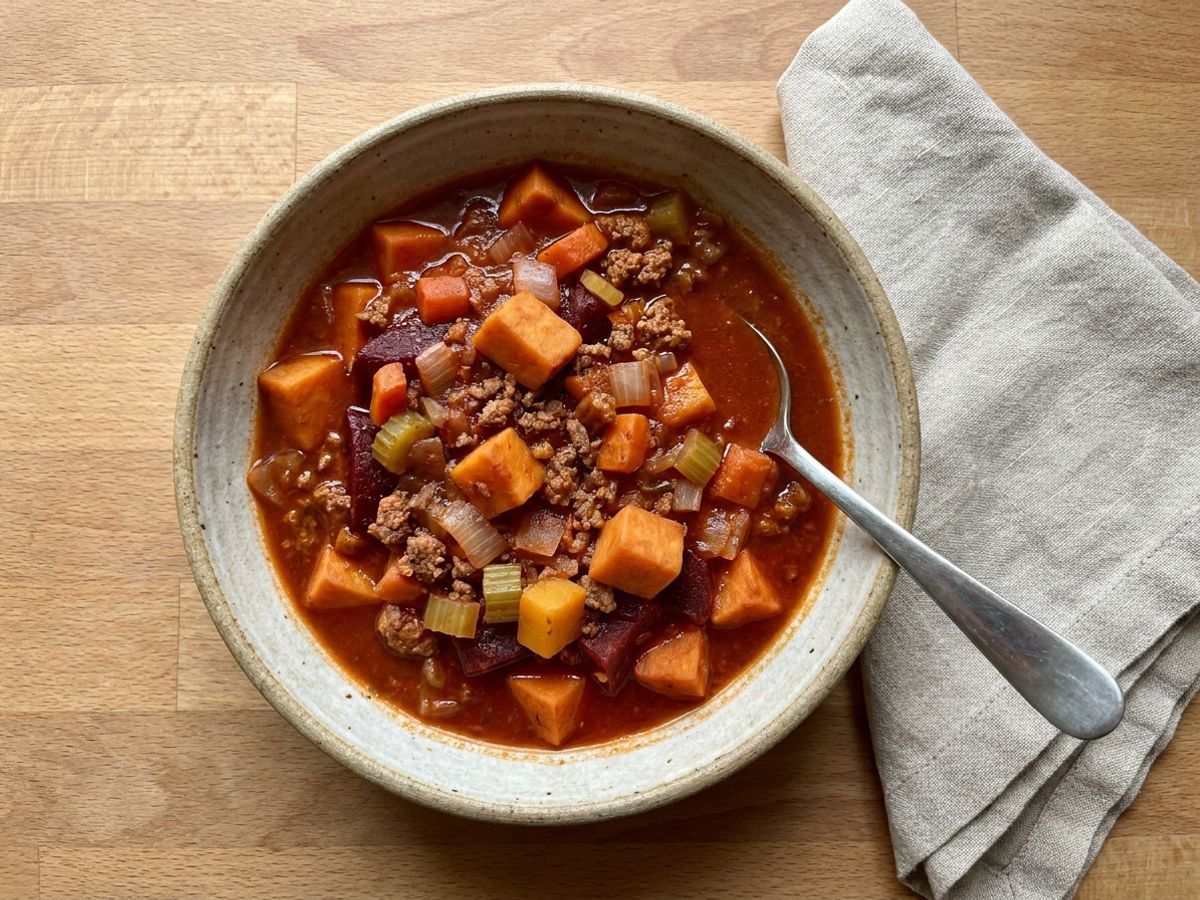
A low histamine tomato-free chili with ground beef, sweet potato, celery, cumin, and a beet, carrot, and butternut squash base.
Ingredients
Nomato Base
- 2 medium beets, peeled and diced (about 300g)
- 2 medium carrots, peeled and chopped
- 1 cup butternut squash, cubed
- 2 tablespoons olive oil, divided
- 1 cup water or fresh homemade broth
Chili
- 1 pound very fresh ground beef (same-day or freshly thawed from frozen)
- 1 small yellow onion, diced (optional)
- 2 cloves garlic, minced (optional)
- 1 stalk celery, diced
- 1 medium sweet potato, peeled and cut into 1/2-inch cubes
- 1 medium carrot (in addition to those in the nomato base), peeled and sliced into thin rounds
- 2 cups fresh homemade broth (beef or vegetable)
- 1 tablespoon fresh oregano leaves, chopped (or 1 teaspoon dried)
- 1 teaspoon ground cumin
- 1/2 teaspoon sea salt, plus more to taste
- 2 tablespoons fresh parsley or cilantro, chopped (for finishing)
Instructions
Roast the Nomato Base
- Preheat your oven to 400°F (200°C).
- Toss the beets, 2 chopped carrots, and butternut squash with 1 tablespoon olive oil on a baking sheet.
- Roast for 25-30 minutes until tender and lightly caramelized.
- Transfer the roasted vegetables to a blender with 1 cup water or broth. Blend until smooth. Set aside.
Brown the Beef
- Heat 1 tablespoon olive oil in a large heavy pot or Dutch oven over medium-high heat.
- Add the ground beef and break it up with a wooden spoon. Cook 5-6 minutes, stirring occasionally, until no pink remains.
- If there is excess fat, spoon off all but about 1 tablespoon.
Build the Chili
- Reduce heat to medium. Add the onion (if using) and celery. Cook 4-5 minutes until softened.
- Add the garlic (if using) and cook 30 seconds until fragrant.
- Stir in the cumin and oregano. Cook 30 seconds to bloom the spices.
- Add the sweet potato, sliced carrot, blended nomato base, and 2 cups broth. Stir well.
- Bring to a gentle boil, then reduce to a low simmer.
Simmer and Finish
- Cover partially and simmer 20-25 minutes, stirring occasionally, until the sweet potato is tender and the chili has thickened to your liking.
- Taste and adjust salt.
- Ladle into bowls and top with fresh parsley or cilantro.
Tips & Substitutions
- Buy ground beef the same day you cook it. Freshness matters most for ground meat because surface area is high. If your butcher grinds to order, even better. Avoid beef that has been sitting in the fridge for several days. If you need to buy ahead, freeze it right away and thaw overnight in the fridge.
- Most sensitive option: use whole-cut beef. If ground beef bothers you even when fresh, cube a small very-fresh chuck or sirloin steak and brown it the same way. Whole cuts have less surface area and tend to be better tolerated.
- For broth, keep it short-simmered. Long-cooked bone broth can be higher in histamine. Use a quick-cooked homemade broth (simmered 1-2 hours, used same day) or swap in water with an extra pinch of salt if you are very sensitive.
- Shortcut the base with no-tomato pasta sauce. If you have a batch already made, use 2 cups of it in place of the roasted and blended nomato base. Skip the roasting step entirely.
- Swap the beef for ground turkey. Works the same way. Use ground turkey thigh rather than breast for better flavor and texture.
- Make it vegan-adaptable. Skip the beef and double the sweet potato. Add 1 cup of cooked white beans if you tolerate them. Use vegetable broth.
- Paprika is borderline. Some people add a pinch of sweet (not smoked) paprika for color. It is a nightshade and not universally well tolerated, so try it only if you know you do well with it.
- Skip onion and garlic if they are triggers for you. Celery and fresh herbs still give the chili depth.
- Serve with bread. A square of low histamine cornbread, a slice of low histamine sandwich bread, or cassava soda bread is the classic chili pairing and helps round out the meal.
 Get the Histamine Recipes app
250+ low histamine recipes, every ingredient rated.


Why This Works
Fresh ground beef. Beef is commonly tolerated when very fresh. Ground meat spoils faster than whole cuts, so same-day cooking matters more than with other proteins.
Beets, carrots, and butternut squash. All are low in histamine and generally well tolerated. Together they create the deep color and mild sweetness that tomatoes usually bring, without the acidity.
Sweet potato. Low in histamine and commonly tolerated. It thickens the chili as it cooks and adds a mild sweetness that balances the earthier beets.
Cumin and fresh oregano. Single-note spices are usually better tolerated than premade chili powder blends, which often contain paprika, cayenne, or aged components. Fresh oregano tends to be better tolerated than older dried versions.
No tomatoes or chili powder. Tomatoes are a common trigger in histamine intolerance, and traditional chili powder blends often contain nightshade-based spices that can cause reactions. The roasted vegetable base provides the color and body without those triggers.
Storage
Best eaten fresh from the pot. As a ground-beef dish, this chili accumulates histamine as it sits. If you need to store leftovers, cool quickly, refrigerate within 30 minutes, and eat within 24 hours. For longer storage, portion into single servings and freeze immediately after cooking. Some sensitive people react even to frozen leftovers, so notice how your body responds.
Not sure about an ingredient?
Histamine tolerance is personal, and most of working it out comes down to knowing where individual foods stand. Our low histamine food list rates 4,500+ foods and explains the reasoning behind each rating, including the foods whose level depends on how fresh they are or how they were stored. It is worth a look before you swap anything in this recipe.
Before you eat
A lot of people with histamine intolerance take a DAO enzyme supplement 15 to 30 minutes before a meal. DAO is the enzyme your body uses to break down the histamine in food, and taking it with meals supports that natural process. Curious how it works? See do DAO supplements actually work.
Affiliate link: if you buy through it, we may earn a commission at no extra cost to you. These statements have not been evaluated by the Food and Drug Administration. This product is not intended to diagnose, treat, cure, or prevent any disease.
For educational purposes only. Not medical advice. Consult a healthcare professional for personal guidance.
References
- Low Histamine Chili Recipe — Mast Cell 360
- Low Histamine Chili — Less With Laur
- Histamine Friendly Nomato Sauce — The Histamine Friendly Kitchen
- Histamine and histamine intolerance — Maintz & Novak (2007)
- Histamine Intolerance: The Current State of the Art — Comas-Basté et al. (2020)
- Biogenic Amines in Plant-Origin Foods: Are They Frequently Underestimated in Low-Histamine Diets? — Sánchez-Pérez et al. (2021)
- Diamine Oxidase Supplementation Improves Symptoms in Patients with Histamine Intolerance — Schnedl et al. (2019)
- Histamine Intolerance — A Comprehensive Review — Jochum (2024)