 Histamine Tracker
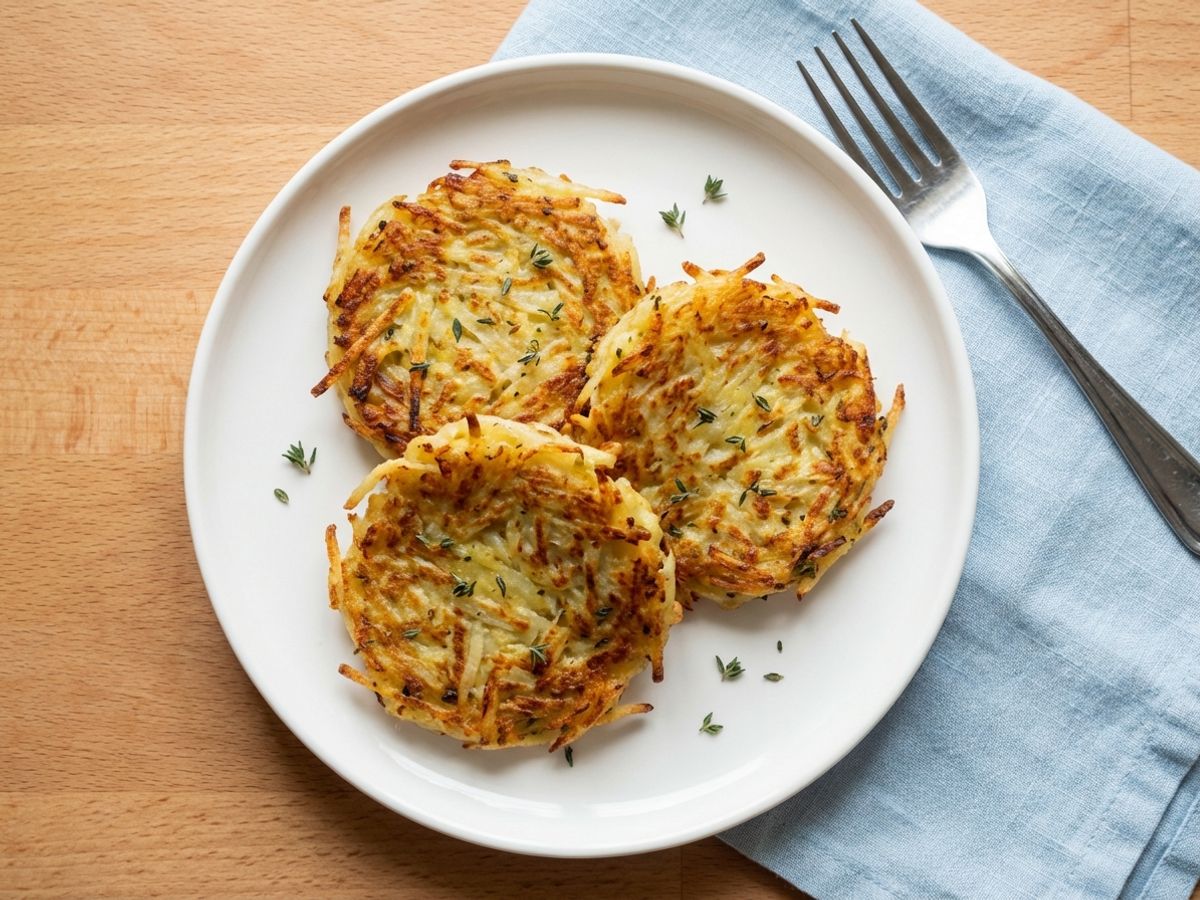
Crispy Potato Fritters

Low histamine potato fritters made with shredded russet potatoes, egg yolk, cassava flour, and fresh thyme.
Ingredients
- 2 large russet potatoes (about 1 pound)
- 1 egg yolk (or 1 whole egg if tolerated)
- 2 tablespoons cassava flour or rice flour
- 1/2 teaspoon sea salt
- 1/4 teaspoon black pepper (optional, omit if spices trigger symptoms)
- 1 teaspoon fresh thyme leaves (optional)
- 3-4 tablespoons avocado oil or coconut oil for frying
Instructions
Prep the Potatoes
- Peel the potatoes and grate them using a box grater or food processor.
- Place the shredded potatoes in a clean kitchen towel or cheesecloth.
- Squeeze firmly to remove as much liquid as possible. This step is essential for crispy fritters.
- Transfer the dried potatoes to a large bowl.
Mix
- Add the egg yolk, flour, salt, pepper if using, and thyme if using to the potatoes.
- Mix until everything is well combined.
Fry
- Heat the oil in a large skillet over medium-high heat until shimmering.
- Take about 2 tablespoons of the potato mixture and form into a flat patty about 1/2-inch thick.
- Carefully place patties in the hot oil. Do not overcrowd the pan.
- Fry for 3-4 minutes per side until golden brown and crispy.
- Transfer to a paper towel-lined plate to drain.
- Serve immediately while hot and crispy.
Tips & Substitutions
- Squeeze the potatoes well. Removing excess moisture is the most important step for crispy fritters. A clean kitchen towel works better than paper towels.
- If egg whites bother you, use just the yolk and add 1 extra tablespoon flour. The extra starch compensates for the lost binding from the white.
- Sweet potato works instead of regular potato. Sweet potato fritters will be slightly softer and sweeter.
- Cassava flour or rice flour both work as binders. Use whichever gluten-free flour you have on hand.
- Keep the patties thin, about 1/2-inch thick. Thinner fritters cook through evenly and get crispier.
 Get the Histamine Recipes app
250+ low histamine recipes, every ingredient rated.


Why This Works
Potatoes. Naturally low in histamine and generally well tolerated. They are a safe, filling starch base for many people with histamine intolerance.
Egg yolk. Eggs are generally low in histamine, but some people react to eggs, often the white. Using just the yolk is a common strategy for those who are sensitive.
Avocado oil or coconut oil. Both are stable cooking fats well suited for frying. They avoid the concerns of dairy butter and are generally well tolerated.
Fresh thyme. Fresh herbs are generally safe and add flavor without processed seasoning blends.
Storage
Best eaten immediately while hot and crispy. Fritters lose their crunch quickly once cooled. If you have leftovers, reheat in a skillet over medium heat rather than microwaving. Avoid storing for more than a few hours, as egg-containing dishes are better eaten fresh.
Not sure about an ingredient?
Histamine tolerance is personal, and most of working it out comes down to knowing where individual foods stand. Our low histamine food list rates 4,500+ foods and explains the reasoning behind each rating, including the foods whose level depends on how fresh they are or how they were stored. It is worth a look before you swap anything in this recipe.
Before you eat
A lot of people with histamine intolerance take a DAO enzyme supplement 15 to 30 minutes before a meal. DAO is the enzyme your body uses to break down the histamine in food, and taking it with meals supports that natural process. Curious how it works? See do DAO supplements actually work.
Affiliate link: if you buy through it, we may earn a commission at no extra cost to you. These statements have not been evaluated by the Food and Drug Administration. This product is not intended to diagnose, treat, cure, or prevent any disease.
For educational purposes only. Not medical advice. Consult a healthcare professional for personal guidance.
References
- Are Potatoes High in Histamine? — Histamine Doctor
- 30 Low Histamine Diet Breakfast Recipes & Ideas — The Allergy Chef
- Is Olive Oil High Histamine? — Histamine Doctor
- Histamine and histamine intolerance — Maintz & Novak (2007)
- Histamine Intolerance: The Current State of the Art — Comas-Basté et al. (2020)
- Biogenic Amines in Plant-Origin Foods: Are They Frequently Underestimated in Low-Histamine Diets? — Sánchez-Pérez et al. (2021)
- Diamine Oxidase Supplementation Improves Symptoms in Patients with Histamine Intolerance — Schnedl et al. (2019)
- Histamine Intolerance — A Comprehensive Review — Jochum (2024)