 Histamine Tracker
Rice Porridge (Congee)

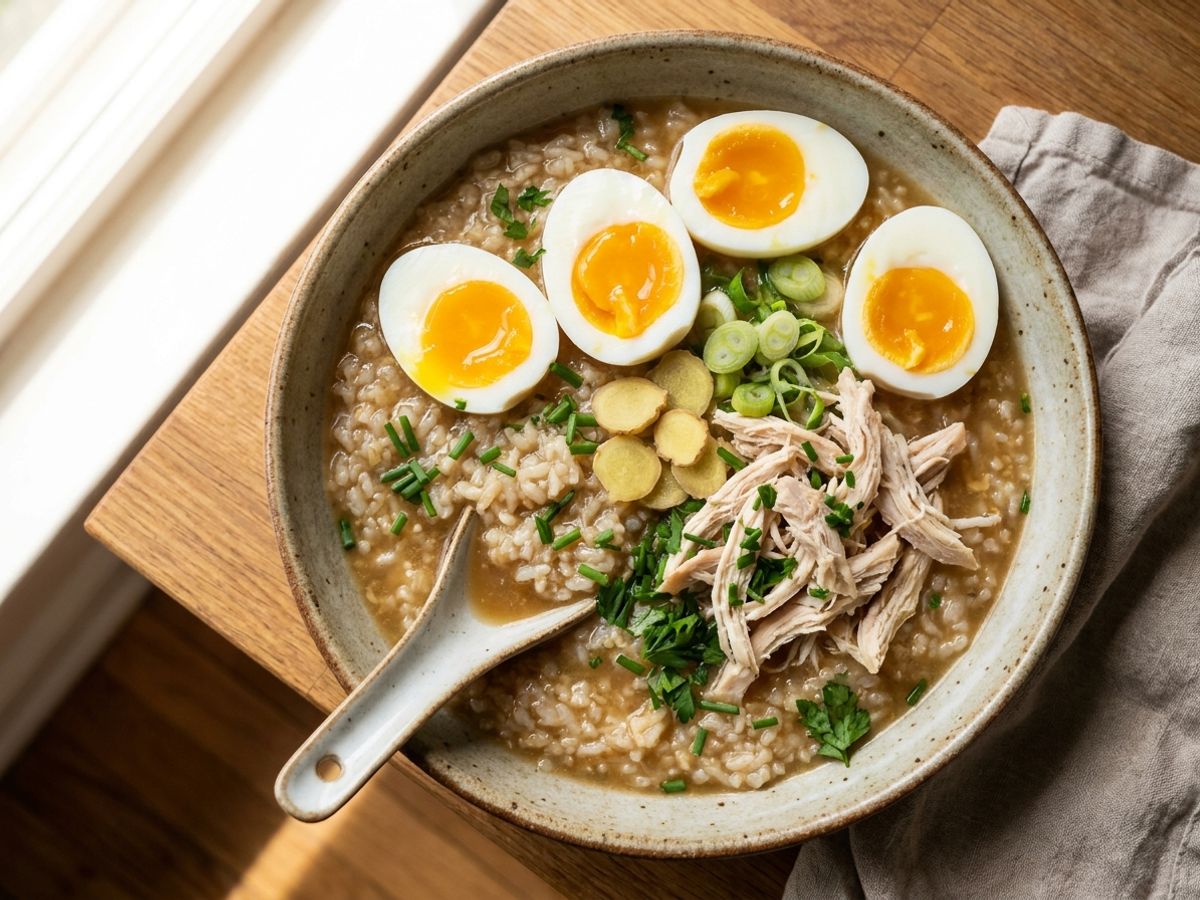
A low histamine rice porridge with jasmine rice, homemade chicken broth, fresh ginger, and green onions.
Ingredients
Porridge
- 1 cup jasmine or long-grain white rice
- 8 cups homemade chicken broth (or 8 cups water plus 1 1/2 teaspoons salt)
- 1 inch piece fresh ginger, peeled and cut into thin coins
- 1/2 teaspoon salt, plus more to taste
To Finish
- 3 green onions, sliced thin
- 1 teaspoon olive oil or coconut oil (optional)
Optional Toppings
- 4 soft-boiled eggs
- 1 cup shredded chicken, cooked fresh the same day
- Fresh chives or parsley, chopped
Instructions
Start the Pot
- Rinse the rice under cold water for about 30 seconds, until the water runs mostly clear. Drain it well.
- Combine the rice, the broth or salted water, the ginger coins, and the salt in a large heavy pot.
- Bring it to a boil over high heat, stirring once so no grains stick to the bottom.
Simmer Slowly
- Drop the heat to low and set the lid on ajar, leaving a gap for steam.
- Simmer for 45 to 60 minutes. Stir every 10 minutes and scrape along the bottom of the pot each time, since the starch settles and catches there.
- At 45 minutes the grains have burst and the porridge is loose and pourable. By 60 minutes it is thick enough to hold a spoon upright.
- If it thickens further than you want, stir in hot water a splash at a time until it loosens.
Season and Serve
- Fish out the ginger coins with a fork if you want a milder bowl, or leave them in.
- Taste and add salt. Porridge takes more salt than you expect, so add it in small amounts and taste again.
- Ladle into bowls. Scatter the green onions over the top, add a small drizzle of oil, and set a soft-boiled egg or a handful of shredded chicken on each bowl if you are using them.
Tips & Substitutions
- Broth or salted water, both work. Homemade chicken broth gives the fullest flavor. Make it ahead and freeze it the same day in portions, then thaw a batch for the pot. Water with extra salt is the fallback, and with the ginger and green onions it still makes a good bowl. Skip boxed stock, which is usually built on yeast extract and long-cooked concentrates.
- Keep the broth simmer short and the rice simmer long. Long-simmered stock is flagged on most low histamine lists, which is why the linked broth recipe keeps the simmer short and freezes it right away. The rice is what needs the slow hour, and rice does not behave the same way.
- Stir and scrape on a timer. Congee sticks and scorches quietly. Setting a 10 minute timer and dragging a wooden spoon across the bottom of the pot each time is the whole trick.
- Jasmine breaks down faster than long-grain. Jasmine rice gives a creamier porridge in less time. Long-grain white rice holds more shape and may want the full hour. Either one benefits from a rinse first.
- Put the egg on at the end. A soft-boiled egg cooked fresh, six and a half minutes from boiling water, sits well on top. If you would rather not time it, stir a beaten egg into the hot porridge off the heat, or serve scrambled eggs alongside.
- Cook the chicken the same day you eat it. Poach or roast a breast, shred it, and add it at the table rather than simmering it in the pot. Chicken that has been cooked and stored is worth skipping if you are sensitive.
 Get the Histamine Recipes app
250+ low histamine recipes, every ingredient rated.


Why This Works
White rice. Generally considered low histamine and one of the plainest starches available, which is part of why congee is a standard first food when someone is easing back onto solids. The long simmer only changes the texture.
Homemade chicken broth. Broth made at home lets you control both the freshness of the meat and how long it cooks. Commonly tolerated when the simmer is kept short and it is cooled and frozen the same day.
Fresh ginger. A commonly tolerated aromatic that gives the pot its backbone. Sliced into coins it infuses gently and comes out easily, so you can dial the intensity by leaving it in longer or pulling it early.
Green onions. Added raw at the end, they give a sharp green note against a very soft bowl. Generally considered low histamine, though tolerance to alliums varies from person to person.
Storage
Congee is at its best the hour it is made. Eat it the day it is made. Portion any extra and freeze it the same day, within an hour of cooking, then reheat it from frozen in a pot with a good splash of water or broth and stir until it loosens. Do not add the eggs or chicken until you are serving. Cooking a half batch is a reasonable move if you would rather not freeze any.
Not sure about an ingredient?
Histamine tolerance is personal, and most of working it out comes down to knowing where individual foods stand. Our low histamine food list rates 4,500+ foods and explains the reasoning behind each rating, including the foods whose level depends on how fresh they are or how they were stored. It is worth a look before you swap anything in this recipe.
Before you eat
A lot of people with histamine intolerance take a DAO enzyme supplement 15 to 30 minutes before a meal. DAO is the enzyme your body uses to break down the histamine in food, and taking it with meals supports that natural process. Curious how it works? See do DAO supplements actually work.
Affiliate link: if you buy through it, we may earn a commission at no extra cost to you. These statements have not been evaluated by the Food and Drug Administration. This product is not intended to diagnose, treat, cure, or prevent any disease.
For educational purposes only. Not medical advice. Consult a healthcare professional for personal guidance.
References
- Meat Broth Recipe: Low Histamine Bone Broth Alternative — Mast Cell 360
- Bone Broth / Chicken Broth Recipe — The Histamine Friendly Kitchen
- Low Histamine Diet Foods List — Through The Fibro Fog
- Histamine and histamine intolerance — Maintz & Novak (2007)
- Histamine Intolerance: The Current State of the Art — Comas-Basté et al. (2020)
- Biogenic Amines in Plant-Origin Foods: Are They Frequently Underestimated in Low-Histamine Diets? — Sánchez-Pérez et al. (2021)
- Diamine Oxidase Supplementation Improves Symptoms in Patients with Histamine Intolerance — Schnedl et al. (2019)
- Histamine Intolerance — A Comprehensive Review — Jochum (2024)