 Histamine Tracker
Cassava Flour Crepes

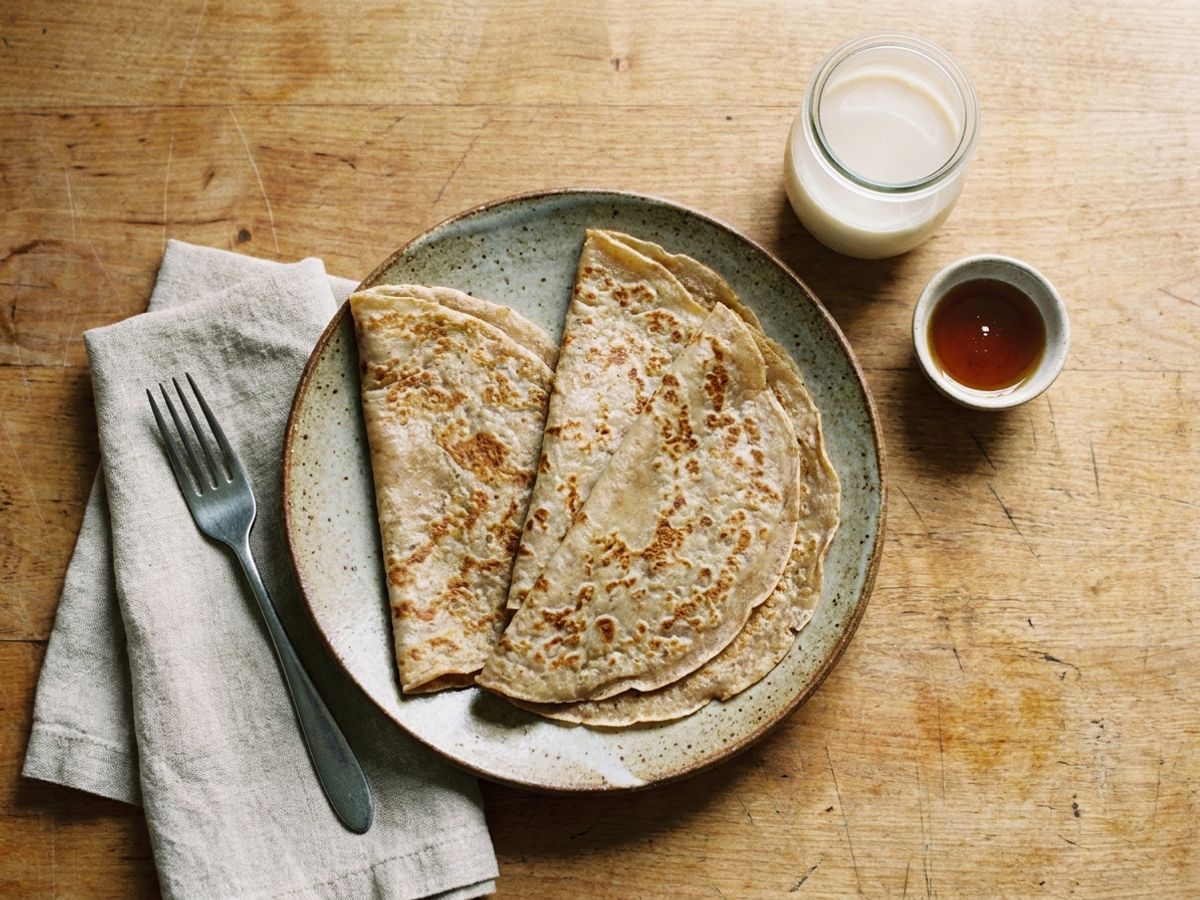
Low histamine crepes made with cassava flour, eggs, dairy-free milk, and a little maple syrup.
Ingredients
- 3 large eggs
- 3/4 cup dairy-free milk (coconut or oat), plus more to thin
- 1/2 cup cassava flour (about 72 grams)
- 2 tablespoons olive oil or melted coconut oil, plus more for the pan
- 1 tablespoon maple syrup (optional, for sweet crepes)
- 1/4 teaspoon sea salt
Instructions
Batter
- In a bowl, whisk together the eggs, dairy-free milk, oil, maple syrup if using, and salt until smooth.
- Sift in the cassava flour and whisk until no lumps remain.
- Let the batter rest for 5 to 10 minutes so the flour can hydrate. It should be thin and pourable, about the consistency of heavy cream. If it has thickened, whisk in a little more milk or water, a tablespoon at a time.
Cook
- Heat an 8 to 10 inch nonstick or ceramic skillet over medium heat. Lightly grease with oil.
- Pour about 1/4 cup of batter into the center of the pan. Immediately lift the pan and swirl it so the batter spreads into a thin, even circle across the bottom.
- Cook for 1 to 2 minutes, until the edges lift away from the pan and the top looks set.
- Slide a thin spatula underneath and flip carefully. Cook the second side for another 30 to 60 seconds, until lightly golden.
- Slide the crepe onto a plate. Repeat with the remaining batter, greasing the pan lightly between crepes and stacking the finished crepes to keep them warm.
Tips & Substitutions
- Keep the batter thin. Cassava flour absorbs liquid as it sits, so rest it and then loosen with a splash of milk or water until it pours like heavy cream. A thin batter is what makes these flexible crepes rather than thicker pancakes.
- Swap the milk and oil. Use full-fat coconut milk or oat milk, whichever you tolerate, and olive or melted coconut oil. Check dairy-free milks for additives like guar gum or carrageenan.
- Prefer butter? If you tolerate dairy, cook the crepes in a little butter instead of oil for a richer flavor.
- Sweet fillings. Roll them around stewed apples, fresh berries, or a spread of pumpkin seed butter with a drizzle of maple syrup.
- Savory fillings. Leave out the maple syrup and fill the crepes with scrambled eggs and sauteed zucchini, or shredded chicken. Their thin, flexible texture makes them work well as wraps.
 Get the Histamine Recipes app
250+ low histamine recipes, every ingredient rated.


Why This Works
Cassava flour. A grain-free, gluten-free flour that is naturally low in histamine. It creates a thin, pliable batter closer to wheat crepes than most alternative flours.
Eggs. Eggs themselves contain no histamine, though egg whites can trigger reactions in some people. They bind the batter and give the crepes their flexibility, so if egg whites bother you, using extra yolks in place of a whole egg still helps hold them together.
Dairy-free milk. Coconut or oat milk keeps the recipe dairy-free. Fresh cow's milk is not typically high in histamine, but aged or fermented dairy is more commonly a problem, so a dairy-free milk is a good choice for those avoiding it entirely. Check labels for additives.
Olive or coconut oil. A small amount of fresh oil keeps the crepes from sticking and is generally well tolerated.
Storage
Crepes are best eaten fresh and warm, right off the skillet. If you make them ahead, stack them with a piece of parchment between each one and reheat briefly in a dry or lightly oiled skillet. Like most cooked foods, they are best eaten within a day, since histamine tends to build up in cooked leftovers the longer they are stored, and sensitive individuals may prefer eating them fresh.
Not sure about an ingredient?
Histamine tolerance is personal, and most of working it out comes down to knowing where individual foods stand. Our low histamine food list rates 4,500+ foods and explains the reasoning behind each rating, including the foods whose level depends on how fresh they are or how they were stored. It is worth a look before you swap anything in this recipe.
Before you eat
A lot of people with histamine intolerance take a DAO enzyme supplement 15 to 30 minutes before a meal. DAO is the enzyme your body uses to break down the histamine in food, and taking it with meals supports that natural process. Curious how it works? See do DAO supplements actually work.
Affiliate link: if you buy through it, we may earn a commission at no extra cost to you. These statements have not been evaluated by the Food and Drug Administration. This product is not intended to diagnose, treat, cure, or prevent any disease.
For educational purposes only. Not medical advice. Consult a healthcare professional for personal guidance.
References
- Low Histamine Cassava Tortillas — Mast Cell 360
- Are Eggs High in Histamine? — Histamine Doctor
- 13+ Low Histamine Flours & Grains — Low Histamine Eats
- Histamine and histamine intolerance — Maintz & Novak (2007)
- Histamine Intolerance: The Current State of the Art — Comas-Basté et al. (2020)
- Biogenic Amines in Plant-Origin Foods: Are They Frequently Underestimated in Low-Histamine Diets? — Sánchez-Pérez et al. (2021)
- Diamine Oxidase Supplementation Improves Symptoms in Patients with Histamine Intolerance — Schnedl et al. (2019)
- Histamine Intolerance — A Comprehensive Review — Jochum (2024)