 Histamine Tracker
Vegetable Frittata

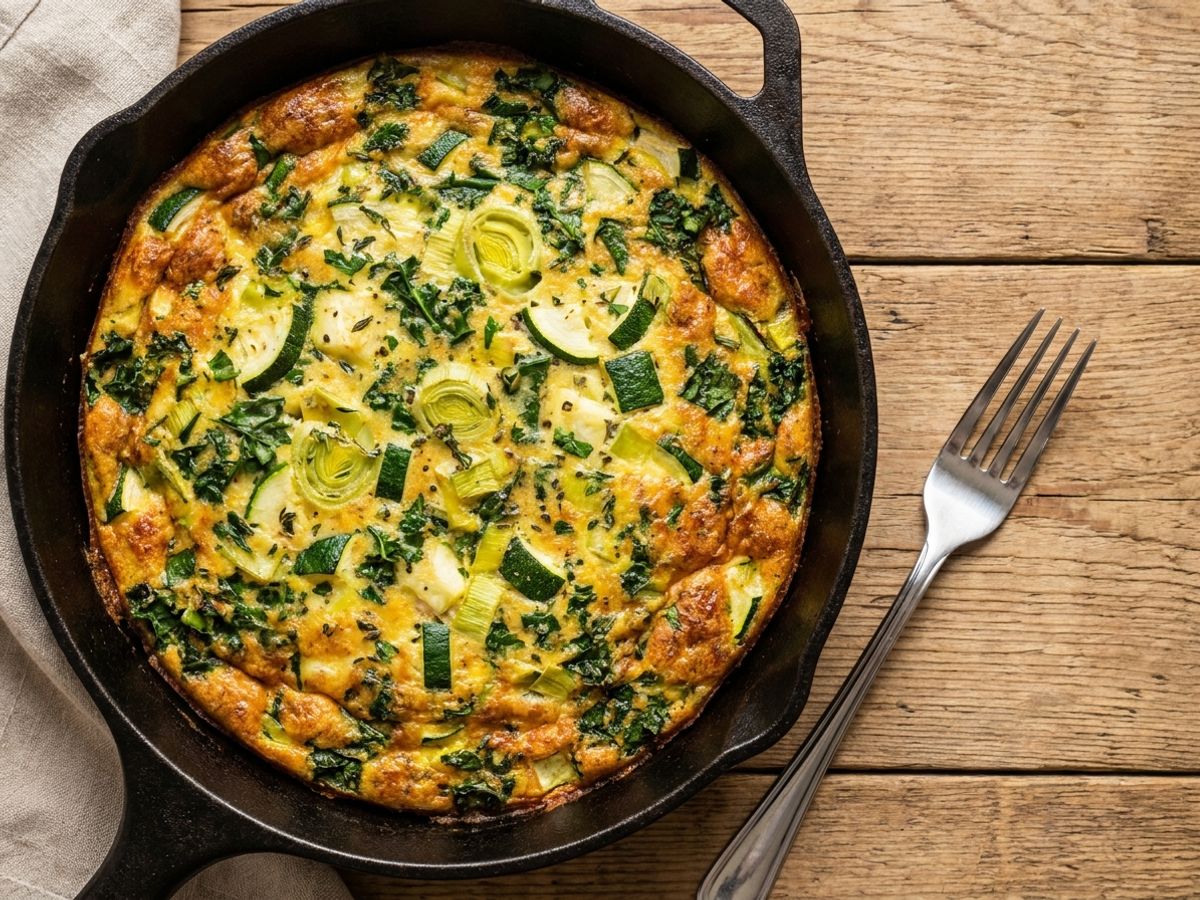
A low histamine frittata with fresh eggs, zucchini, leek, kale, thyme, and parsley.
Ingredients
- 8 large fresh eggs
- 3 tablespoons additive-free dairy-free milk (full-fat coconut milk or oat milk both work; check the label for guar gum, carrageenan, or natural flavors if you're sensitive)
- 2 tablespoons extra-virgin olive oil
- 1 medium fresh zucchini, diced small (about 1 1/2 cups)
- 1 medium fresh leek, white and light green parts only, thinly sliced and well washed (about 1 cup)
- 2 cups fresh kale, stems removed and chopped (Lacinato or dinosaur kale works well)
- 1 tablespoon fresh thyme leaves
- 2 tablespoons fresh flat-leaf parsley, finely chopped
- 1/2 teaspoon sea salt
- 1/4 teaspoon black pepper (optional)
Instructions
Prep
- Preheat your oven to 400°F (200°C).
- Whisk the eggs, dairy-free milk, salt, and pepper if using in a bowl until smooth and uniform. Set aside.
Saute the Vegetables
- Heat the olive oil in a 10-inch oven-safe skillet (cast iron or a sturdy nonstick) over medium heat.
- Add the sliced leek and a pinch of the salt. Cook for 4 to 5 minutes, stirring often, until soft and just starting to turn golden at the edges.
- Add the diced zucchini. Cook for another 3 to 4 minutes, stirring, until it softens and any released moisture cooks off.
- Add the chopped kale and the thyme. Cook for 1 to 2 minutes more, just until the kale wilts down. Spread the vegetables into an even layer across the skillet.
Add the Eggs
- Stir the chopped parsley into the egg mixture.
- Pour the eggs evenly over the vegetables. Tilt the skillet so the eggs settle into the gaps.
- Let the frittata cook undisturbed on the stovetop for 2 to 3 minutes, until the edges begin to set but the center is still loose.
Bake
- Transfer the skillet to the oven. Bake for 14 to 18 minutes, until the eggs are fully set and the top is lightly golden around the edges. The center should be firm and no longer jiggle when you nudge the pan. If your oven runs hot or you're using cast iron, bake at 375°F (190°C) and start checking at 15 minutes.
- Some people tolerate eggs better when fully cooked. If runny eggs trigger symptoms for you, bake until the center is set rather than soft.
- Let the frittata rest in the skillet for 5 minutes before slicing. The handle stays hot, so keep a towel over it as a reminder.
Serve
- Slice into 6 wedges directly in the skillet.
- Serve warm on its own or with a simple green salad dressed in olive oil.
Tips & Substitutions
- This is one big skillet frittata, not muffins or a quiche. If you'd rather have grab-and-go portions, make the egg muffins instead. If you want a softer, custard-style bake with coconut milk, try the quiche. The frittata is the fastest of the three and cooks in a single pan.
- Use the freshest eggs you can find. A recent carton or pasture-raised eggs from a local farm are ideal. Freshness matters for nearly every ingredient in a low histamine kitchen, and eggs are no exception.
- Swap the vegetables for what you have. Chard can stand in for the kale, though it's higher in oxalates if that's a concern for you. Diced sauteed zucchini or extra sauteed kale both fold in well. Aim for about 3 to 4 cups of raw vegetables, which cooks down to roughly 2 cups, so the eggs still hold everything together.
- Swap leek for shallot, a little fresh onion, or chives. Leek is sweeter and gentler than onion. If you can't find one, use 1/4 cup finely diced fresh onion cooked the same way. If you react to alliums in general, leave them out and stir in extra chopped parsley or 2 tablespoons of fresh chives at the end.
- Sensitive to eggs? Egg whites can act as a trigger for some people even though eggs themselves are not high in histamine. There's no clean swap that gives you the same texture, so this is a recipe to skip if eggs are a known issue for you.
- No oven-safe skillet? Saute the vegetables in any pan, then transfer everything to a greased 9-inch pie dish, pour the eggs over, and bake the same way. You'll lose the crisp skillet edge but the result is just as good.
 Get the Histamine Recipes app
250+ low histamine recipes, every ingredient rated.


Why This Works
Fresh eggs. Not a high-histamine food the way aged cheese or cured meat is, since they don't ferment or age. Even so, eggs can still be a personal trigger for some people with histamine intolerance, especially the whites, so individual tolerance varies.
Fresh zucchini. Generally well tolerated and considered low in histamine. Sauteing it first cooks off moisture so the frittata sets cleanly instead of weeping.
Kale. A low histamine green that's commonly well tolerated, and a better choice here than spinach, which is a common trigger for people with histamine intolerance.
Leek. A milder member of the allium family than onion or garlic. It's often tolerated by people who find raw onion or garlic harder to handle, though alliums can act as histamine liberators for some, so adjust to your own response.
Fresh thyme and parsley. Fresh herbs add depth without relying on premade spice blends, which can include anti-caking agents or natural flavors that some sensitive people react to as additives. Some sources list flat-leaf parsley as lower in oxalates than the curly kind.
Dairy-free milk. A splash adds tenderness without dairy, which is a common trigger. Check the label and skip versions with carrageenan, gums, or natural flavors if you tend to react to additives.
Storage
A frittata is best eaten fresh the day it's made. Eggs are a protein, and like many cooked protein foods, a frittata can become less tolerable the longer it's stored, so reheated leftovers are a common trigger for sensitive people. If you want to keep portions, slice the frittata once it has cooled, wrap the wedges tightly, and freeze them right away rather than refrigerating. Thaw and reheat only what you'll eat, and trust your own response, since some people react even to frozen leftovers.
Not sure about an ingredient?
Histamine tolerance is personal, and most of working it out comes down to knowing where individual foods stand. Our low histamine food list rates 4,500+ foods and explains the reasoning behind each rating, including the foods whose level depends on how fresh they are or how they were stored. It is worth a look before you swap anything in this recipe.
Before you eat
A lot of people with histamine intolerance take a DAO enzyme supplement 15 to 30 minutes before a meal. DAO is the enzyme your body uses to break down the histamine in food, and taking it with meals supports that natural process. Curious how it works? See do DAO supplements actually work.
Affiliate link: if you buy through it, we may earn a commission at no extra cost to you. These statements have not been evaluated by the Food and Drug Administration. This product is not intended to diagnose, treat, cure, or prevent any disease.
For educational purposes only. Not medical advice. Consult a healthcare professional for personal guidance.
References
- SIGHI Food Compatibility List — SIGHI (2026)
- 10 Low Histamine Breakfast or Brunch Ideas — MastCell360 (Beth O'Hara)
- Are Eggs High in Histamine? — Histamine Tracker
- How to Make a Frittata — Love and Lemons
- Histamine and histamine intolerance — Maintz & Novak (2007)
- Histamine Intolerance: The Current State of the Art — Comas-Basté et al. (2020)
- Biogenic Amines in Plant-Origin Foods: Are They Frequently Underestimated in Low-Histamine Diets? — Sánchez-Pérez et al. (2021)
- Diamine Oxidase Supplementation Improves Symptoms in Patients with Histamine Intolerance — Schnedl et al. (2019)
- Histamine Intolerance — A Comprehensive Review — Jochum (2024)