 Histamine Tracker
Coconut Cream Parfait

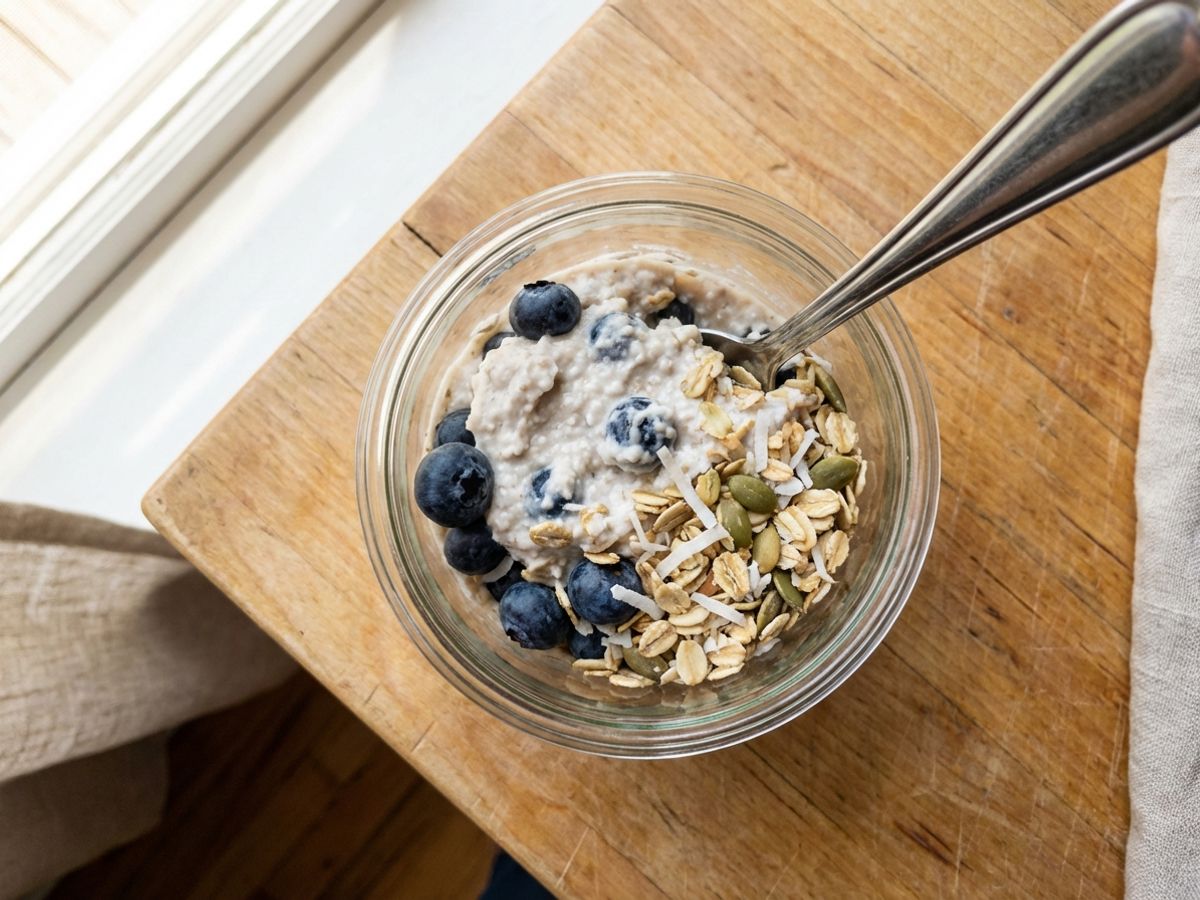
A low histamine parfait of whipped coconut cream layered with fresh blueberries, rolled oats, pumpkin seeds, and shredded coconut.
Ingredients
Coconut Cream Base
- 1 can (13.5 oz) full-fat coconut milk (additive-free, just coconut and water), refrigerated overnight
- 1 tablespoon maple syrup
- 1/4 teaspoon vanilla powder (optional)
- Pinch of sea salt
Toppings
- 1 cup fresh blueberries
- 1/4 cup gluten-free rolled oats (or puffed rice cereal)
- 2 tablespoons pumpkin seeds
- 2 tablespoons unsweetened shredded coconut
Instructions
Make the Cream
- Open the refrigerated can of coconut milk. Scoop out the thick cream from the top and place it in a bowl. Save the liquid for smoothies or other recipes.
- Add the maple syrup, vanilla powder if using, and salt to the cream.
- Whisk until smooth and creamy, about 1-2 minutes. If the cream is very firm, add 1-2 teaspoons of the reserved coconut water to help smooth it.
Prepare the Crunch
- In a small bowl, combine the oats (or puffed rice), pumpkin seeds, and shredded coconut.
- For extra crunch, toast the mixture in a dry skillet over medium heat for 2-3 minutes, stirring constantly. Let cool.
Assemble
- Divide half the granola mixture between two glasses or bowls.
- Add a layer of coconut cream.
- Add a layer of blueberries.
- Repeat layers, ending with berries on top.
- Serve immediately.
Tips & Substitutions
- Refrigerate coconut milk overnight so the cream separates. Place the can upside down for easier scooping.
- Use fresh blueberries. Avoid strawberries, which are common histamine triggers. Fresh mango or pear also work.
- Add the granola just before serving so it stays crunchy. Pre-assembled parfaits will have soggy granola.
- Swap pumpkin seeds for hemp seeds. Both are generally well tolerated and add protein.
- Use puffed rice cereal if you react to oats. It gives a lighter crunch but still adds texture.
 Get the Histamine Recipes app
250+ low histamine recipes, every ingredient rated.


Why This Works
Coconut cream. Using coconut cream instead of yogurt avoids fermentation, which raises histamine levels. It provides a rich, creamy base without the risks of dairy.
Blueberries. Naturally low in histamine and generally well tolerated. They add sweetness and color without problematic compounds.
Pumpkin seeds. A good source of protein and minerals that are generally well tolerated. They add a satisfying crunch to the parfait.
Gluten-free oats. Certified gluten-free oats are commonly well tolerated and provide fiber and slow-release energy.
Storage
Best eaten immediately after assembling. The coconut cream base can be prepared and refrigerated for up to one day, but add the granola and fruit just before serving. Do not store the assembled parfait, as the granola will get soggy and the fruit will break down.
Not sure about an ingredient?
Histamine tolerance is personal, and most of working it out comes down to knowing where individual foods stand. Our low histamine food list rates 4,500+ foods and explains the reasoning behind each rating, including the foods whose level depends on how fresh they are or how they were stored. It is worth a look before you swap anything in this recipe.
Before you eat
A lot of people with histamine intolerance take a DAO enzyme supplement 15 to 30 minutes before a meal. DAO is the enzyme your body uses to break down the histamine in food, and taking it with meals supports that natural process. Curious how it works? See do DAO supplements actually work.
Affiliate link: if you buy through it, we may earn a commission at no extra cost to you. These statements have not been evaluated by the Food and Drug Administration. This product is not intended to diagnose, treat, cure, or prevent any disease.
For educational purposes only. Not medical advice. Consult a healthcare professional for personal guidance.
References
- Are There Low-Histamine Dairy Foods? — Histamine Doctor
- Are Oats Low Histamine? Is Oatmeal High In Histamine? — The Allergy Chef
- Low Histamine Nuts and Seeds — Histamine Doctor
- Histamine and histamine intolerance — Maintz & Novak (2007)
- Histamine Intolerance: The Current State of the Art — Comas-Basté et al. (2020)
- Biogenic Amines in Plant-Origin Foods: Are They Frequently Underestimated in Low-Histamine Diets? — Sánchez-Pérez et al. (2021)
- Diamine Oxidase Supplementation Improves Symptoms in Patients with Histamine Intolerance — Schnedl et al. (2019)
- Histamine Intolerance — A Comprehensive Review — Jochum (2024)