 Histamine Tracker
Meat and Veggies

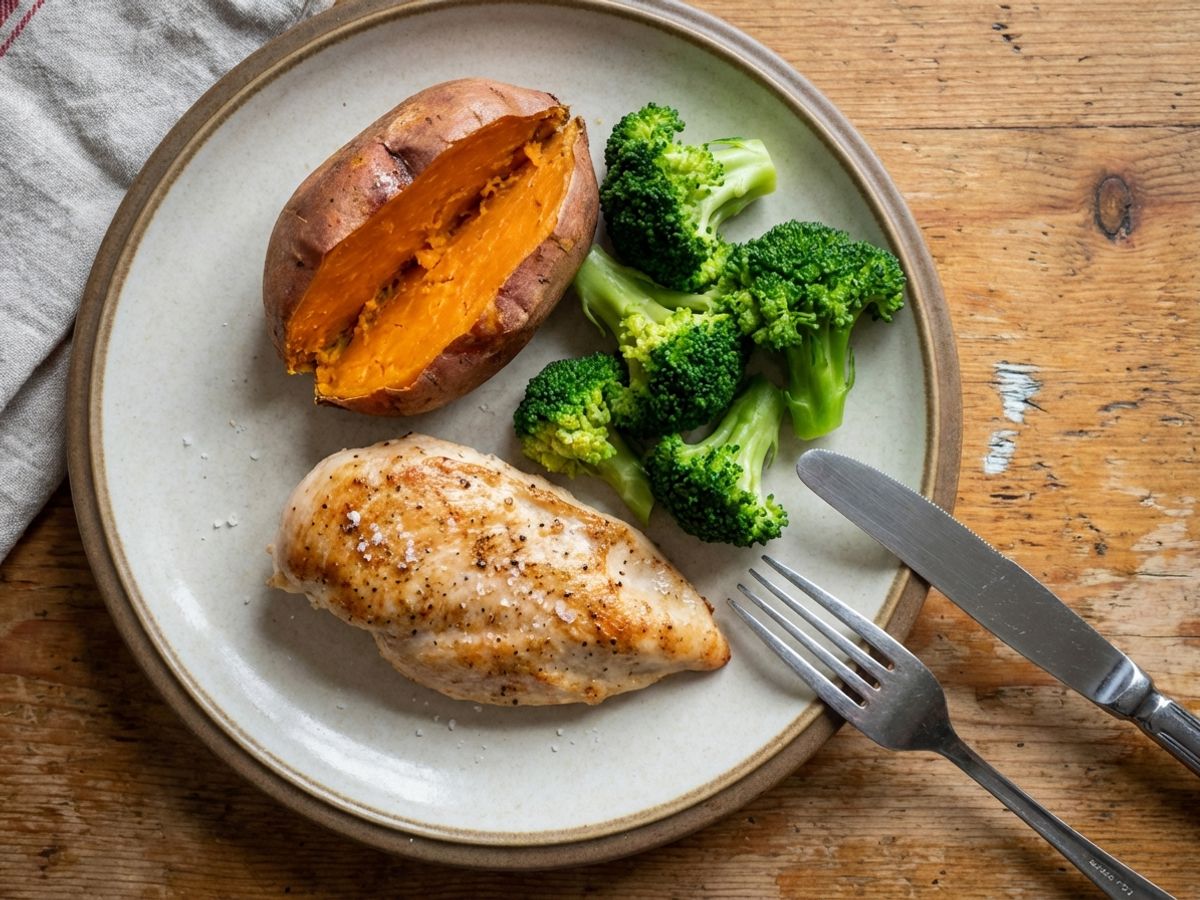
A low histamine plate of fresh chicken, pork, beef, or fish with a green vegetable and a potato or rice side.
Ingredients
Protein (choose one)
- 2 chicken breasts or thighs
- 2 pork chops
- 8 ounces beef steak
- 2 fish fillets
Vegetable 1 (choose one)
- 2 cups broccoli florets
- 2 cups cauliflower florets
- 1 bunch asparagus
Vegetable 2 (choose one)
- 2 medium potatoes
- 1 large sweet potato
- 2 cups rice (cooked)
Seasoning
- 2 tablespoons olive oil, divided
- Sea salt to taste
Instructions
Cook the Protein
- Season protein with salt and a drizzle of olive oil.
- For chicken: Cook in a skillet over medium-high heat for 6-7 minutes per side until 165°F (74°C).
- For pork: Cook for 4-5 minutes per side until 145°F (63°C).
- For beef: Cook to desired doneness (130°F/54°C for medium-rare, 140°F/60°C for medium, 145°F/63°C for medium-well). Rest 5 minutes.
- For fish: Use very fresh or frozen-at-sea fillets. Cook for 3-4 minutes per side until it flakes easily and reaches 145°F (63°C).
- Let rest while preparing vegetables.
Cook Vegetable 1
- Steam broccoli, cauliflower, or asparagus for 4-6 minutes until tender-crisp.
- Toss with olive oil and salt.
Cook Vegetable 2
- For potatoes: Cube and roast at 400°F (200°C) for 25 minutes, or boil until tender.
- For sweet potato: Bake whole at 400°F (200°C) for 45 minutes, or cube and roast.
- For rice: Cook according to package directions.
Serve
- Plate the protein with both vegetable sides.
- Serve immediately.
Tips & Substitutions
- Use fresh protein bought the same day. This is the single most important step for keeping histamine levels low.
- Cut the vegetables while the protein rests. This keeps your timing efficient so everything is served hot.
- Roast two vegetables on the same sheet pan at 400°F (200°C) to save time and dishes.
- Swap broccoli for green beans, asparagus, or cauliflower. Use whatever fresh vegetables look best at the store.
- Season with fresh herbs like rosemary, thyme, or parsley for extra flavor without relying on premade spice blends.
 Get the Histamine Recipes app
250+ low histamine recipes, every ingredient rated.


Why This Works
Fresh protein. Whether chicken, pork, beef, or fish, buying same-day and cooking immediately keeps histamine accumulation to a minimum.
Broccoli and cauliflower. Both are naturally low in histamine and generally well tolerated. Steaming preserves nutrients while keeping them easy to digest.
Potatoes and sweet potatoes. Starchy vegetables that are well tolerated by most people. They provide filling energy and pair with any protein.
Olive oil. A stable, low histamine cooking fat. It works well for both pan-cooking and roasting at moderate temperatures.
Storage
Best served immediately. Protein dishes accumulate histamine over time, and reheating does not reduce histamine. If you need leftovers, cool quickly and freeze portions right away, or refrigerate and eat within 24 hours.
Not sure about an ingredient?
Histamine tolerance is personal, and most of working it out comes down to knowing where individual foods stand. Our low histamine food list rates 4,500+ foods and explains the reasoning behind each rating, including the foods whose level depends on how fresh they are or how they were stored. It is worth a look before you swap anything in this recipe.
Before you eat
A lot of people with histamine intolerance take a DAO enzyme supplement 15 to 30 minutes before a meal. DAO is the enzyme your body uses to break down the histamine in food, and taking it with meals supports that natural process. Curious how it works? See do DAO supplements actually work.
Affiliate link: if you buy through it, we may earn a commission at no extra cost to you. These statements have not been evaluated by the Food and Drug Administration. This product is not intended to diagnose, treat, cure, or prevent any disease.
For educational purposes only. Not medical advice. Consult a healthcare professional for personal guidance.
References
- Biogenic Amines in Meat and Meat Products: A Review of the Science and Future Perspectives — Schirone et al. (2022), Foods
- 3 Types of Tasty Low-Histamine Vegetables to Brighten Up Your Plate — Histamine Doctor
- Are Potatoes High in Histamine? — Histamine Doctor
- Histamine and histamine intolerance — Maintz & Novak (2007)
- Histamine Intolerance: The Current State of the Art — Comas-Basté et al. (2020)
- Biogenic Amines in Plant-Origin Foods: Are They Frequently Underestimated in Low-Histamine Diets? — Sánchez-Pérez et al. (2021)
- Diamine Oxidase Supplementation Improves Symptoms in Patients with Histamine Intolerance — Schnedl et al. (2019)
- Histamine Intolerance — A Comprehensive Review — Jochum (2024)