 Histamine Tracker
Stuffed Bell Peppers

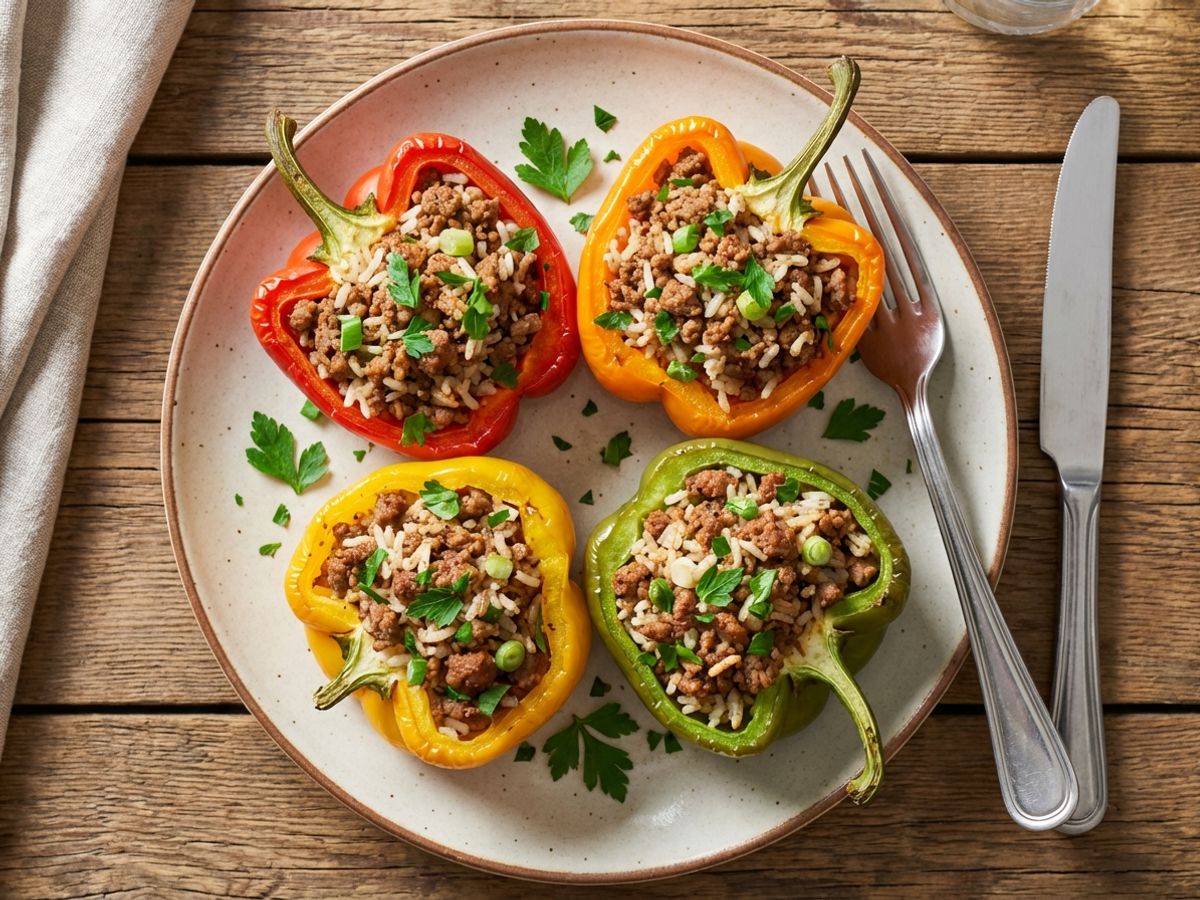
Low histamine stuffed bell peppers filled with ground turkey, white rice, oregano, thyme, green onion tops, and parsley.
Ingredients
For the Peppers
- 4 large bell peppers (any color)
- 1 tablespoon olive oil
For the Filling
- 1 lb fresh ground turkey
- 1 cup cooked white rice (about 1/3 cup dry)
- 1 tablespoon olive oil
- 1/2 teaspoon dried oregano
- 1/2 teaspoon dried thyme
- 1/2 teaspoon sea salt
- 1/4 teaspoon black pepper (optional)
- 2 green onions, green parts only, sliced
- 1/4 cup fresh parsley, chopped
For Topping
- 2 tablespoons olive oil
- Fresh parsley for garnish
Instructions
Prepare the Peppers
- Preheat your oven to 375°F (190°C).
- Cut the tops off the bell peppers and remove the seeds and membranes.
- Lightly brush the outside of each pepper with olive oil.
- Place peppers cut-side up in a baking dish.
Make the Filling
- Heat olive oil in a large skillet over medium-high heat.
- Add ground turkey, breaking it up with a spatula.
- Cook for 6-8 minutes until browned and cooked through to 165°F (74°C).
- Add oregano, thyme, salt, and pepper if using.
- Stir to combine and cook another minute.
- Remove from heat.
- Stir in cooked rice, green onions, and parsley.
- Mix well to combine all ingredients.
Stuff and Bake
- Divide the filling evenly among the 4 peppers, pressing down gently.
- Drizzle the tops with olive oil.
- Cover the baking dish tightly with foil.
- Bake for 30 minutes.
- Remove foil and bake another 10-15 minutes until peppers are tender.
- Garnish with fresh parsley before serving.
Tips & Substitutions
- Use fresh ground turkey. Ground chicken works well too. Ask your butcher to grind to order if possible.
- This skips the tomato sauce found in traditional recipes. The seasoned filling is flavorful on its own.
- Red, orange, and yellow peppers are sweeter than green. Choose whichever color you prefer.
- Leave out the green onions if alliums bother you. Fresh parsley alone adds plenty of color and freshness.
- Swap white rice for quinoa or cauliflower rice for a different texture in the filling.
 Get the Histamine Recipes app
250+ low histamine recipes, every ingredient rated.


Why This Works
Turkey. Fresh ground turkey is generally well tolerated and provides lean protein. Cooking it immediately after purchase keeps histamine levels minimal.
Bell peppers. Naturally low in histamine and well tolerated by most people. They act as edible bowls and provide vitamin C, which may help reduce histamine burden indirectly for some people.
White rice. A well-tolerated, neutral grain that adds bulk to the filling. It absorbs the herb flavors and keeps the texture satisfying.
Fresh herbs. Oregano, thyme, and parsley are naturally low in histamine. They provide the savory depth that traditional recipes achieve with tomato sauce or cheese.
Olive oil. A stable, well-tolerated cooking fat used both for cooking the filling and drizzling on top before baking.
Storage
Best served fresh from the oven. If you have leftovers, cool quickly and refrigerate in an airtight container, or freeze portions right away. Eat refrigerated leftovers within 24 hours. Since this contains ground turkey, it accumulates histamine during storage, and reheating does not reduce histamine.
Not sure about an ingredient?
Histamine tolerance is personal, and most of working it out comes down to knowing where individual foods stand. Our low histamine food list rates 4,500+ foods and explains the reasoning behind each rating, including the foods whose level depends on how fresh they are or how they were stored. It is worth a look before you swap anything in this recipe.
Before you eat
A lot of people with histamine intolerance take a DAO enzyme supplement 15 to 30 minutes before a meal. DAO is the enzyme your body uses to break down the histamine in food, and taking it with meals supports that natural process. Curious how it works? See do DAO supplements actually work.
Affiliate link: if you buy through it, we may earn a commission at no extra cost to you. These statements have not been evaluated by the Food and Drug Administration. This product is not intended to diagnose, treat, cure, or prevent any disease.
For educational purposes only. Not medical advice. Consult a healthcare professional for personal guidance.
References
- 3 Types of Tasty Low-Histamine Vegetables to Brighten Up Your Plate — Histamine Doctor
- Low Histamine Herbs and Spices (and Recipes to Enjoy!) — Through The Fibro Fog
- Low Histamine Diet: Foods to Eat and Avoid — Wyndly
- Histamine and histamine intolerance — Maintz & Novak (2007)
- Histamine Intolerance: The Current State of the Art — Comas-Basté et al. (2020)
- Biogenic Amines in Plant-Origin Foods: Are They Frequently Underestimated in Low-Histamine Diets? — Sánchez-Pérez et al. (2021)
- Diamine Oxidase Supplementation Improves Symptoms in Patients with Histamine Intolerance — Schnedl et al. (2019)
- Histamine Intolerance — A Comprehensive Review — Jochum (2024)