 Histamine Tracker
Creamy Garlic Chicken

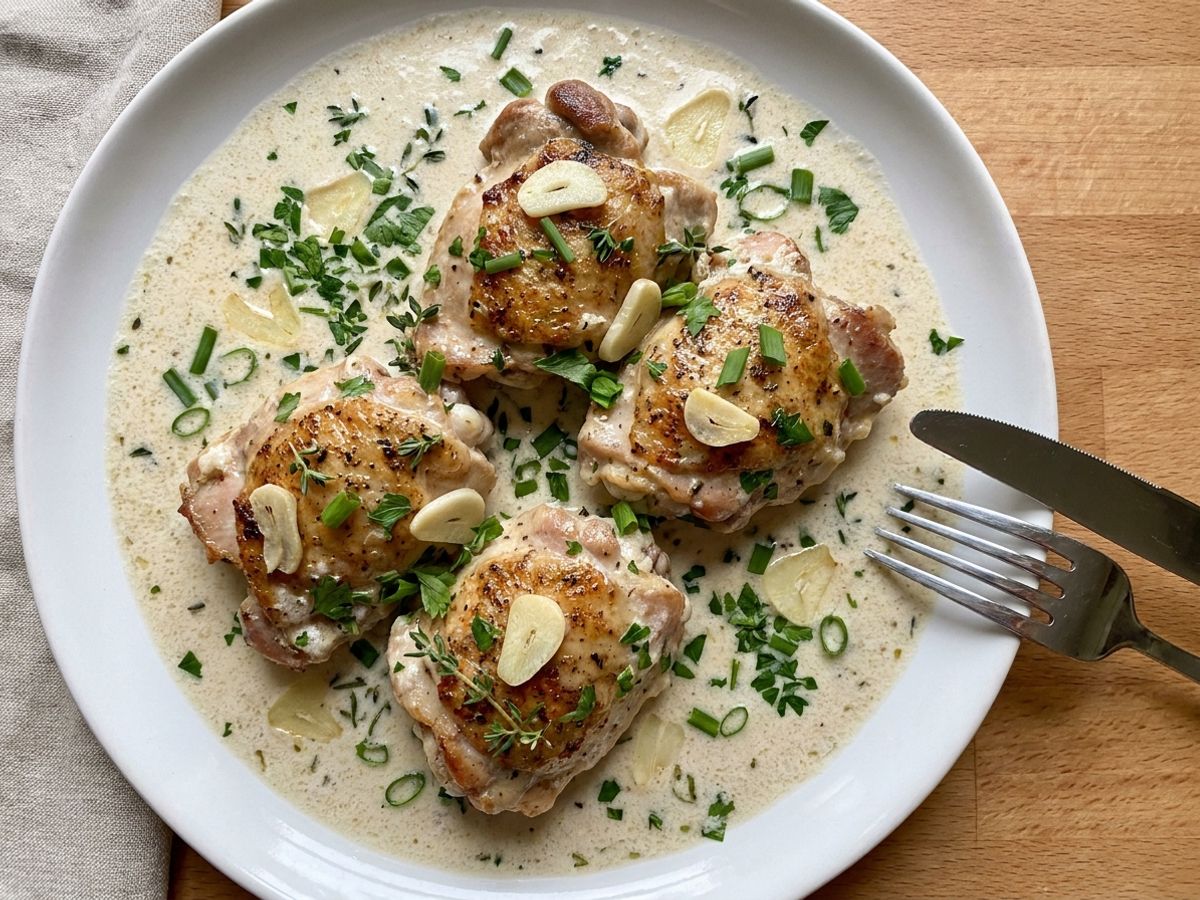
A low histamine creamy garlic chicken with coconut cream, homemade chicken broth, fresh thyme, and parsley.
Ingredients
- 1 1/2 pounds fresh boneless, skinless chicken thighs or breasts
- 3/4 teaspoon salt, divided
- 2 tablespoons olive oil
- 6 cloves garlic, thinly sliced
- 1 cup coconut cream (or the thick layer skimmed from a can of full-fat coconut milk)
- 1/4 cup homemade chicken broth (or water with a pinch of salt)
- 1 teaspoon fresh thyme leaves
- 2 tablespoons fresh parsley, chopped
- 1 tablespoon fresh chives, sliced (optional)
Instructions
Sear the Chicken
- Pat the chicken dry on both sides and season it with 1/2 teaspoon of the salt. If you are using breasts, slice them in half horizontally so they cook evenly.
- Heat the olive oil in a large skillet over medium-high heat until it shimmers.
- Lay the chicken in the pan and cook for 5 to 6 minutes without moving it, until the underside is golden.
- Flip and cook another 4 to 5 minutes, until the thickest piece reads 165°F (74°C). Move the chicken to a plate.
Build the Sauce
- Lower the heat to medium-low and add the sliced garlic to the same pan. Stir for 45 to 60 seconds, until it smells sweet and turns pale gold. Do not let it brown or the sauce will taste bitter.
- Pour in the chicken broth and scrape the browned bits off the bottom of the pan with a wooden spoon.
- Stir in the coconut cream, the thyme, and the remaining 1/4 teaspoon of salt.
Simmer and Finish
- Let the sauce bubble gently for 4 to 5 minutes, stirring now and then, until it coats the back of a spoon.
- Return the chicken and any juices from the plate to the pan. Spoon sauce over each piece and simmer for 2 more minutes.
- Take the pan off the heat, scatter the parsley and chives over the top, and serve.
Tips & Substitutions
- No wine, no citrus, no cheese. Restaurant creamy garlic chicken leans on white wine, a squeeze of citrus, parmesan, and often cream cheese. Wine is fermented, and citrus is a common trigger for people with histamine intolerance. Aged cheese is high on most low histamine lists and fresh cheeses vary, so this recipe leaves cheese out. Six cloves of garlic and a good broth cover the same ground.
- Check the coconut milk label. Look for a can whose ingredients are coconut and water, with no guar gum or carrageenan, if additives bother you. Chill the can overnight and the thick cream separates to the top, ready to skim.
- Thicken it without flour. The sauce tightens on its own as it simmers. If you want it thicker faster, whisk 1 teaspoon of cassava flour into the coconut cream before it goes into the pan.
- Serve it over something plain. Basic white rice and mashed potatoes both soak up the sauce. For a lighter plate, spoon it over zucchini noodles.
- Buy the chicken the day you cook it. Fresh poultry is the whole point here. Cook it the day you bring it home, or freeze it right away and thaw it in the fridge the night before.
- Thighs are more forgiving. Breasts dry out if the sauce simmers too long. Thighs hold up to the extra couple of minutes in the pan and give the sauce more flavor.
 Get the Histamine Recipes app
250+ low histamine recipes, every ingredient rated.


Why This Works
Coconut cream. Generally considered low histamine and commonly used as a dairy-free stand-in for heavy cream. Cans without thickeners or preservatives tend to be the better choice, and tolerance varies from brand to brand.
Fresh garlic. Commonly tolerated when used fresh, and it does most of the flavor work in this dish. Slicing rather than mincing keeps it from burning in the pan, which matters when there are six cloves in there.
Chicken. Fresh poultry is generally considered lower in histamine than aged, cured, or sliced deli meats. How recently it was bought and cooked usually matters more than the cut, so freshness is the thing to watch.
Fresh thyme and parsley. Fresh herbs keep the sauce from tasting flat without any packaged seasoning blend. If you use dried herbs instead, check the label for additives.
Homemade broth. A splash of homemade chicken broth adds savor that store-bought stock cubes usually get from yeast extract. Long-simmered stock is flagged on most low histamine lists, which is why the linked broth recipe keeps the simmer short and freezes it right away. Make it ahead and freeze it the same day in portions, or use water with a pinch of salt.
Storage
Eat it the day it is made. Portion any extra and freeze it the same day, within an hour of cooking. Reheat from frozen in a covered pan over low heat until it is steaming hot all the way through, whisking the coconut cream back together as it warms so it does not split. Freshly made is the version most people tolerate best, so cook only what you plan to eat and keep the rest of the chicken raw in the freezer.
Not sure about an ingredient?
Histamine tolerance is personal, and most of working it out comes down to knowing where individual foods stand. Our low histamine food list rates 4,500+ foods and explains the reasoning behind each rating, including the foods whose level depends on how fresh they are or how they were stored. It is worth a look before you swap anything in this recipe.
Before you eat
A lot of people with histamine intolerance take a DAO enzyme supplement 15 to 30 minutes before a meal. DAO is the enzyme your body uses to break down the histamine in food, and taking it with meals supports that natural process. Curious how it works? See do DAO supplements actually work.
Affiliate link: if you buy through it, we may earn a commission at no extra cost to you. These statements have not been evaluated by the Food and Drug Administration. This product is not intended to diagnose, treat, cure, or prevent any disease.
For educational purposes only. Not medical advice. Consult a healthcare professional for personal guidance.
References
- Low Histamine Sauce for Chicken with Coconut Cream and Herbs — Mast Cell 360
- Creamy Sage Chicken — Through The Fibro Fog
- Is Coconut High Histamine? — Low Histamine Eats
- Histamine and histamine intolerance — Maintz & Novak (2007)
- Histamine Intolerance: The Current State of the Art — Comas-Basté et al. (2020)
- Biogenic Amines in Plant-Origin Foods: Are They Frequently Underestimated in Low-Histamine Diets? — Sánchez-Pérez et al. (2021)
- Diamine Oxidase Supplementation Improves Symptoms in Patients with Histamine Intolerance — Schnedl et al. (2019)
- Histamine Intolerance — A Comprehensive Review — Jochum (2024)