 Histamine Tracker
Egg Fried Rice

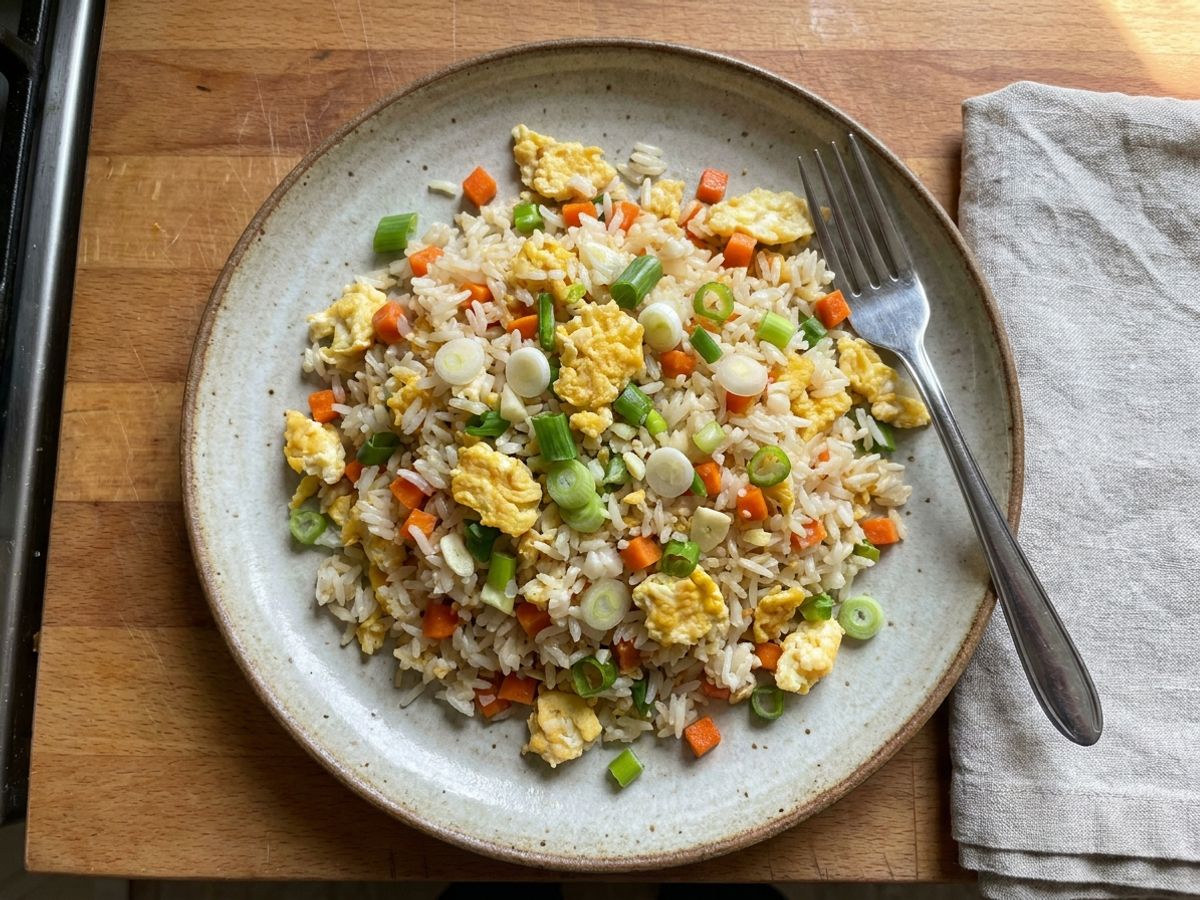
A low histamine egg fried rice with cooled white rice, eggs, green onions, carrot, and fresh garlic.
Ingredients
- 3 cups cooked white rice (about 1 cup uncooked), cooked the same day and chilled until firm
- 3 large eggs, beaten
- 3 tablespoons olive oil or coconut oil, divided
- 1 medium carrot, peeled and diced small
- 3 green onions, sliced thin, white and green parts kept separate
- 2 cloves fresh garlic, minced
- 1 teaspoon fresh ginger, finely grated (optional)
- 3/4 teaspoon salt, plus more to taste
Instructions
Cook and Cool the Rice
- Rinse 1 cup of white rice under cold water until the water runs clear. Cook it with 1 1/2 cups water and a pinch of salt, following the method in basic white rice.
- Spread the cooked rice across a sheet pan in a thin layer and let it cool at room temperature for 15 to 20 minutes.
- Move the pan to the refrigerator, uncovered, for 30 to 60 minutes, until the grains are cold and firm. Use the rice the same day, ideally within a few hours.
Scramble the Eggs
- Heat 1 tablespoon of the oil in a large skillet or wok over medium heat.
- Pour in the beaten eggs. Let them set for about 20 seconds, then stir with a spatula until just cooked through, about 1 minute.
- Slide the eggs onto a plate and break them into small pieces with the edge of the spatula.
Fry the Rice
- Add the remaining 2 tablespoons of oil to the same skillet and raise the heat to medium-high.
- Add the diced carrot and cook, stirring, for 3 minutes until it starts to soften.
- Add the garlic, the white parts of the green onions, and the grated ginger if using. Stir for 30 seconds, just until you can smell them.
- Add the cold rice and the salt. Press the rice flat against the pan, let it sit for 30 seconds, then toss. Repeat for 4 to 5 minutes, until the grains are hot through and some have lightly crisped.
Finish and Serve
- Return the eggs to the pan and toss to break them through the rice.
- Add the green tops of the onions and toss once more.
- Taste, add salt if it needs it, and serve straight from the pan.
Tips & Substitutions
- There is no soy sauce in this recipe. Soy sauce is brewed and aged, and it sits on the restricted list for a low histamine diet, so it is left out here. Salt carries the savory side, and a teaspoon of freshly grated ginger stirred in with the garlic gives you the sharp note you would otherwise get from the bottle.
- Plan about an hour for the rice. Freshly steamed rice is too wet and turns to paste in a hot pan. Cook the rice, spread it on a tray to cool for 15 to 20 minutes, then refrigerate it for 30 to 60 minutes so the grains firm up. Use it the same day, ideally within a few hours.
- Get the pan hot before the rice goes in. Medium-high heat and a thin layer of oil are what give you crisp edges instead of steamed clumps. If your skillet is small, fry the rice in two batches rather than crowding it.
- Change the vegetables freely. Diced zucchini, small broccoli florets, or a cup of cauliflower rice all fold in at the same point as the carrot. Add firmer vegetables first and quicker ones a minute or two later.
- Add meat for a fuller plate. Chicken cooked fresh the same day and cut small goes in with the rice. For a version built around chicken and more vegetables, see chicken fried rice.
- Use fresh garlic cloves, not the jarred kind. Jarred minced garlic sits in liquid with preservatives, and the flavor is flat next to a clove you mince yourself.
 Get the Histamine Recipes app
250+ low histamine recipes, every ingredient rated.


Why This Works
White rice. Generally considered low histamine and one of the plainer starches to build a meal on. Chilling the cooked grains before they hit the pan is what keeps them separate instead of sticky.
Eggs. Eggs are commonly tolerated when fresh; egg white is flagged on some lists, so start with a small portion if you are unsure. Scrambling them separately and folding them in at the end keeps them soft rather than rubbery.
Green onions and fresh garlic. Both are commonly tolerated aromatics that do the work soy sauce usually does. The white parts go in early for depth and the green tops go in raw at the end for bite.
Olive oil. A commonly tolerated fat with a clean taste and a high enough smoke point for stir-frying over medium-high heat. Coconut oil works the same way if you prefer it. Tolerance varies with any fat, so use the one that already sits well with you.
Storage
Fried rice is best straight out of the pan while the edges are still crisp. Eat it the day it is made. Portion any extra and freeze it the same day, within an hour of cooking, then reheat it from frozen in a hot skillet with a little oil rather than in the microwave, which steams it soft. Cooking only the amount you plan to eat is the simpler approach.
Not sure about an ingredient?
Histamine tolerance is personal, and most of working it out comes down to knowing where individual foods stand. Our low histamine food list rates 4,500+ foods and explains the reasoning behind each rating, including the foods whose level depends on how fresh they are or how they were stored. It is worth a look before you swap anything in this recipe.
Before you eat
A lot of people with histamine intolerance take a DAO enzyme supplement 15 to 30 minutes before a meal. DAO is the enzyme your body uses to break down the histamine in food, and taking it with meals supports that natural process. Curious how it works? See do DAO supplements actually work.
Affiliate link: if you buy through it, we may earn a commission at no extra cost to you. These statements have not been evaluated by the Food and Drug Administration. This product is not intended to diagnose, treat, cure, or prevent any disease.
For educational purposes only. Not medical advice. Consult a healthcare professional for personal guidance.
References
- Stir Fry Sauce Without Soy Sauce (Vegan Option) — Low Histamine Eats
- Adding Flavor to your Low Histamine Recipes — Through The Fibro Fog
- Low Histamine Diet Foods List — Through The Fibro Fog
- Histamine and histamine intolerance — Maintz & Novak (2007)
- Histamine Intolerance: The Current State of the Art — Comas-Basté et al. (2020)
- Biogenic Amines in Plant-Origin Foods: Are They Frequently Underestimated in Low-Histamine Diets? — Sánchez-Pérez et al. (2021)
- Diamine Oxidase Supplementation Improves Symptoms in Patients with Histamine Intolerance — Schnedl et al. (2019)
- Histamine Intolerance — A Comprehensive Review — Jochum (2024)