 Histamine Tracker
Chicken Pad Thai

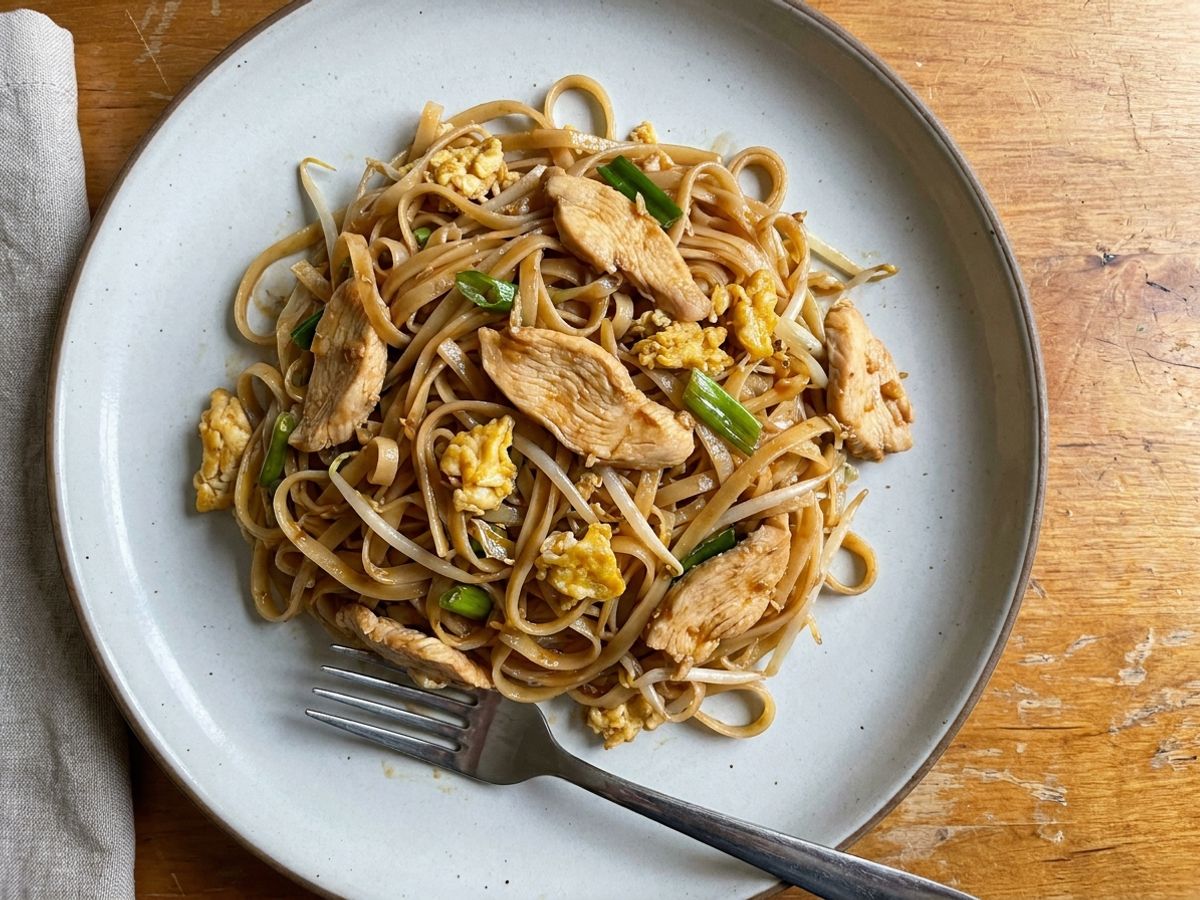
A low histamine pad Thai with rice noodles, chicken, eggs, carrots, napa cabbage, and a coconut aminos, ginger, and sesame sauce.
Ingredients
Sauce
- 3 tablespoons coconut aminos
- 2 tablespoons pure maple syrup or honey
- 1 tablespoon fresh ginger, finely grated
- 1 clove fresh garlic, minced (optional)
- 1 tablespoon toasted sesame oil
- 1/4 teaspoon fine sea salt
- 1 tablespoon arrowroot starch
- 2 tablespoons cold water
Pad Thai
- 8 ounces medium or wide rice noodles
- 1 pound fresh boneless, skinless chicken breast, sliced into thin strips
- 1/2 teaspoon fine sea salt
- 2 tablespoons avocado oil or olive oil, divided
- 2 medium carrots, julienned or shredded
- 2 cups napa cabbage or bok choy, sliced thin
- 2 large fresh eggs, beaten
- 3 scallions, green tops only, sliced
To Finish
- 1/4 cup fresh cilantro, chopped
- 1/4 cup fresh Thai basil (or regular basil), chopped
- 2 tablespoons crushed macadamia nuts
- Lime wedges (optional, omit if sensitive)
Instructions
Prep
- Place the rice noodles in a large heatproof bowl. Cover with very hot tap water (not boiling) and soak for 8 to 10 minutes, until pliable but still firm in the center. They will finish cooking in the pan. Drain and rinse with cool water; set aside.
- In a small bowl, whisk the cold water and arrowroot starch into a slurry. Set aside.
- In a second small bowl, whisk together the coconut aminos, maple syrup, ginger, garlic if using, sesame oil, and salt.
Cook the Chicken
- Season the chicken with the 1/2 teaspoon salt.
- Heat a large nonstick skillet or wok over medium-high heat. Add 1 tablespoon of the oil and let it shimmer.
- Add the chicken in a single layer and cook, stirring once or twice, for 4 to 5 minutes until cooked through and lightly golden. Transfer to a plate.
Build the Stir-Fry
- Return the pan to medium-high heat and add the remaining 1 tablespoon of oil. Add the carrots and napa cabbage. Stir-fry for 2 to 3 minutes until just tender.
- Push the vegetables to one side of the pan. Pour the beaten eggs into the cleared space and scramble with a spatula until just set, about 30 seconds.
- Return the chicken to the pan along with the drained rice noodles and scallion tops. Pour the sauce over the top and toss to combine.
- Give the arrowroot slurry a quick whisk, then pour into the pan. Toss for another 1 to 2 minutes until the sauce thickens and clings to the noodles.
- Remove from heat. Divide between plates and top with cilantro, Thai basil, and crushed macadamia nuts. Serve with lime wedges on the side if you tolerate citrus.
Tips & Substitutions
- Soak the rice noodles in hot tap water, not boiling. Boiling water turns them gummy before they hit the pan. The hot-tap soak softens them just enough so they finish cooking in the sauce.
- Macadamia nuts replace peanuts. Peanuts are a common histamine trigger. Macadamias are one of the lower-histamine nuts and bring the same crunch and richness.
- Coconut aminos replace fish sauce and soy sauce. Both fish sauce and soy sauce are fermented and high in histamine. Coconut aminos carry the same savory backbone and are often better tolerated, though they are processed from fermented coconut sap and tolerance varies by brand and person. If you are very sensitive, replace the aminos with 2 tablespoons of water and a pinch more salt to taste.
- Skip the lime if you are sensitive. Lime is a histamine liberator for some people. The dish stands on its own without it; for brightness, add a little extra fresh ginger rather than vinegar, which is fermented and a common trigger.
- Scallion greens only. The green tops are lower-FODMAP and gentler than the white parts. Same with leeks if you swap them in.
- Want it spicier? A pinch of freshly ground ginger or a few thin slices of fresh hot pepper (if you tolerate it) at the end add heat without reaching for chili paste, which is usually fermented.
- Holy basil works too. Holy basil and Thai basil both carry the right note. Regular basil is a fine stand-in if it is what you have.
 Get the Histamine Recipes app
250+ low histamine recipes, every ingredient rated.


Why This Works
Rice noodles. Plain white rice noodles are generally well tolerated and form the base of the dish. Look for noodles with rice as the only ingredient.
Fresh chicken. Cooked and eaten the same day to keep histamine low. Pre-cut chicken from the grocery store sits longer than chicken you slice yourself; cutting from a whole breast at home is the cleaner option.
Coconut aminos. A soy-free, fish-sauce-free alternative that many people tolerate better than the originals. The sauce is made from fermented coconut sap, so brands and processing vary and tolerance is individual. The Tips section has a no-aminos option for very sensitive readers.
Fresh ginger and garlic. Ginger is generally well tolerated and adds the sharp aromatic backbone. Garlic contains small amounts of quercetin, a compound sometimes discussed in mast cell research, though individual response varies and it can also act as a histamine liberator for some people. Use the amount that works for you.
Macadamia nuts. One of the lowest-histamine nuts, with a buttery flavor that holds up well as a crunchy topping.
No tamarind. Traditional pad Thai uses tamarind paste for its tang. Tamarind itself is not on most high-histamine lists, but most commercial pastes are aged and concentrated. A small amount of maple syrup plus the sesame oil and ginger does the job here.
Storage
Best eaten right out of the pan. The fresh chicken, scrambled egg, and stir-fry combination is the part that benefits most from being fresh. If you have leftovers, refrigerate covered for up to 1 day, but know that leftovers of protein-containing dishes accumulate histamine. Some people react even to frozen leftovers, so pay attention to how you respond.
Not sure about an ingredient?
Histamine tolerance is personal, and most of working it out comes down to knowing where individual foods stand. Our low histamine food list rates 4,500+ foods and explains the reasoning behind each rating, including the foods whose level depends on how fresh they are or how they were stored. It is worth a look before you swap anything in this recipe.
Before you eat
A lot of people with histamine intolerance take a DAO enzyme supplement 15 to 30 minutes before a meal. DAO is the enzyme your body uses to break down the histamine in food, and taking it with meals supports that natural process. Curious how it works? See do DAO supplements actually work.
Affiliate link: if you buy through it, we may earn a commission at no extra cost to you. These statements have not been evaluated by the Food and Drug Administration. This product is not intended to diagnose, treat, cure, or prevent any disease.
For educational purposes only. Not medical advice. Consult a healthcare professional for personal guidance.
References
- Healthy Pad Thai Recipe — Mast Cell 360
- One Pot Low Histamine, Low FODMAP Pad Thai — Pink Salt Collective
- Coconut Aminos and Histamine Intolerance — Baliza (OxiPur lab results)
- Histamine and histamine intolerance — Maintz & Novak (2007)
- Histamine Intolerance: The Current State of the Art — Comas-Basté et al. (2020)
- Biogenic Amines in Plant-Origin Foods: Are They Frequently Underestimated in Low-Histamine Diets? — Sánchez-Pérez et al. (2021)
- Diamine Oxidase Supplementation Improves Symptoms in Patients with Histamine Intolerance — Schnedl et al. (2019)
- Histamine Intolerance — A Comprehensive Review — Jochum (2024)