 Histamine Tracker
Teriyaki Chicken

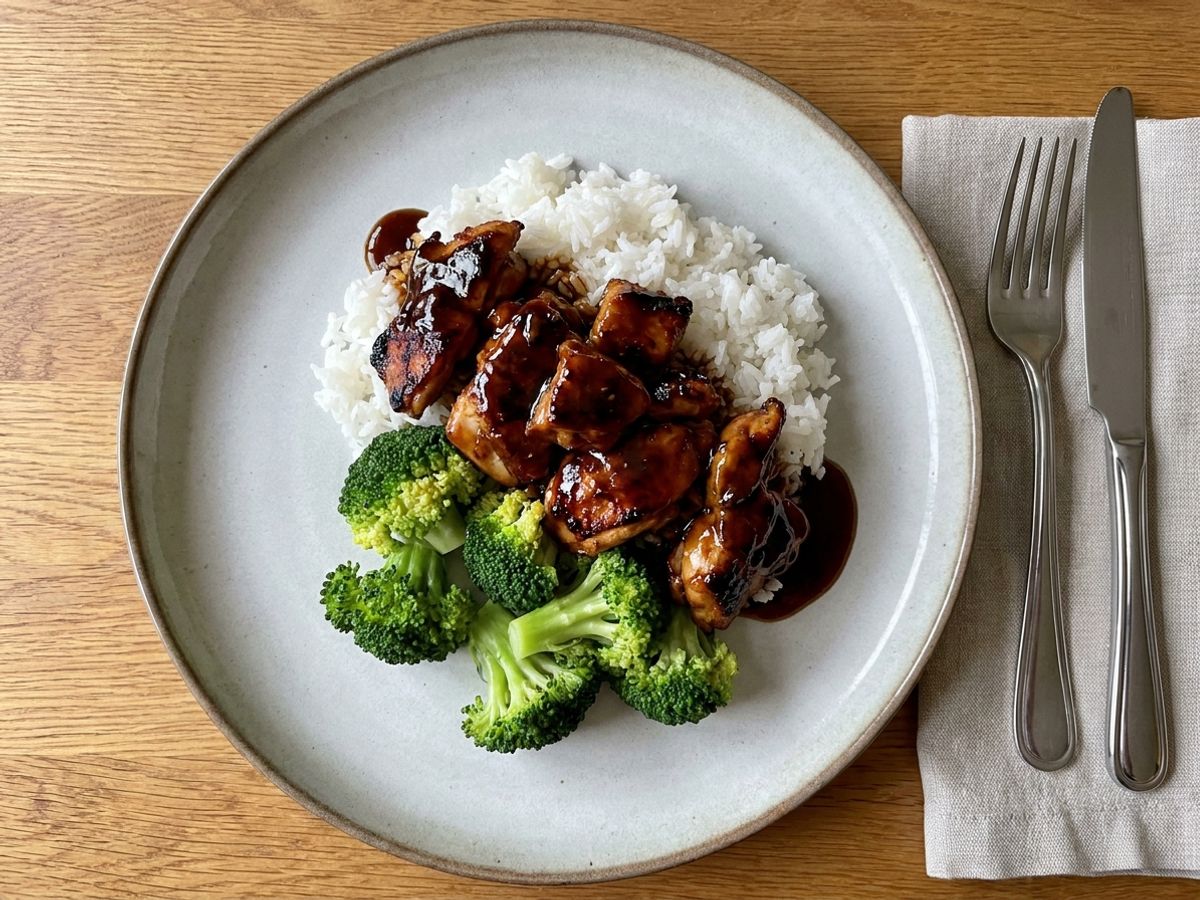
Low histamine teriyaki chicken thighs glazed in a coconut aminos, honey, ginger, and garlic sauce.
Ingredients
Chicken
- 1 1/2 pounds fresh boneless, skinless chicken thighs (or breasts), cut into bite-sized pieces
- 1 tablespoon olive oil
- 1/4 to 1/2 teaspoon salt (coconut aminos are salty, so start light)
Teriyaki sauce
The easiest approach is to make a batch of the soy-free teriyaki sauce ahead of time and keep it ready in the fridge. If you want to make it right in the pan, here is a quick inline version:
- 1/3 cup coconut aminos
- 2 tablespoons honey (or maple syrup)
- 1 teaspoon fresh ginger, finely grated
- 1 clove garlic, minced
- 1 teaspoon arrowroot starch
- 2 tablespoons water
- 1 teaspoon sesame oil (optional)
Instructions
Prep
- About 15 minutes before cooking, remove the chicken from the refrigerator to take the chill off. Pat the pieces completely dry with paper towels and season with the salt.
- In a small bowl, whisk the arrowroot starch into the water until smooth. Set aside.
Sear the chicken
- Heat the olive oil in a large skillet over medium-high heat until it shimmers.
- Add the chicken pieces in a single layer, leaving space between them so they sear rather than steam. Work in two batches if needed.
- Cook undisturbed for 3-4 minutes until golden underneath, then turn and continue cooking until the thickest pieces reach an internal temperature of 165°F (74°C), usually another 3-4 minutes. Transfer to a plate.
Glaze and reduce
- Lower the heat to medium. Add the coconut aminos, honey, ginger, and garlic to the same skillet and stir, scraping up any browned bits from the bottom of the pan.
- Once the sauce begins to simmer, stir in the arrowroot slurry and cook for 1-2 minutes until the sauce thickens enough to coat the back of a spoon.
- Return the chicken to the pan and toss to coat in the glaze. Cook for 1-2 minutes more so the sauce clings to every piece. Remove from heat and stir in the sesame oil if using.
Tips & Substitutions
- Use chicken thighs for the juiciest result. They stay tender even after glazing. Breasts work too. Just take them off the heat as soon as they hit 165°F (74°C) so they do not dry out.
- Make the sauce ahead. A jar of teriyaki sauce in the fridge turns this into a fast weeknight dinner. Add it to the pan after searing and skip straight to thickening.
- Serve it over rice with a green vegetable. A bed of basic white rice and a side of steamed broccoli round out the plate. Leftover plain rice and chicken can also become low histamine fried rice the next day.
- Use fresh ginger, not dried. Fresh ginger has a brighter flavor and may be better tolerated than the dried version.
- Skip the garlic if it bothers you. The ginger and coconut aminos carry plenty of flavor on their own.
 Get the Histamine Recipes app
250+ low histamine recipes, every ingredient rated.


Why This Works
Coconut aminos. This soy-free alternative replaces the soy sauce that classic teriyaki depends on. Soy sauce is fermented and high in histamine, while coconut aminos is often tolerated better, though tolerance varies by brand and individual. Choose a brand with minimal ingredients.
Fresh chicken. Chicken is low in histamine when fresh. Freshness matters most for protein, so cook it the same day you buy it, or freeze and thaw just before cooking.
Fresh ginger. Generally well tolerated and may help support digestion for some people. It gives the glaze its warm, classic teriyaki note without any fermented mirin or rice vinegar.
Honey. A natural sweetener that is generally well tolerated and gives the sauce its signature glossy finish. Maple syrup works in its place.
Garlic (optional). Contains quercetin, a compound sometimes discussed in mast cell research, but it can also act as a histamine liberator for some people. Use it only if you tolerate it.
Storage
Best eaten immediately after cooking. Cooked chicken is one of the foods most prone to histamine buildup in leftovers, so if you must store it, refrigerate within 30 minutes and eat within 24 hours. Reheating does not reduce histamine that has already formed, and some people react even to frozen leftover meat.
Not sure about an ingredient?
Histamine tolerance is personal, and most of working it out comes down to knowing where individual foods stand. Our low histamine food list rates 4,500+ foods and explains the reasoning behind each rating, including the foods whose level depends on how fresh they are or how they were stored. It is worth a look before you swap anything in this recipe.
Before you eat
A lot of people with histamine intolerance take a DAO enzyme supplement 15 to 30 minutes before a meal. DAO is the enzyme your body uses to break down the histamine in food, and taking it with meals supports that natural process. Curious how it works? See do DAO supplements actually work.
Affiliate link: if you buy through it, we may earn a commission at no extra cost to you. These statements have not been evaluated by the Food and Drug Administration. This product is not intended to diagnose, treat, cure, or prevent any disease.
For educational purposes only. Not medical advice. Consult a healthcare professional for personal guidance.
References
- Stir Fry Sauce Without Soy Sauce (Vegan Option) — Low Histamine Eats
- Low Histamine Chicken Stir Fry and Sauce Recipe — Fact vs Fitness
- My Staple Low Histamine Recipes That I Make On Repeat — Lesswithlaur
- Histamine and histamine intolerance — Maintz & Novak (2007)
- Histamine Intolerance: The Current State of the Art — Comas-Basté et al. (2020)
- Biogenic Amines in Plant-Origin Foods: Are They Frequently Underestimated in Low-Histamine Diets? — Sánchez-Pérez et al. (2021)
- Diamine Oxidase Supplementation Improves Symptoms in Patients with Histamine Intolerance — Schnedl et al. (2019)
- Histamine Intolerance — A Comprehensive Review — Jochum (2024)