 Histamine Tracker
Macadamia Nut Butter

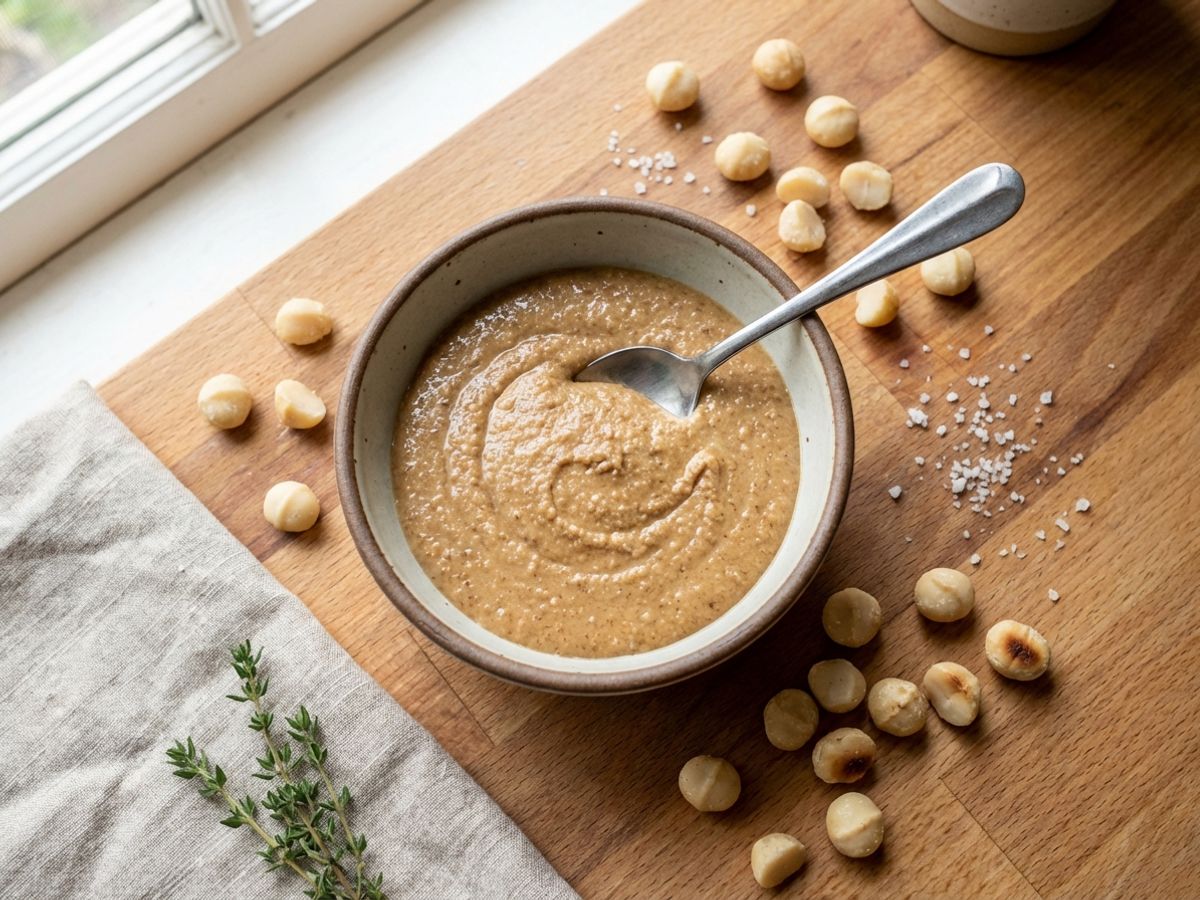
A low histamine nut butter made from raw macadamia nuts and sea salt.
Ingredients
- 2 cups raw macadamia nuts
- 1/4 teaspoon sea salt
Instructions
Toast the Nuts (Optional)
- For a richer flavor, spread the macadamia nuts on a baking sheet.
- Toast at 325°F (165°C) for 8-10 minutes, stirring halfway, until lightly golden and fragrant.
- Let cool for 5 minutes before blending.
Blend
- Add the macadamia nuts to a food processor or high-speed blender.
- Process for 1-2 minutes until the nuts break down into a coarse meal.
- Stop and scrape down the sides.
- Continue processing for another 6-8 minutes, stopping to scrape the sides as needed.
- The mixture will progress from crumbly to a thick ball, then release its oils and become smooth and creamy.
- Add the salt and blend for 15 more seconds to combine.
Store
Transfer to a clean glass jar with a tight-fitting lid.
Tips & Substitutions
- Skip toasting if you are very sensitive. Raw macadamia nuts blend just as well, though the flavor will be milder.
- Processing time depends on your machine. A high-speed blender or powerful food processor finishes in about 5 minutes. Smaller machines may take 10 or more, with frequent scraping.
- Add 1 tablespoon maple syrup for a lightly sweetened version. Stir it in at the end.
- Stir if the oils separate. Natural nut butters will separate over time. A quick stir brings it back together.
- Swap macadamia nuts for cashews if they are easier to find, though macadamia nuts are generally better tolerated for histamine intolerance.
 Get the Histamine Recipes app
250+ low histamine recipes, every ingredient rated.


Why This Works
Macadamia nuts. Generally well tolerated and naturally low in histamine. They are one of the safer nut options compared to walnuts or cashews, which some people find more problematic.
Minimal ingredients. Just nuts and salt. Fewer ingredients means fewer potential triggers and easier troubleshooting if something does not agree with you.
No additives. Store-bought nut butters often contain preservatives, added oils, or other ingredients that can be problematic. Making your own gives you full control over freshness and quality.
Storage
Store in a clean glass jar with a tight-fitting lid in the refrigerator for 2-3 weeks. The oils may separate over time, which is normal. Just stir before using. Histamine buildup is lower risk than with meat or fish leftovers. The bigger concern with nut butter over time is rancidity, so use clean utensils and keep the lid tightly sealed. You can also freeze portions for longer storage.
Not sure about an ingredient?
Histamine tolerance is personal, and most of working it out comes down to knowing where individual foods stand. Our low histamine food list rates 4,500+ foods and explains the reasoning behind each rating, including the foods whose level depends on how fresh they are or how they were stored. It is worth a look before you swap anything in this recipe.
Before you eat
A lot of people with histamine intolerance take a DAO enzyme supplement 15 to 30 minutes before a meal. DAO is the enzyme your body uses to break down the histamine in food, and taking it with meals supports that natural process. Curious how it works? See do DAO supplements actually work.
Affiliate link: if you buy through it, we may earn a commission at no extra cost to you. These statements have not been evaluated by the Food and Drug Administration. This product is not intended to diagnose, treat, cure, or prevent any disease.
For educational purposes only. Not medical advice. Consult a healthcare professional for personal guidance.
References
- Low Histamine Nuts and Seeds (Complete Guide) — Low Histamine Eats
- Macadamia Nut Butter Recipe — Mast Cell 360
- Low Histamine Nut Butter Recipe with Macadamia Nuts — Fact vs Fitness
- Histamine and histamine intolerance — Maintz & Novak (2007)
- Histamine Intolerance: The Current State of the Art — Comas-Basté et al. (2020)
- Biogenic Amines in Plant-Origin Foods: Are They Frequently Underestimated in Low-Histamine Diets? — Sánchez-Pérez et al. (2021)
- Diamine Oxidase Supplementation Improves Symptoms in Patients with Histamine Intolerance — Schnedl et al. (2019)
- Histamine Intolerance — A Comprehensive Review — Jochum (2024)