 Histamine Tracker
Honey Garlic Sauce

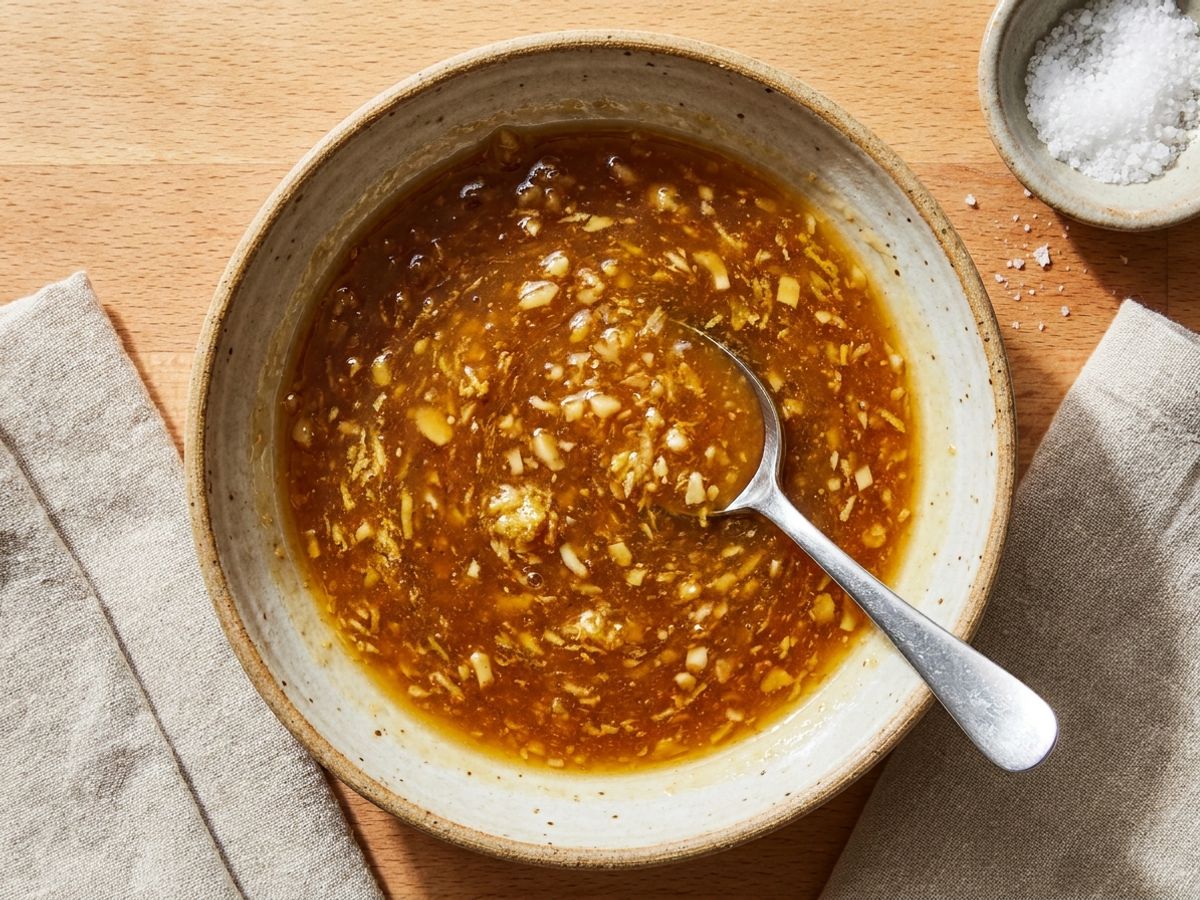
A low histamine honey garlic sauce made with honey, coconut aminos, butter, fresh garlic, and ginger.
Ingredients
- 3 tablespoons honey
- 2 tablespoons coconut aminos
- 2 tablespoons unsalted butter (or olive oil for dairy-free)
- 3 cloves fresh garlic, finely minced
- 1 teaspoon fresh ginger, finely grated
- 2 tablespoons water (1 tablespoon for the slurry, 1 tablespoon for the sauce)
- 1 to 1 1/2 teaspoons arrowroot starch (optional, for a thicker glaze)
- Pinch of sea salt
Instructions
Make the Slurry
- If using arrowroot, whisk it into 1 tablespoon of the water in a small bowl until smooth. Set aside.
Cook the Sauce
- Melt the butter in a small saucepan over medium-low heat.
- Add the minced garlic and grated ginger. Cook gently for 30 to 60 seconds, stirring constantly, until fragrant. Do not let the garlic brown.
- Stir in the honey, coconut aminos, remaining water, and salt.
- Bring to a gentle simmer and cook for 3 to 5 minutes, stirring often, until slightly reduced and glossy.
- If you want a thicker glaze, stir in the arrowroot slurry and simmer gently for 30 to 90 seconds until the sauce coats the back of a spoon. Do not let it hard-boil after adding the slurry, or it can thin out again.
- Remove from heat and let cool for a minute before using. The sauce will thicken further as it sits.
Use
Brush over baked chicken thighs, pork tenderloin, or turkey during the last few minutes of cooking. Also works as a dipping sauce for crispy chicken tenders or a quick glaze stirred into a stir-fry at the end. If using on salmon, choose fish that was frozen at sea or is extremely fresh, since fish builds histamine quickly.
Tips & Substitutions
- Mince the garlic finely. Smaller pieces melt into the sauce instead of standing out, which gives a smoother flavor.
- Skip the garlic if it bothers you. Garlic can act as a histamine liberator for some people. The honey, ginger, and coconut aminos still carry the sauce on their own.
- Use olive oil instead of butter for a dairy-free version. The flavor is a little less rich but still works well.
- Use raw or minimally processed honey if you can find it. Avoid flavored or infused honeys.
- Use fresh ginger, not dried. Fresh has a brighter flavor and may be better tolerated by some people.
- Arrowroot gives a glossy, thicker glaze. Without it, the sauce stays thinner and works better as a marinade or pan sauce.
 Get the Histamine Recipes app
250+ low histamine recipes, every ingredient rated.


Why This Works
Honey. Generally well tolerated and not fermented when raw or minimally processed. It provides the sweetness and sticky texture that would normally come from brown sugar or commercial sauces.
Coconut aminos. A common soy-free swap for soy sauce, which is fermented and high in histamine. Coconut aminos are not tolerated by everyone, since some processing involves fermentation or aging. Choose a brand with minimal ingredients and test your tolerance.
Fresh ginger. Generally well tolerated and may help support digestion for some people. It adds warmth and balances the sweetness of the honey.
Garlic (optional). Contains some flavonoids that are sometimes discussed in mast cell research, though individual response varies. Garlic can also act as a histamine liberator for some people, so use it only if you tolerate it.
Freshness matters. Making this sauce from scratch avoids the soy sauce, vinegars, and preservatives in store-bought honey garlic sauces.
Storage
Best used same day. If needed, refrigerate in a sealed glass jar for up to 24 hours, or freeze in small portions and thaw only what you need. The sauce thickens when cold, so warm it gently before using. Histamine buildup is lower risk than with meat or fish leftovers, but more sensitive people may want to stick with fresh.
Not sure about an ingredient?
Histamine tolerance is personal, and most of working it out comes down to knowing where individual foods stand. Our low histamine food list rates 4,500+ foods and explains the reasoning behind each rating, including the foods whose level depends on how fresh they are or how they were stored. It is worth a look before you swap anything in this recipe.
Before you eat
A lot of people with histamine intolerance take a DAO enzyme supplement 15 to 30 minutes before a meal. DAO is the enzyme your body uses to break down the histamine in food, and taking it with meals supports that natural process. Curious how it works? See do DAO supplements actually work.
Affiliate link: if you buy through it, we may earn a commission at no extra cost to you. These statements have not been evaluated by the Food and Drug Administration. This product is not intended to diagnose, treat, cure, or prevent any disease.
For educational purposes only. Not medical advice. Consult a healthcare professional for personal guidance.
References
- Easy Honey Butter Chicken Breast (Soy-Free) — Low Histamine Eats
- Gluten-Free Honey Garlic Chicken Wings — Low Histamine Eats
- 35+ Low Histamine Sauces & Condiments — Low Histamine Eats
- Histamine and histamine intolerance — Maintz & Novak (2007)
- Histamine Intolerance: The Current State of the Art — Comas-Basté et al. (2020)
- Biogenic Amines in Plant-Origin Foods: Are They Frequently Underestimated in Low-Histamine Diets? — Sánchez-Pérez et al. (2021)
- Diamine Oxidase Supplementation Improves Symptoms in Patients with Histamine Intolerance — Schnedl et al. (2019)
- Histamine Intolerance — A Comprehensive Review — Jochum (2024)