 Histamine Tracker
Herb Oil Dressing

A low histamine dressing of extra virgin olive oil with fresh basil, parsley, thyme, and garlic.
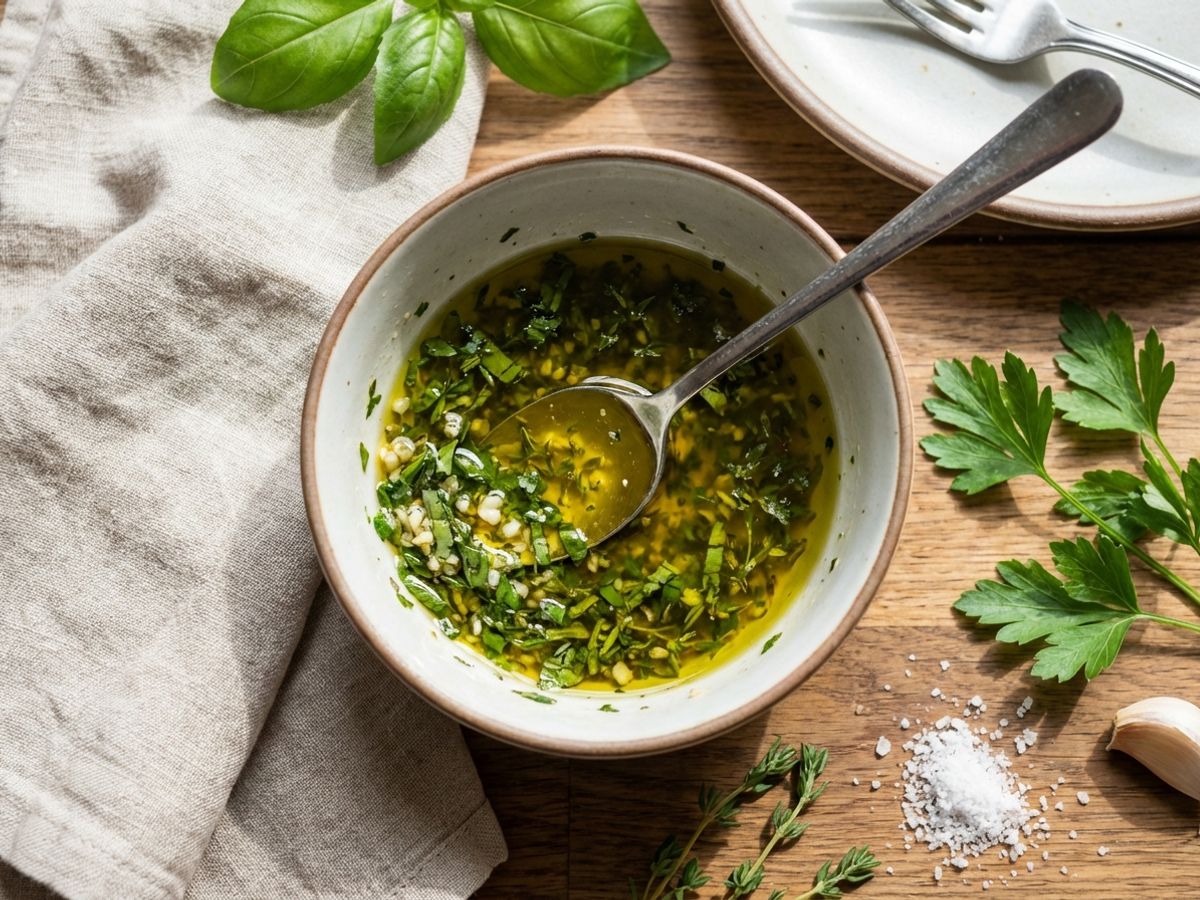
Ingredients
- 1/4 cup extra virgin olive oil
- 2 tablespoons fresh basil, finely chopped
- 1 tablespoon fresh parsley, finely chopped
- 1 teaspoon fresh thyme leaves
- 1/4 teaspoon salt
- 1 small clove garlic, minced (optional)
Instructions
Prepare the Herbs
- Wash and thoroughly dry all fresh herbs.
- Finely chop the basil and parsley. Strip the thyme leaves from the stems.
- If using garlic, mince it finely.
Combine
- Add the olive oil to a small jar or bowl.
- Stir in the chopped herbs and salt.
- Add garlic if using.
- Whisk or shake until combined.
Serve
Drizzle over mixed greens, roasted vegetables, or grain bowls. Shake or stir before each use.
Tips & Substitutions
- Skip the garlic if it is a trigger. The fresh herbs provide plenty of flavor without it.
- Use whatever fresh herbs you have on hand. Dill, chives, mint, or cilantro all work well in place of basil, parsley, and thyme.
- No vinegar or citrus needed. This dressing relies on good olive oil and fresh herbs for flavor, avoiding the acidity that can be problematic.
- Shake or stir before each use. The herbs settle to the bottom, so give it a quick shake before drizzling.
- The oil may solidify when cold. Let it sit at room temperature for a few minutes before using, or run the jar under warm water briefly.
 Get the Histamine Recipes app
250+ low histamine recipes, every ingredient rated.


Why This Works
Olive oil. Generally well tolerated and provides healthy fats. It serves as the base without needing vinegar, citrus, or other acidic ingredients that many people with histamine intolerance find problematic.
Fresh herbs. Basil, parsley, and thyme are commonly tolerated when fresh. They add flavor without relying on dried seasonings, which may bother some people depending on storage.
No vinegar or citrus. Most commercial dressings contain vinegar (fermented) or lemon juice (which can be triggering for some people with histamine intolerance). This dressing skips both entirely.
Garlic (optional). Contains quercetin, a compound sometimes discussed in mast cell research, but can also act as a histamine liberator for sensitive individuals. It is optional for this reason.
Storage
Use within 1-2 days for best freshness and flavor. Store in a sealed glass jar in the refrigerator. Histamine buildup is lower risk than with meat or fish leftovers, but the fresh herbs will lose their brightness after a couple of days. Making a fresh batch is quick and worth the effort.
Not sure about an ingredient?
Histamine tolerance is personal, and most of working it out comes down to knowing where individual foods stand. Our low histamine food list rates 4,500+ foods and explains the reasoning behind each rating, including the foods whose level depends on how fresh they are or how they were stored. It is worth a look before you swap anything in this recipe.
Before you eat
A lot of people with histamine intolerance take a DAO enzyme supplement 15 to 30 minutes before a meal. DAO is the enzyme your body uses to break down the histamine in food, and taking it with meals supports that natural process. Curious how it works? See do DAO supplements actually work.
Affiliate link: if you buy through it, we may earn a commission at no extra cost to you. These statements have not been evaluated by the Food and Drug Administration. This product is not intended to diagnose, treat, cure, or prevent any disease.
For educational purposes only. Not medical advice. Consult a healthcare professional for personal guidance.
References
- 10 Low Histamine Salad Dressings — Through The Fibro Fog
- 17+ Low Histamine Salad Dressings (Recipes) — Low Histamine Eats
- Fresh Herbs Salad Dressing With Garlic — Low Histamine Eats
- Histamine and histamine intolerance — Maintz & Novak (2007)
- Histamine Intolerance: The Current State of the Art — Comas-Basté et al. (2020)
- Biogenic Amines in Plant-Origin Foods: Are They Frequently Underestimated in Low-Histamine Diets? — Sánchez-Pérez et al. (2021)
- Diamine Oxidase Supplementation Improves Symptoms in Patients with Histamine Intolerance — Schnedl et al. (2019)
- Histamine Intolerance — A Comprehensive Review — Jochum (2024)