 Histamine Tracker
Zucchini Chips

Low histamine baked zucchini chips with olive oil, salt, thyme, and rosemary.
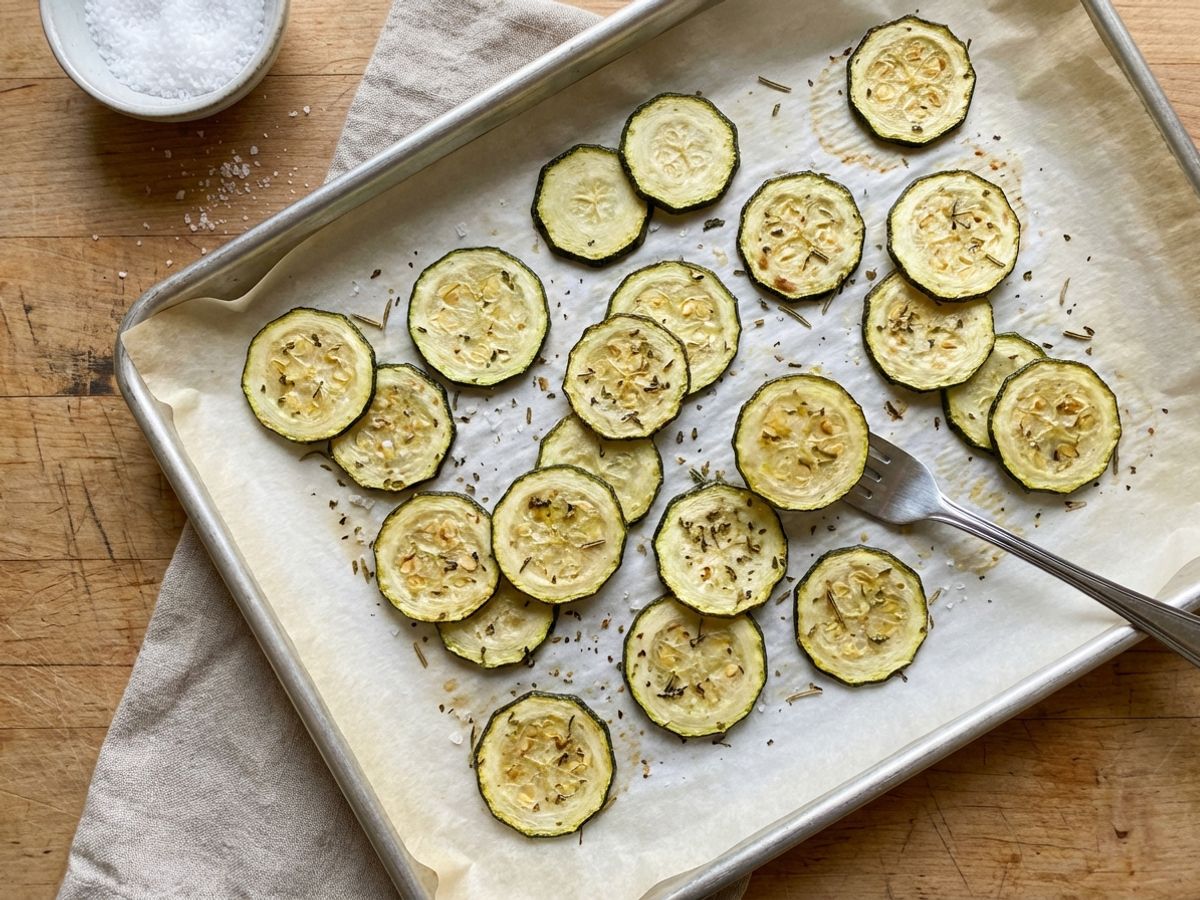
Ingredients
- 2 medium zucchini
- 1 tablespoon olive oil (or olive oil spray)
- 1/2 teaspoon salt
- 1/4 teaspoon dried thyme (optional)
- 1/4 teaspoon dried rosemary (optional)
Instructions
Prep
- Preheat your oven to 250°F (120°C).
- Line two baking sheets with parchment paper.
- Slice zucchini into thin rounds using a mandoline or very sharp knife. Aim for 1/8-inch thick or thinner. Uniform thickness is key for even cooking.
Season
- Pat zucchini slices dry with paper towels. Removing excess moisture helps them crisp up.
- Place the slices in a large bowl.
- Drizzle with olive oil (or spray lightly) and toss to coat evenly.
- Sprinkle with salt and herbs if using. Toss again.
Bake
- Arrange slices in a single layer on the baking sheets. Leave space between each slice. Do not overlap.
- Bake for 45 minutes, then check. If the top side is golden, flip each chip.
- Continue baking for another 30-45 minutes until chips are golden and crispy throughout.
- Watch carefully in the final minutes. Thinner chips will finish first, so remove them early.
Cool
Remove from oven and let cool on the baking sheets for 5-10 minutes. The chips will crisp up more as they cool.
Tips & Substitutions
- Use a mandoline for paper-thin, uniform slices. This is the most important step. Uneven slices mean some chips burn while others stay soft.
- Pat dry thoroughly. Zucchini has high water content, and removing surface moisture is essential for crispiness.
- Low and slow baking at 250°F (120°C) draws out moisture for true crispiness. Higher temperatures tend to brown the outside while leaving the inside soft.
- Flip halfway through for even cooking. This ensures both sides dry out and crisp up evenly.
- Swap olive oil for coconut oil if you prefer. Both work well at low temperatures.
 Get the Histamine Recipes app
250+ low histamine recipes, every ingredient rated.


Why This Works
Zucchini. Naturally low in histamine, low FODMAP in typical portions, and generally well tolerated. Its mild flavor takes on whatever seasoning you add.
Olive oil. A stable cooking fat that is generally well tolerated. Just a light coating is enough for crispiness without the need for deep frying.
Thyme and rosemary. Fresh herbs that are generally well tolerated. Dried versions work here too, though freshness and storage conditions can affect tolerance for dried herbs.
Storage
Best eaten fresh from the oven, when they're crispiest. Zucchini chips tend to soften faster than root vegetable chips due to the high water content. If you have leftovers, store in an open container at room temperature and eat within a few hours. They don't refrigerate or freeze well since they lose their crunch entirely.
Not sure about an ingredient?
Histamine tolerance is personal, and most of working it out comes down to knowing where individual foods stand. Our low histamine food list rates 4,500+ foods and explains the reasoning behind each rating, including the foods whose level depends on how fresh they are or how they were stored. It is worth a look before you swap anything in this recipe.
Before you eat
A lot of people with histamine intolerance take a DAO enzyme supplement 15 to 30 minutes before a meal. DAO is the enzyme your body uses to break down the histamine in food, and taking it with meals supports that natural process. Curious how it works? See do DAO supplements actually work.
Affiliate link: if you buy through it, we may earn a commission at no extra cost to you. These statements have not been evaluated by the Food and Drug Administration. This product is not intended to diagnose, treat, cure, or prevent any disease.
For educational purposes only. Not medical advice. Consult a healthcare professional for personal guidance.
References
- 9 Easy Low-Histamine Snacks — Histamine Doctor
- Low Histamine Herbs and Spices (and Recipes to Enjoy!) — Through The Fibro Fog
- SIGHI Food Compatibility List — SIGHI (2026)
- Histamine and histamine intolerance — Maintz & Novak (2007)
- Histamine Intolerance: The Current State of the Art — Comas-Basté et al. (2020)
- Biogenic Amines in Plant-Origin Foods: Are They Frequently Underestimated in Low-Histamine Diets? — Sánchez-Pérez et al. (2021)
- Diamine Oxidase Supplementation Improves Symptoms in Patients with Histamine Intolerance — Schnedl et al. (2019)
- Histamine Intolerance — A Comprehensive Review — Jochum (2024)