 Histamine Tracker
Kettle Corn

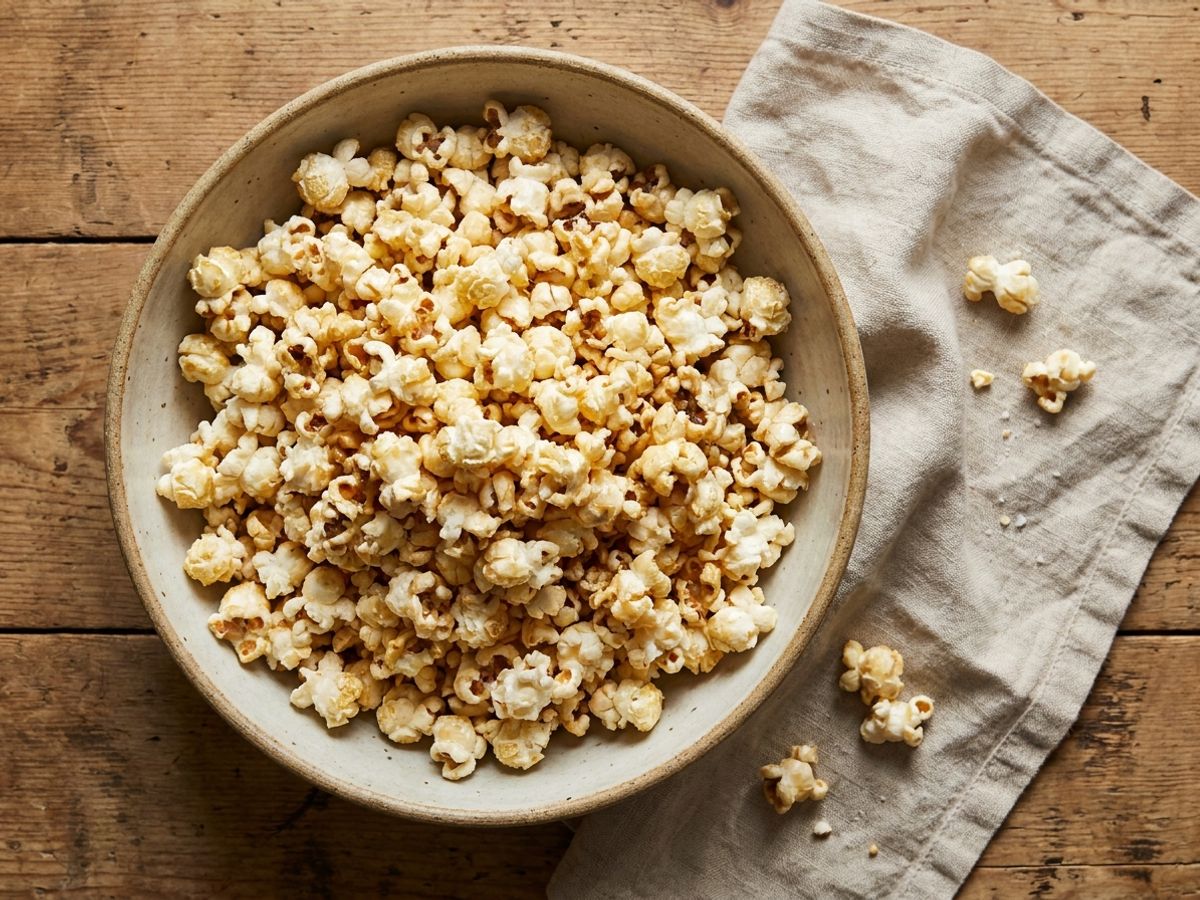
Low histamine stovetop kettle corn made with popcorn kernels, coconut oil, maple syrup, and sea salt.
Ingredients
- 1/3 cup plain popcorn kernels (organic or blue corn if you can find them)
- 2 tablespoons coconut oil (or light olive oil)
- 1 tablespoon pure maple syrup (or 1 tablespoon cane sugar)
- 1/4 teaspoon sea salt, plus more to taste
Instructions
- Set a large heavy pot with a tight lid over medium heat. Add the coconut oil and 3 to 4 kernels, then cover.
- When the test kernels pop, add the rest of the kernels and the salt. Cover and shake the pot often over the heat as the corn pops, about 2 to 3 minutes.
- When the popping slows to 2 to 3 seconds between pops, pour the popcorn into a large bowl and set it aside.
- Return the empty pot to medium-low heat and add the maple syrup. Warm it just until it bubbles, about 20 to 40 seconds, watching closely so it does not scorch.
- Add the popcorn back to the pot and toss quickly to coat, then pour it straight into the bowl so the coating does not keep cooking. Taste and add a little more salt if you like.
Tips & Substitutions
- Use plain kernels, never microwave bags. Microwave popcorn bags often carry butter flavoring, artificial flavors, and other additives. Plain kernels popped on the stove give you full control over what goes in.
- Swap the oil. Coconut oil and light olive oil both work well and have a neutral taste. Skip canola and any butter-flavored oils.
- Adjust the sweetness. One tablespoon of maple syrup makes a lightly sweet kettle corn. Add a little more for a sweeter batch, or cut back for mostly salty. Cane sugar works in place of maple for a more traditional caramel crunch.
- Watch the maple. Warming the maple syrup on its own after the corn has popped keeps it from scorching against the kernels. Keep the heat at medium-low and pull the pot off the moment the syrup bubbles. If it starts to smell like it is scorching, take it off the heat right away.
- Leave the maple out for a savory batch. Stovetop popcorn is the plain salted version, same pot and same method.
- Buy fresh kernels. Older kernels pop poorly and can taste stale, so buy from a shop with good turnover and store the kernels somewhere cool and dry.
 Get the Histamine Recipes app
250+ low histamine recipes, every ingredient rated.


Why This Works
Popcorn (plain kernels). Corn is generally considered low in histamine, and plain stovetop popcorn is commonly tolerated by many people. That said, some people still react to corn, since it is high in lectins and can develop mold when stored poorly, so choose fresh kernels and test your own tolerance.
Coconut oil (or light olive oil). Both are commonly tolerated fats for people with histamine intolerance, and they give a clean base without the butter flavoring or additives found in packaged popcorn.
Maple syrup. Pure maple syrup is generally well tolerated and a simpler sweetener than flavored coatings or corn syrup. Individual tolerance to sweeteners varies, so start with a small amount.
Storage
Kettle corn is best the day it is made, ideally within a few hours of popping. Store any extra in an airtight container at room temperature for up to 2 days, though it will lose its crunch and turn a little chewy as the maple coating softens. Do not refrigerate, which only makes it go stale faster.
Not sure about an ingredient?
Histamine tolerance is personal, and most of working it out comes down to knowing where individual foods stand. Our low histamine food list rates 4,500+ foods and explains the reasoning behind each rating, including the foods whose level depends on how fresh they are or how they were stored. It is worth a look before you swap anything in this recipe.
Before you eat
A lot of people with histamine intolerance take a DAO enzyme supplement 15 to 30 minutes before a meal. DAO is the enzyme your body uses to break down the histamine in food, and taking it with meals supports that natural process. Curious how it works? See do DAO supplements actually work.
Affiliate link: if you buy through it, we may earn a commission at no extra cost to you. These statements have not been evaluated by the Food and Drug Administration. This product is not intended to diagnose, treat, cure, or prevent any disease.
For educational purposes only. Not medical advice. Consult a healthcare professional for personal guidance.
References
- What to Know About Corn if You Have MCAS or Histamine Intolerance — Mast Cell 360
- Simple Sweet & Salty Vegan Kettle Corn — Low Histamine Eats
- Maple Syrup Popcorn — Through The Fibro Fog
- Histamine and histamine intolerance — Maintz & Novak (2007)
- Histamine Intolerance: The Current State of the Art — Comas-Basté et al. (2020)
- Biogenic Amines in Plant-Origin Foods: Are They Frequently Underestimated in Low-Histamine Diets? — Sánchez-Pérez et al. (2021)
- Diamine Oxidase Supplementation Improves Symptoms in Patients with Histamine Intolerance — Schnedl et al. (2019)
- Histamine Intolerance — A Comprehensive Review — Jochum (2024)