 Histamine Tracker
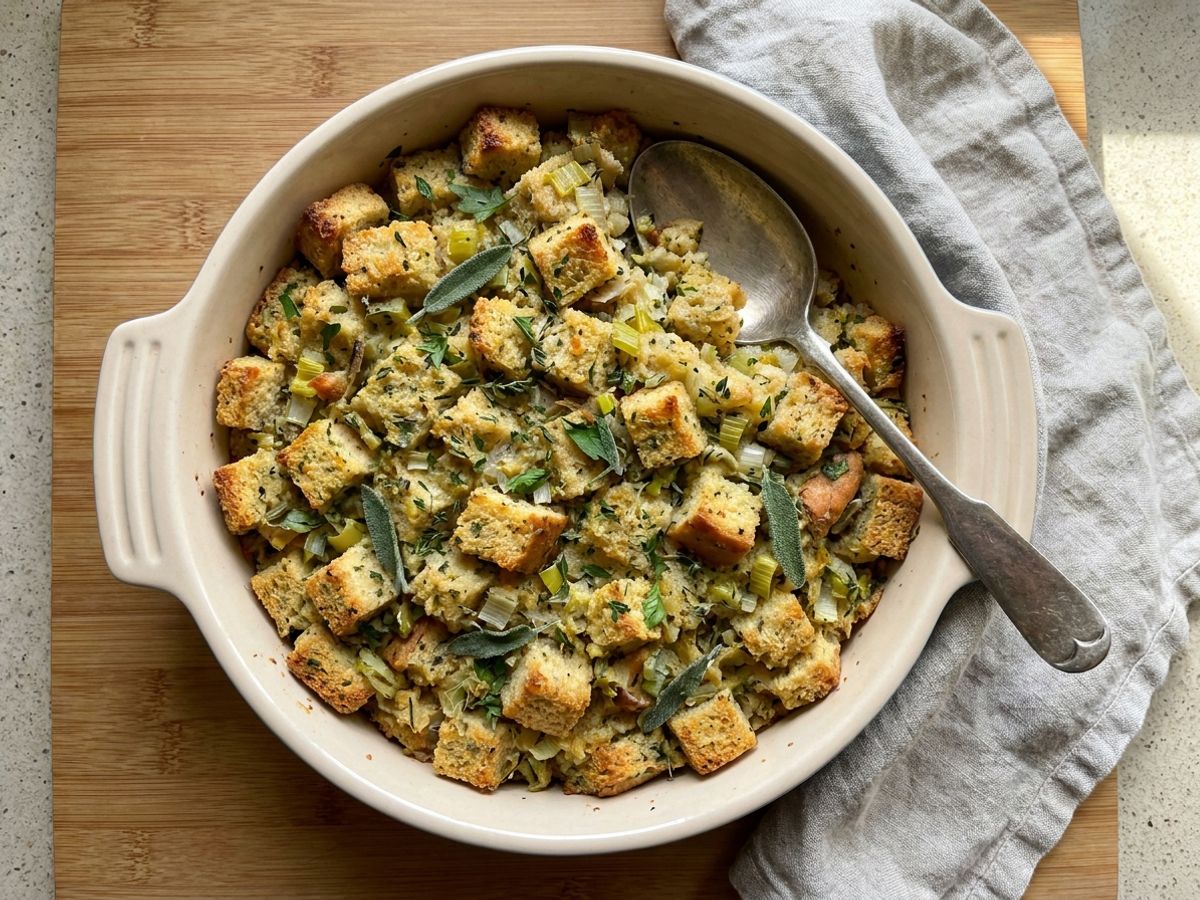
Herb Bread Stuffing

A low histamine herb stuffing made with gluten-free bread, leek, celery, sage, thyme, rosemary, and fresh broth.
Ingredients
- 1 loaf low histamine gluten-free bread, cut into 1/2-inch cubes (about 8 cups)
- 4 tablespoons ghee or olive oil, divided (or dairy-free butter)
- 1 large leek, white and light green parts only, sliced thin and rinsed
- 2 ribs celery, diced small
- 2 tablespoons fresh sage leaves, finely chopped
- 1 tablespoon fresh thyme leaves
- 1 tablespoon fresh rosemary, finely chopped
- 2 tablespoons fresh parsley, chopped
- 1 1/2 cups fresh chicken broth or vegetable broth, cooled to just barely warm
- 1 large fresh egg
- 1 teaspoon fine sea salt
Instructions
Dry the Bread
- The day before, cut the bread into 1/2-inch cubes and spread on a sheet pan. Leave uncovered overnight to dry. If you need to speed this up, bake at 250°F (120°C) for 20 to 25 minutes, tossing once, until the cubes feel dry and lightly toasted.
Sauté the Vegetables
- Preheat the oven to 350°F (175°C). Lightly grease a 9x13-inch baking dish.
- Melt 3 tablespoons of the ghee in a large skillet over medium heat. Add the sliced leek and diced celery and a pinch of salt. Cook, stirring often, for 6 to 8 minutes until softened and translucent but not browned.
- Add the sage, thyme, and rosemary. Cook another 30 seconds until the herbs smell fragrant. Remove from heat.
Assemble
- Place the dried bread cubes in a large mixing bowl. Pour the sautéed vegetable and herb mixture over the top and toss gently to combine.
- Let the broth cool until just barely warm to the touch (not hot, or the egg will scramble). Whisk the egg into a few tablespoons of the cooled broth first, then whisk that mixture into the rest of the broth along with the salt and chopped parsley.
- Pour the broth mixture over the bread in 2 or 3 additions, tossing gently after each, until every cube is evenly moistened but not soaked. The bread should feel damp through but still hold its shape.
- Transfer to the prepared baking dish and pat into an even layer. Dot the top with the remaining 1 tablespoon of ghee in small pieces.
Bake
- Cover the dish tightly with foil and bake for 25 minutes.
- Remove the foil and bake for another 15 to 20 minutes, until the top is golden and crisp and the edges have pulled slightly away from the dish.
- Let rest for 5 minutes before serving.
Tips & Substitutions
- Dry the bread the day before. Fresh bread cubes turn to mush once the broth hits. Day-old or oven-dried cubes hold their shape and soak up just enough liquid.
- Leek replaces onion. Onion can be a trigger for some people with histamine intolerance, often more reliably as a FODMAP/fructan issue than a strict histamine liberator one. The white and light-green parts of a leek give the same backbone flavor more gently.
- Use fresh broth. Boxed broths and bouillon cubes are often aged or contain yeast extract. The chicken broth or vegetable broth on this site make a big difference to how the finished stuffing reads.
- Skip the celery if it bothers you. Some people find celery aggravating; the leek and herbs carry plenty of flavor on their own.
- Black pepper is optional. Some lists flag black pepper as a histamine liberator. A pinch is usually fine; skip it if you are sensitive.
- For a richer version. Add 1/2 pound of freshly cooked ground turkey or chicken, seasoned with salt and a pinch of the fresh herbs, to the leek and celery mixture before adding the herbs. Skip pre-made sausages, which are usually seasoned with aged spices and can be high in histamine.
- Serve alongside. Pairs naturally with simple roast chicken, pork tenderloin with apples, and simple gravy for a classic Thanksgiving plate.
 Get the Histamine Recipes app
250+ low histamine recipes, every ingredient rated.


Why This Works
Fresh gluten-free bread. Most store-bought stuffing cubes and packaged bread are made with yeast. Yeast and other fermented ingredients are a common trigger for some people with histamine intolerance, though tolerance varies. The homemade gluten-free bread on this site uses baking powder instead of yeast, which keeps the bread part of the dish gentler.
Fresh herbs. Sage, thyme, rosemary, and parsley are generally well tolerated and carry the classic stuffing flavor. Older dried herbs can lose potency and pick up off notes, so fresh is the better default.
Leek instead of onion. Generally gentler than onion both for histamine and for FODMAPs, while still giving the savory base flavor the dish needs.
Fresh broth. A homemade broth used the same day or the next is much lower in histamine than the long-aged boxed broths. Boxed broths frequently include yeast extract and aged spices in the seasoning.
Ghee or olive oil. Both are generally well tolerated. Dairy tolerance is highly individual; the olive-oil or dairy-free butter version keeps the recipe accessible if butter is not on the table.
Storage
Best made the day of serving while the herbs are still bright and the texture is at its best. If you must prep ahead, dry the bread and chop the herbs and vegetables the day before; assemble and bake on the day. Leftovers of stuffing accumulate histamine, especially when made with broth, so cool quickly in shallow containers, refrigerate promptly, and ideally freeze portions the same day. Reheat covered in a 325°F (163°C) oven with a splash of fresh broth.
Not sure about an ingredient?
Histamine tolerance is personal, and most of working it out comes down to knowing where individual foods stand. Our low histamine food list rates 4,500+ foods and explains the reasoning behind each rating, including the foods whose level depends on how fresh they are or how they were stored. It is worth a look before you swap anything in this recipe.
Before you eat
A lot of people with histamine intolerance take a DAO enzyme supplement 15 to 30 minutes before a meal. DAO is the enzyme your body uses to break down the histamine in food, and taking it with meals supports that natural process. Curious how it works? See do DAO supplements actually work.
Affiliate link: if you buy through it, we may earn a commission at no extra cost to you. These statements have not been evaluated by the Food and Drug Administration. This product is not intended to diagnose, treat, cure, or prevent any disease.
For educational purposes only. Not medical advice. Consult a healthcare professional for personal guidance.
References
- Low Histamine Turkey Stuffing Recipe — Fact vs Fitness
- The Low Histamine Thanksgiving — Healing Histamine
- Low Histamine Thanksgiving Recipes and Menu Ideas — Through The Fibro Fog
- Histamine and histamine intolerance — Maintz & Novak (2007)
- Histamine Intolerance: The Current State of the Art — Comas-Basté et al. (2020)
- Biogenic Amines in Plant-Origin Foods: Are They Frequently Underestimated in Low-Histamine Diets? — Sánchez-Pérez et al. (2021)
- Diamine Oxidase Supplementation Improves Symptoms in Patients with Histamine Intolerance — Schnedl et al. (2019)
- Histamine Intolerance — A Comprehensive Review — Jochum (2024)