 Histamine Tracker
Gluten-Free Sandwich Bread

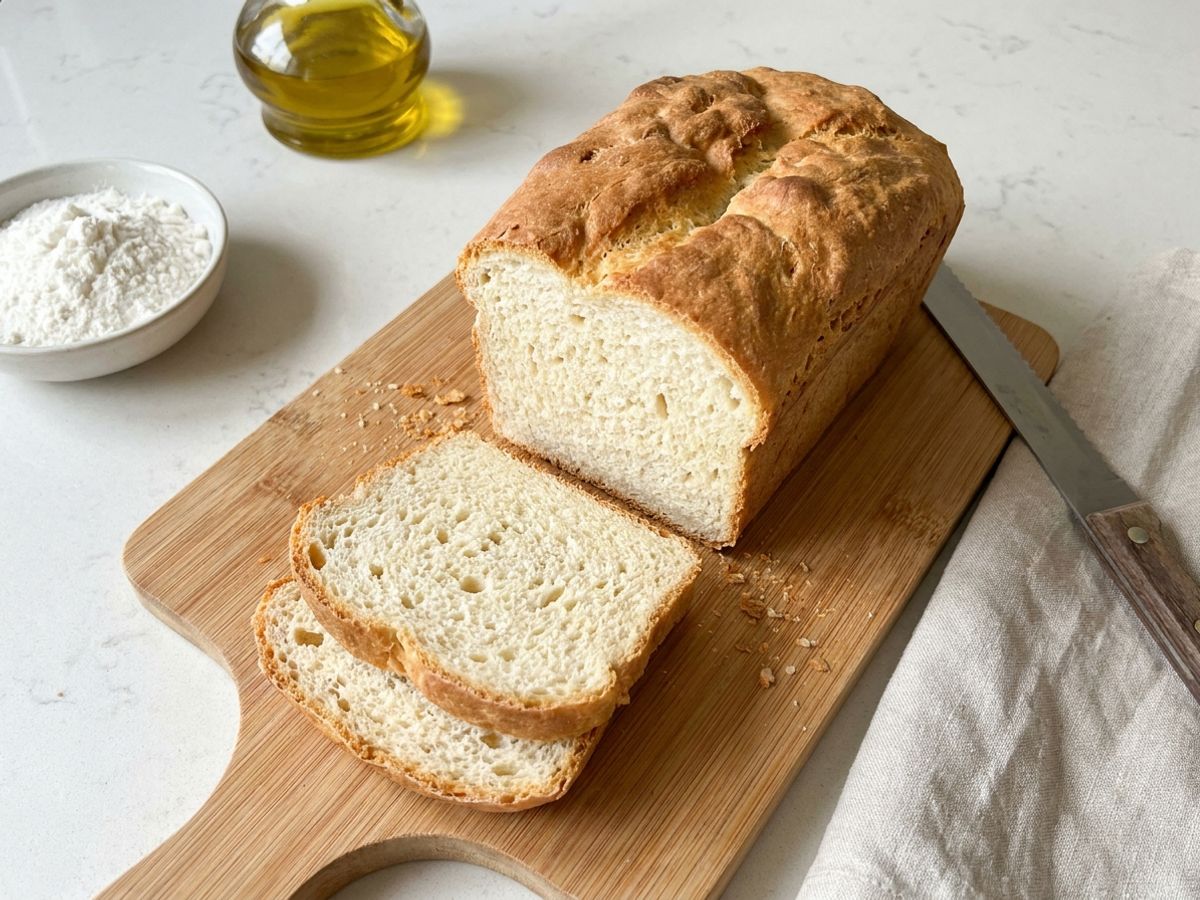
A low histamine gluten-free sandwich bread made with white rice flour, tapioca starch, psyllium husk, eggs, and olive oil.
Ingredients
- 2 cups fine white rice flour
- 3/4 cup tapioca starch
- 3 tablespoons psyllium husk powder
- 1 1/2 tablespoons gluten-free baking powder
- 1 teaspoon sea salt
- 3 fresh large eggs
- 1/4 cup olive oil
- 1 1/4 cups room temperature water
- 1 teaspoon maple syrup (optional, helps with browning)
Instructions
Prep
- Preheat oven to 375°F (190°C).
- Line a loaf pan (about 9x5 inches) with parchment paper, leaving a little overhang on the long sides for easy lifting.
Mix Dry Ingredients
- In a large bowl, whisk together the rice flour, tapioca starch, psyllium husk powder, baking powder, and salt.
- Make a well in the center.
Mix Wet Ingredients
- In a separate bowl, whisk the eggs until smooth.
- Whisk in the olive oil, water, and maple syrup if using.
- Pour the wet mixture into the well in the dry ingredients.
- Stir with a spatula until fully combined. The mixture will look like a thick, wet batter at first.
- Let it rest for 8 to 10 minutes. The psyllium will absorb the liquid and the batter will firm into a soft, scoopable dough.
Shape and Score
- Scoop the dough into the prepared loaf pan.
- Smooth the top with a wet spatula or a wet hand.
- Use a sharp knife to score a shallow line down the length of the loaf.
Bake
- Bake for 50 to 65 minutes, until the top is golden and a toothpick inserted in the center comes out clean. The internal temperature should read 208°F to 212°F (98°C to 100°C) for a fully set crumb.
- If the top browns too quickly, tent loosely with foil for the last 15 minutes.
- Lift the loaf out of the pan using the parchment overhang and transfer to a wire rack.
- Cool completely before slicing. The crumb sets as it cools.
Tips & Substitutions
- Cool fully before slicing. Gluten-free bread slices much cleaner once it has cooled all the way through. Slicing warm will tear the crumb.
- Use fine white rice flour. Coarser rice flour gives a gritty texture. If your flour feels sandy between your fingers, sift it first or look for a finer grind.
- Psyllium husk is what makes it sliceable. It binds the dough in place of gluten. Don't skip it or swap in chia or flax, which behave differently. Whole psyllium husks can work, but use a little more and let the dough rest a few extra minutes.
- Swap olive oil for melted coconut oil or avocado oil if you prefer. All three work well at this temperature.
- Yeast is a common question. Yeast-leavened breads involve fermentation, which many people with histamine intolerance don't tolerate well. This recipe skips yeast entirely for that reason. If you know you tolerate yeast, other recipes exist, but this loaf is designed to avoid that variable.
- Check your baking powder label. Some baking powders contain additives like cornstarch. Aluminum-free versions with minimal additives are a cleaner choice, and confirm you tolerate whatever starch is used.
- Serving ideas. Toast a slice and top with herb butter, or use it for a sandwich with simple roast chicken.
 Get the Histamine Recipes app
250+ low histamine recipes, every ingredient rated.


Why This Works
White rice flour. A gluten-free flour that is naturally low in histamine and generally well tolerated. It gives the loaf a neutral flavor and soft crumb without wheat.
Tapioca starch. A starch from the cassava root with almost no flavor. It adds chew and flexibility to the crumb, which helps the bread hold up to slicing and toasting.
Psyllium husk powder. Plant fiber that binds the dough and gives the loaf its sliceable texture in place of gluten. Generally well tolerated and adds fiber.
Eggs. Eggs are not considered histamine-rich, but some people with histamine intolerance react to them (often to egg whites specifically). If you know eggs are a trigger for you, this recipe isn't a good fit as written. They give the bread structure and a tender crumb.
Olive oil. A stable cooking fat that is generally well tolerated and adds moisture without dairy.
No yeast. Skipping yeast removes a commonly reported trigger. Baking powder provides the rise instead.
Storage
Best eaten the day it is baked. Slice what you need and freeze the rest right away in a sealed bag, with parchment between slices. Toast slices straight from frozen. Leftovers can accumulate histamine, so freezing promptly is better than keeping the loaf at room temperature for several days.
Not sure about an ingredient?
Histamine tolerance is personal, and most of working it out comes down to knowing where individual foods stand. Our low histamine food list rates 4,500+ foods and explains the reasoning behind each rating, including the foods whose level depends on how fresh they are or how they were stored. It is worth a look before you swap anything in this recipe.
Before you eat
A lot of people with histamine intolerance take a DAO enzyme supplement 15 to 30 minutes before a meal. DAO is the enzyme your body uses to break down the histamine in food, and taking it with meals supports that natural process. Curious how it works? See do DAO supplements actually work.
Affiliate link: if you buy through it, we may earn a commission at no extra cost to you. These statements have not been evaluated by the Food and Drug Administration. This product is not intended to diagnose, treat, cure, or prevent any disease.
For educational purposes only. Not medical advice. Consult a healthcare professional for personal guidance.
References
- Low Histamine Bread (Gluten Free, Yeast Free) — George Eats
- 13 Low Histamine Bread Options (Recipes & Brands) — Low Histamine Eats
- 13+ Low Histamine Flours & Grains — Low Histamine Eats
- Histamine and histamine intolerance — Maintz & Novak (2007)
- Histamine Intolerance: The Current State of the Art — Comas-Basté et al. (2020)
- Biogenic Amines in Plant-Origin Foods: Are They Frequently Underestimated in Low-Histamine Diets? — Sánchez-Pérez et al. (2021)
- Diamine Oxidase Supplementation Improves Symptoms in Patients with Histamine Intolerance — Schnedl et al. (2019)
- Histamine Intolerance — A Comprehensive Review — Jochum (2024)