 Histamine Tracker
Cornbread

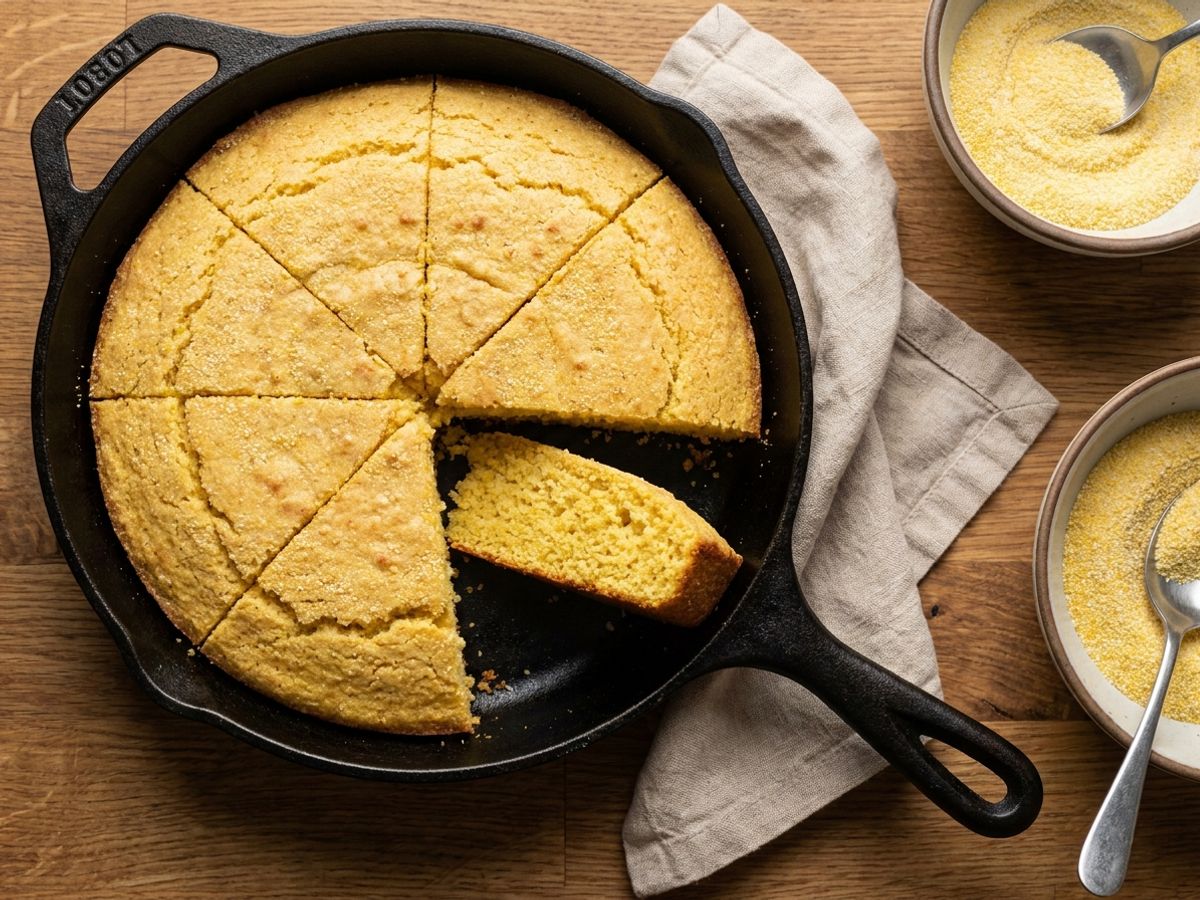
Low histamine cornbread made with cornmeal, white rice flour, oat milk, eggs, coconut oil, and a little cane sugar.
Ingredients
- 1 cup fine or medium-grind cornmeal
- 1 cup white rice flour (or a 1:1 gluten-free baking flour blend)
- 1 tablespoon baking powder
- 1 teaspoon sea salt
- 1/4 cup pure cane sugar (or 1/4 cup pure maple syrup, see notes)
- 1 cup oat milk (or full-fat coconut milk)
- 2 large fresh eggs
- 1/3 cup melted coconut oil (or extra-virgin olive oil)
Instructions
Prep
- Preheat your oven to 400°F (205°C).
- Grease a 9-inch square baking pan or an 8-inch cast iron skillet with coconut oil. If using cast iron, place the empty skillet in the oven while it preheats for a crisper crust.
Mix the Dry Ingredients
- In a large bowl, whisk together the cornmeal, rice flour, baking powder, salt, and sugar (if using granular sugar).
Mix the Wet Ingredients
- In a separate bowl, whisk the oat milk, eggs, and melted coconut oil until smooth.
- If using maple syrup instead of sugar, whisk it in with the wet ingredients.
Combine and Bake
- Pour the wet mixture into the dry mixture and stir gently with a spatula until just combined. The batter will be thick and slightly lumpy. Do not overmix.
- Pour into the prepared pan (or carefully into the preheated cast iron skillet) and smooth the top.
- Bake for 22 to 28 minutes, until the top is golden brown and a toothpick inserted in the center comes out clean. Cast iron may need an extra 2 to 3 minutes.
- Cool in the pan on a wire rack for 10 minutes before slicing. Cut into 9 squares.
Tips & Substitutions
- Maple syrup swap. Maple syrup adds extra liquid, so the crumb will be slightly more moist. For a closer match to the cane sugar version, use 3 tablespoons of maple syrup or reduce the oat milk by 1 to 2 tablespoons.
- Cornmeal grind matters. Fine grind gives a softer crumb. Medium grind gives more texture and a sturdier slice. Coarse grind tends to bake up gritty.
- Buy fresh cornmeal. Older cornmeal can taste flat or slightly stale. Look for a recent best-by date and store opened bags in the freezer to keep the flavor bright.
- Rice flour swap. A 1:1 gluten-free baking flour blend works in place of rice flour. So does 1/2 cup cassava flour plus 1/2 cup tapioca starch if you prefer a slightly chewier texture.
- Oat milk choice. Look for an ingredient list of just water, oats, and salt. Oat milks loaded with gums, oils, and natural flavors can bother sensitive people. Full-fat coconut milk works as a richer alternative.
- Cast iron for crisp edges. Preheating an 8-inch cast iron skillet gives the cornbread that classic crackly crust. A regular 9-inch square pan still works but the edges will be softer.
- Skip butter glaze. Some recipes brush melted butter on top after baking. It is fine to do this with dairy-free butter, but the cornbread is moist enough on its own.
- Pair ideas. Serve alongside low histamine chili, low histamine beef stew, or chicken and rice soup. Top warm slices with a smear of herb butter or a drizzle of pure maple syrup for breakfast.
 Get the Histamine Recipes app
250+ low histamine recipes, every ingredient rated.


Why This Works
Cornmeal. Plain cornmeal is generally considered low histamine when fresh. Tolerance to corn varies, so if corn bothers you, this is not the right recipe. Older or improperly stored cornmeal can develop off flavors, so freshness matters.
Rice flour. A gluten-free flour that is generally well tolerated and has a neutral flavor that lets the cornmeal lead. Wheat is omitted here to keep the recipe gluten-free, which is helpful for readers who also avoid gluten for separate sensitivities.
Oat milk. Often well tolerated when the ingredient list is short. Skipping dairy helps people who react to milk proteins or to aged and fermented dairy products. Coconut milk is a good alternative if oats bother you.
Coconut oil or olive oil. Both add moisture without dairy. Coconut oil keeps the flavor neutral, while extra-virgin olive oil adds a slight savory note that pairs especially well with chili and stew.
Baking powder. A non-fermented chemical leavener that many people with histamine intolerance tolerate, though sensitivities vary. Aluminum-free baking powder is the easier choice for most people. If you also react to corn, look for a corn-free brand, since most baking powders use cornstarch as a filler.
Storage
Best eaten the day it is baked, slightly warm. To save extras, cool fully and freeze the same day in a sealed bag with parchment between the squares. Reheat from frozen wrapped in foil in a 325°F (165°C) oven for about 10 minutes. Refrigerated leftovers tend to dry out and can also build up histamine, so freezing the same day is the better choice.
Not sure about an ingredient?
Histamine tolerance is personal, and most of working it out comes down to knowing where individual foods stand. Our low histamine food list rates 4,500+ foods and explains the reasoning behind each rating, including the foods whose level depends on how fresh they are or how they were stored. It is worth a look before you swap anything in this recipe.
Before you eat
A lot of people with histamine intolerance take a DAO enzyme supplement 15 to 30 minutes before a meal. DAO is the enzyme your body uses to break down the histamine in food, and taking it with meals supports that natural process. Curious how it works? See do DAO supplements actually work.
Affiliate link: if you buy through it, we may earn a commission at no extra cost to you. These statements have not been evaluated by the Food and Drug Administration. This product is not intended to diagnose, treat, cure, or prevent any disease.
For educational purposes only. Not medical advice. Consult a healthcare professional for personal guidance.
References
- Low Histamine Homesteader Cornbread — Dr. Hagmeyer
- Sweet Gluten Free Cornbread — Lesswithlaur
- 13+ Low Histamine Flours & Grains — Low Histamine Eats
- Histamine and histamine intolerance — Maintz & Novak (2007)
- Histamine Intolerance: The Current State of the Art — Comas-Basté et al. (2020)
- Biogenic Amines in Plant-Origin Foods: Are They Frequently Underestimated in Low-Histamine Diets? — Sánchez-Pérez et al. (2021)
- Diamine Oxidase Supplementation Improves Symptoms in Patients with Histamine Intolerance — Schnedl et al. (2019)
- Histamine Intolerance — A Comprehensive Review — Jochum (2024)