 Histamine Tracker
Chicken Pot Pie

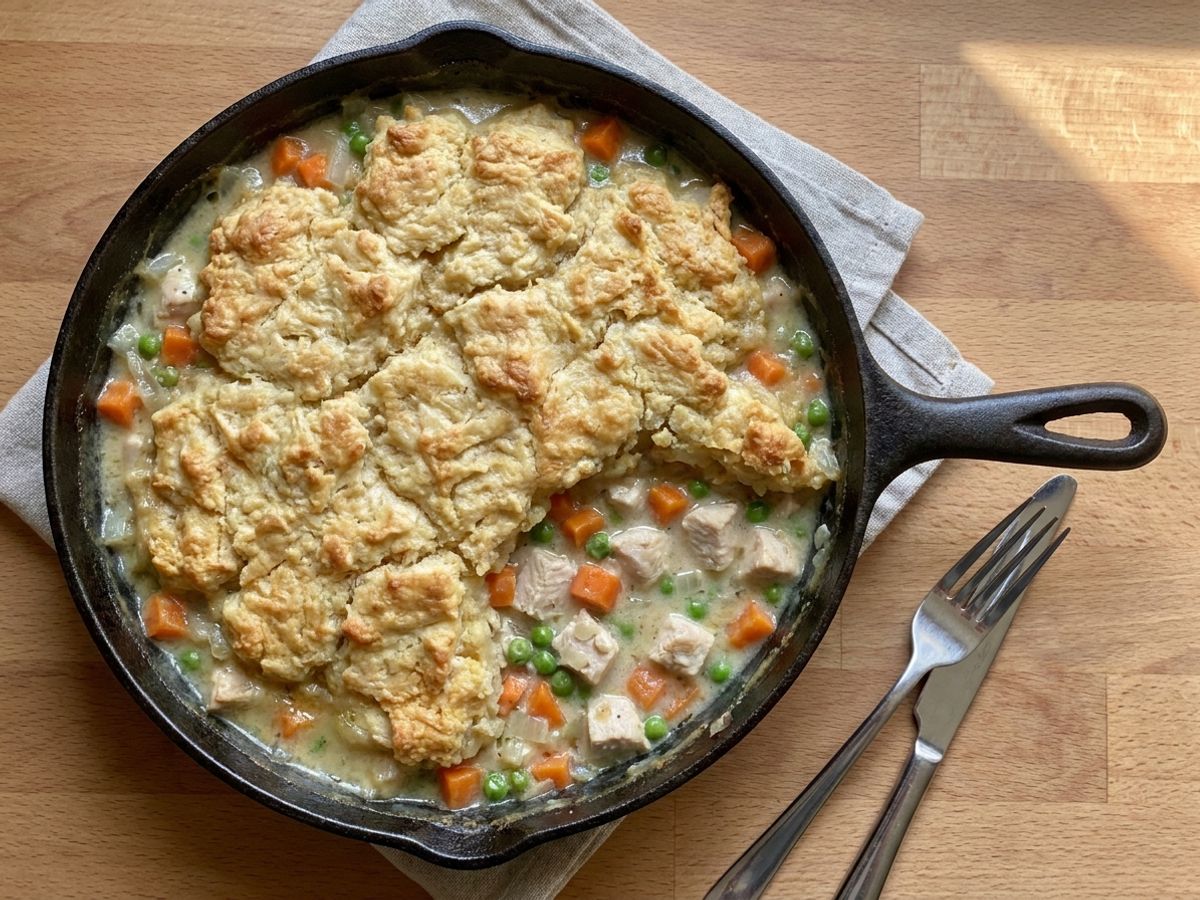
A low histamine chicken pot pie with chicken, carrots, peas, and a coconut milk sauce under cassava flour biscuits.
Ingredients
Filling
- 1 1/2 pounds fresh boneless, skinless chicken breast or thighs, cut into 3/4-inch pieces
- 2 tablespoons olive oil, divided
- 1 small onion, finely chopped (about 3/4 cup)
- 2 cloves garlic, minced
- 2 medium carrots, peeled and diced (about 1 cup)
- 2 stalks celery, diced (about 3/4 cup)
- 1 cup fresh or freshly frozen green peas
- 3 tablespoons cassava flour
- 1 1/2 cups chicken broth, warm
- 3/4 cup full-fat coconut milk (canned, no guar gum or carrageenan)
- 1 tablespoon fresh thyme leaves
- 1 tablespoon fresh parsley, chopped
- 1 teaspoon sea salt, plus more to taste
- 1/4 teaspoon black pepper (optional)
Biscuit Topping
- 1 1/2 cups cassava flour
- 2 teaspoons baking powder (aluminum-free)
- 1/2 teaspoon sea salt
- 6 tablespoons cold coconut oil, in small pieces
- 1/2 cup full-fat coconut milk, cold
- 1 large egg, lightly beaten (for brushing the tops)
Instructions
Prep
- Preheat your oven to 400°F (200°C).
- Have a 9 or 10-inch oven-safe skillet or a 2-quart baking dish ready.
Cook the Chicken and Vegetables
- Heat 1 tablespoon olive oil in a large oven-safe skillet over medium-high heat.
- Pat the fresh chicken pieces dry, season with about 1/2 teaspoon salt, and add to the pan in a single layer. Cook for 2-3 minutes per side, just until lightly browned. The chicken will finish cooking in the oven, so a little pink in the center is fine here. Transfer to a plate.
- Add the remaining 1 tablespoon olive oil to the pan. Lower the heat to medium and add the onion, carrots, and celery. Cook for 6-8 minutes, stirring often, until the vegetables soften and the onion turns translucent.
- Stir in the garlic and cook for 1 more minute.
Build the Sauce
- Sprinkle the cassava flour evenly over the vegetables. Stir for 1 minute so the flour coats everything and loses its raw smell.
- Slowly pour in the warm chicken broth, stirring constantly to keep the sauce smooth.
- Add the coconut milk, thyme, the remaining 1/2 teaspoon salt, and the pepper if using. Bring to a gentle simmer and cook for 3-4 minutes, until the sauce thickens enough to coat the back of a spoon.
- Stir in the cooked chicken, peas, and parsley. Taste and adjust salt. Remove from heat.
- If your skillet isn't oven-safe, transfer the filling to a 2-quart baking dish now.
Make the Biscuit Topping
- In a medium bowl, whisk together the cassava flour, baking powder, and salt.
- Add the cold coconut oil. Use your fingertips or a pastry cutter to work it in until the mixture looks like coarse crumbs with some pea-sized pieces of fat.
- Pour in the cold coconut milk. Stir gently with a fork until a soft dough comes together. If it feels dry or crumbly, add 1-2 more tablespoons of coconut milk. Do not overwork it.
Assemble and Bake
- Drop heaping tablespoons of biscuit dough over the warm filling, leaving small gaps between mounds so steam can escape.
- Brush the tops lightly with the beaten egg for a golden finish.
- Bake for 22-28 minutes, until the biscuits are firm to the touch, lightly golden, and the filling is bubbling around the edges.
- Let the pot pie rest for 10 minutes before serving so the sauce settles and the biscuits set.
Serve
- Spoon into shallow bowls, scooping a biscuit and plenty of filling into each portion.
- A simple green salad on the side rounds out the meal.
Tips & Substitutions
- Use chicken cut today. Freshness matters more than any food list when it comes to chicken. Buy chicken the day you plan to cook it, or cook from frozen straight to the pan if you've portioned and frozen it yourself.
- Skip rotisserie or pre-cooked chicken. Pre-cooked chicken sitting under a heat lamp or in deli packaging can build up histamine quickly. Always start with raw, fresh chicken.
- Use a quick-simmered broth. Long-simmered bone broth can be harder to tolerate. A quick chicken broth made the same day, or one you portioned and froze right after cooking, is the safer option here.
- Swap rice flour for cassava flour. White rice flour works in both the sauce and the topping. Use the same amount in the sauce. For the biscuits, increase the coconut milk by 2-3 tablespoons since rice flour absorbs less liquid.
- Choose a clean coconut milk. Look for canned full-fat coconut milk with just coconut and water on the label. Guar gum and carrageenan are common additives that can trigger reactions for some people. Native Forest Simple is one option that skips both.
- Oat milk works in the sauce. If coconut milk isn't your preference, full-fat oat milk thickens nicely with cassava flour. Avoid oat milks with added gums or natural flavors.
- Sensitive to onion or garlic? Leave both out and double the fresh thyme. Onion and garlic can trigger symptoms for reasons unrelated to histamine, including FODMAP sensitivity.
- Prefer a single top crust? Roll the biscuit dough out between two sheets of parchment to about 1/4-inch thick, lay it over the filling, trim to fit, and cut a few vents. Bake the same way.
- Make-ahead biscuit shortcut. The biscuit dough can be mixed earlier in the day and refrigerated. Drop it onto the filling cold, straight from the fridge.
- Want flakier biscuits on top? The standalone low histamine biscuits recipe uses a cassava-plus-tapioca blend for extra lift. Drop spoonfuls of that dough over the filling instead of the topping above.
 Get the Histamine Recipes app
250+ low histamine recipes, every ingredient rated.


Why This Works
Fresh chicken. Naturally low in histamine when cooked from fresh or properly frozen. Because chicken is one of the protein-handling steps where freshness has the biggest impact, buying and cooking the same day is the simplest way to keep this dish well tolerated.
Coconut milk and cassava flour roux. A traditional pot pie sauce is built on butter, flour, and milk. This version replaces all three with olive oil, cassava flour, and coconut milk. Some people with histamine intolerance also find dairy difficult, especially aged or fermented dairy and products with added cultures, so a coconut milk base sidesteps that. Cassava flour thickens like wheat flour and stays neutral in flavor.
Fresh thyme and parsley. Fresh herbs carry the savory flavor that traditional pot pie gets from poultry seasoning blends or bouillon cubes. Premade blends and cubes can include yeast extract, natural flavors, or anti-caking agents that are harder to tolerate, while fresh herbs are simple and additive-free.
Carrots, celery, and peas. These three are commonly well tolerated and form the classic pot pie vegetable base. Fresh carrots and celery hold up well to the simmer, and fresh or freshly frozen peas keep their color and bite when stirred in at the end.
Skipping the canned soup shortcut. Standard recipes often call for cream of chicken or cream of mushroom soup. These contain added MSG, yeast extract, and dairy that many people with histamine intolerance react to. Building the sauce from scratch with a simple roux takes just a few minutes more.
Storage
Pot pie is best eaten fresh the day it's made. Cooked chicken accumulates histamine over time, even in the fridge. If you want to save portions, cool quickly, divide into single servings, and freeze right away rather than refrigerating. Thaw and reheat one portion at a time. Some people react even to frozen cooked protein, so try a small amount first before relying on it as a meal-prep option.
Not sure about an ingredient?
Histamine tolerance is personal, and most of working it out comes down to knowing where individual foods stand. Our low histamine food list rates 4,500+ foods and explains the reasoning behind each rating, including the foods whose level depends on how fresh they are or how they were stored. It is worth a look before you swap anything in this recipe.
Before you eat
A lot of people with histamine intolerance take a DAO enzyme supplement 15 to 30 minutes before a meal. DAO is the enzyme your body uses to break down the histamine in food, and taking it with meals supports that natural process. Curious how it works? See do DAO supplements actually work.
Affiliate link: if you buy through it, we may earn a commission at no extra cost to you. These statements have not been evaluated by the Food and Drug Administration. This product is not intended to diagnose, treat, cure, or prevent any disease.
For educational purposes only. Not medical advice. Consult a healthcare professional for personal guidance.
References
- Biogenic Amines in Meat and Meat Products: A Review of the Science and Future Perspectives — Schirone et al. (2022), Foods
- 13+ Low Histamine Flours & Grains — Low Histamine Eats
- Creamy Coconut Milk Pasta Sauce — Low Histamine Eats
- The Mast Cell 360 Guide to Favorite Kitchen Staples — MastCell360
- Histamine and histamine intolerance — Maintz & Novak (2007)
- Histamine Intolerance: The Current State of the Art — Comas-Basté et al. (2020)
- Biogenic Amines in Plant-Origin Foods: Are They Frequently Underestimated in Low-Histamine Diets? — Sánchez-Pérez et al. (2021)
- Diamine Oxidase Supplementation Improves Symptoms in Patients with Histamine Intolerance — Schnedl et al. (2019)
- Histamine Intolerance — A Comprehensive Review — Jochum (2024)