 Histamine Tracker
Biscuits

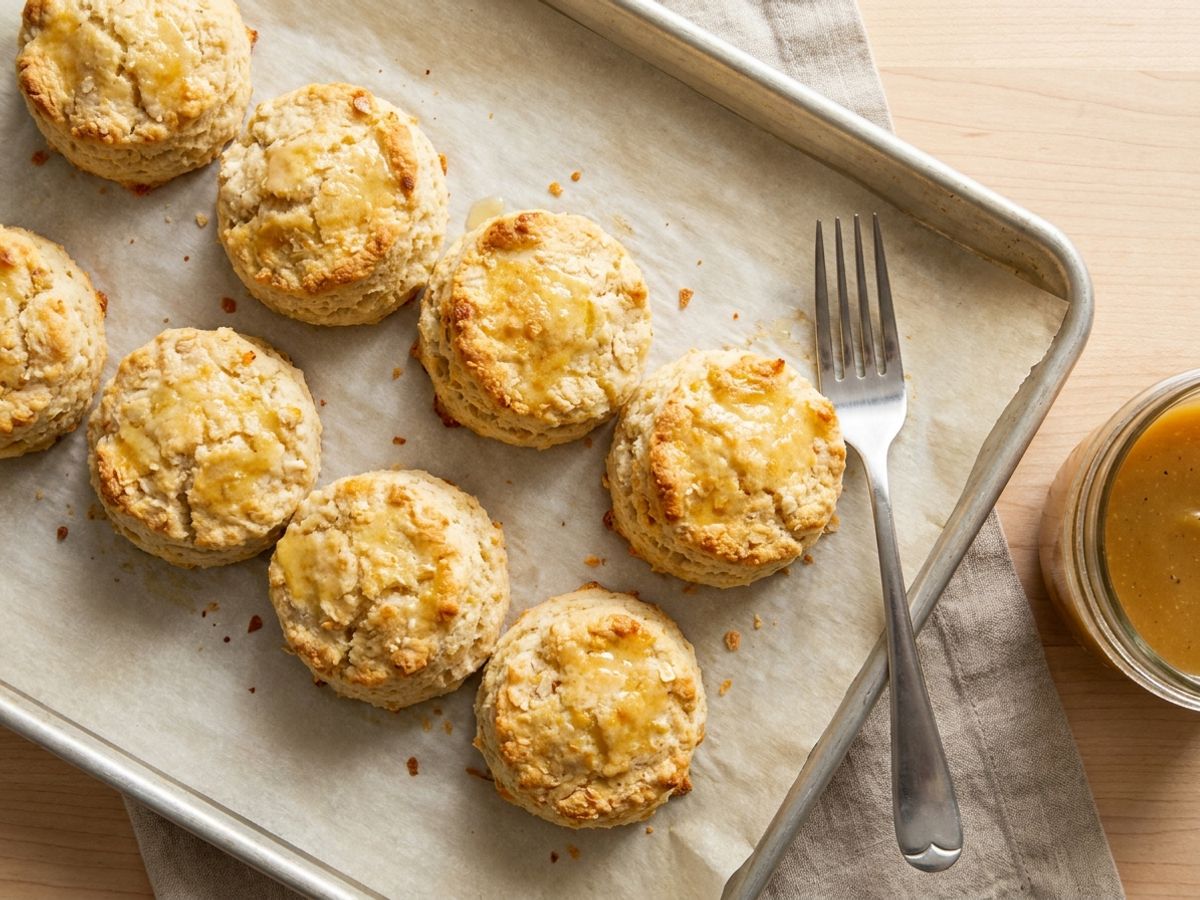
Low histamine biscuits made with cassava flour, tapioca starch, cold dairy-free butter, oat milk, and egg.
Ingredients
- 1 1/2 cups cassava flour
- 1/2 cup tapioca starch (also sold as tapioca flour)
- 1 tablespoon baking powder
- 1 teaspoon sea salt
- 1 teaspoon pure cane sugar (optional, for browning)
- 1/2 cup cold dairy-free butter, cut into small cubes (or solid coconut oil, well chilled)
- 3/4 cup cold oat milk (or full-fat coconut milk), plus more if needed
- 1 fresh egg, lightly beaten
- 1 tablespoon dairy-free butter, melted, for brushing the tops
Instructions
Prep
- Preheat your oven to 425°F (220°C).
- Line a baking sheet with parchment paper.
- Make sure your dairy-free butter and oat milk are very cold. Pop them in the freezer for 10 minutes while you measure the dry ingredients if your kitchen is warm.
Mix the Dry Ingredients
- In a large bowl, whisk together the cassava flour, tapioca starch, baking powder, salt, and sugar if using.
Cut in the Fat
- Scatter the cold cubed butter over the flour mixture.
- Use a pastry cutter, two knives, or your fingertips to work the butter into the flour until the largest pieces are about the size of small peas. You want visible pieces of butter throughout. Those pockets of fat are what create flaky layers.
- Place the bowl in the freezer for 5 minutes to keep the butter cold while you mix the wet ingredients.
Add the Wet Ingredients
- In a small bowl, whisk together the oat milk and beaten egg.
- Pour the wet mixture into the flour-butter mixture.
- Stir gently with a spatula or fork just until the dough comes together. It should be shaggy and slightly sticky, not smooth. If it looks dry and crumbly, add another tablespoon of oat milk.
Shape the Biscuits
- Turn the dough out onto a sheet of parchment paper lightly dusted with cassava flour.
- Pat the dough into a rough rectangle about 1 inch thick. Do not roll it out thin.
- Fold the dough over itself once, then pat it back to 1 inch thick. Repeat once more. These folds build the layers that give biscuits their flake.
- Use a 2 1/2-inch round cutter or a sharp knife to cut 8 biscuits. Press straight down without twisting the cutter, which seals the edges and stops the rise.
- Gather any scraps, gently press them together, and cut the last biscuit. The re-pressed biscuit will be slightly less flaky but still tender.
Bake
- Place the biscuits on the prepared baking sheet, spaced about an inch apart for crisp sides or touching for soft sides.
- Brush the tops with the melted dairy-free butter.
- Bake for 16 to 20 minutes, until the tops are deep golden brown and the bottoms feel firm when tapped.
- Cool on the pan for 5 minutes before serving warm.
Tips & Substitutions
- Cold ingredients are non-negotiable. Warm butter melts into the flour instead of staying in distinct pieces, and you lose the flake. If the dough feels soft at any point, return the bowl or the cut biscuits to the freezer for a few minutes.
- Don't overwork the dough. Mix only until the flour disappears. Each extra stir tightens the texture and gives you a denser biscuit. The dough should look messy.
- Use a fresh, lightly colored cassava flour. Older flour can taste bitter and weigh the biscuits down.
- Swap tapioca starch for arrowroot starch. Both behave similarly and either gives the biscuits their lift. Cassava flour and tapioca starch are not interchangeable here, though, since cassava is the structure flour and tapioca is the lightener.
- Coconut milk works in place of oat milk. Use the full-fat canned kind, well shaken. Skip light coconut milk, which is too watery to bind the dough.
- Choose a simple-ingredient oat milk. Look for water, oats, and salt on the label. Oat milks loaded with gums, emulsifiers, and natural flavors can bother sensitive people. Rice milk works too if oats are an issue for you.
- Use a stick-style dairy-free butter. Stick-style brands have a higher fat content and firmer texture than tub spreads, which makes them behave more like dairy butter in pastry. Tub spreads carry more water and can grease out before the biscuits set.
- Pick an aluminum-free baking powder. If you also react to corn, look for a corn-free formula. Most standard baking powders use cornstarch as a filler.
- Egg-free option. Replace the egg with a flax egg (1 tablespoon ground flaxseed stirred into 3 tablespoons warm water, rested for 5 minutes). A gelatin egg (1 tablespoon unflavored gelatin into 3 tablespoons warm water) gives a slightly closer texture if you tolerate it. The biscuits will be a little less tall either way but still tender.
- Serving ideas. Split warm and top with herb butter, drizzle with simple gravy for biscuits and gravy, or spread with a thin layer of fresh fruit jam. They also work as a base for breakfast sandwiches with scrambled eggs.
 Get the Histamine Recipes app
250+ low histamine recipes, every ingredient rated.


Why This Works
Cassava flour. A gluten-free flour from the cassava root that is generally considered low histamine and is often well tolerated. It gives the biscuits enough structure to hold their shape without wheat.
Tapioca starch. Pulled from the same root as cassava but more refined. Generally low histamine and commonly tolerated. It adds the lightness that keeps these biscuits from feeling heavy. Without it, the cassava-only dough bakes up dense.
Cold dairy-free butter. Pockets of cold fat melt during baking and leave behind layers of air, which is how biscuits get their flake. Skipping dairy helps people who react to milk proteins or to aged and fermented dairy products like cheese and yogurt. Coconut oil works the same way as long as it stays solid until the dough hits the oven.
Oat milk. Often well tolerated, especially when the ingredient list is short (water, oats, salt). Tolerance varies, so check the label and test your own response. A simple rice milk is a fine alternative if oats bother you.
Baking powder. A yeast-free leavening, which suits people who react to fermented foods. Baking powder reacts twice, once when wet and once with heat, so the biscuits keep rising in the oven. Aluminum-free is the easier choice for most people.
Storage
Best eaten warm the same day they are baked. To save extras, cool fully and freeze in a sealed bag right away. Reheat from frozen in a 300°F (150°C) oven for about 8 minutes, or split and toast. Leftovers stored in the fridge tend to dry out and lose texture, so freezing right after they cool is the better option.
Not sure about an ingredient?
Histamine tolerance is personal, and most of working it out comes down to knowing where individual foods stand. Our low histamine food list rates 4,500+ foods and explains the reasoning behind each rating, including the foods whose level depends on how fresh they are or how they were stored. It is worth a look before you swap anything in this recipe.
Before you eat
A lot of people with histamine intolerance take a DAO enzyme supplement 15 to 30 minutes before a meal. DAO is the enzyme your body uses to break down the histamine in food, and taking it with meals supports that natural process. Curious how it works? See do DAO supplements actually work.
Affiliate link: if you buy through it, we may earn a commission at no extra cost to you. These statements have not been evaluated by the Food and Drug Administration. This product is not intended to diagnose, treat, cure, or prevent any disease.
For educational purposes only. Not medical advice. Consult a healthcare professional for personal guidance.
References
- Lower Histamine Biscuits — Betsy Leighton
- Cassava Flour Biscuits with Sweet Potatoes — UnderStory Healing
- 13+ Low Histamine Flours & Grains — Low Histamine Eats
- Histamine and histamine intolerance — Maintz & Novak (2007)
- Histamine Intolerance: The Current State of the Art — Comas-Basté et al. (2020)
- Biogenic Amines in Plant-Origin Foods: Are They Frequently Underestimated in Low-Histamine Diets? — Sánchez-Pérez et al. (2021)
- Diamine Oxidase Supplementation Improves Symptoms in Patients with Histamine Intolerance — Schnedl et al. (2019)
- Histamine Intolerance — A Comprehensive Review — Jochum (2024)