 Histamine Tracker
Fresh Salmon Cakes

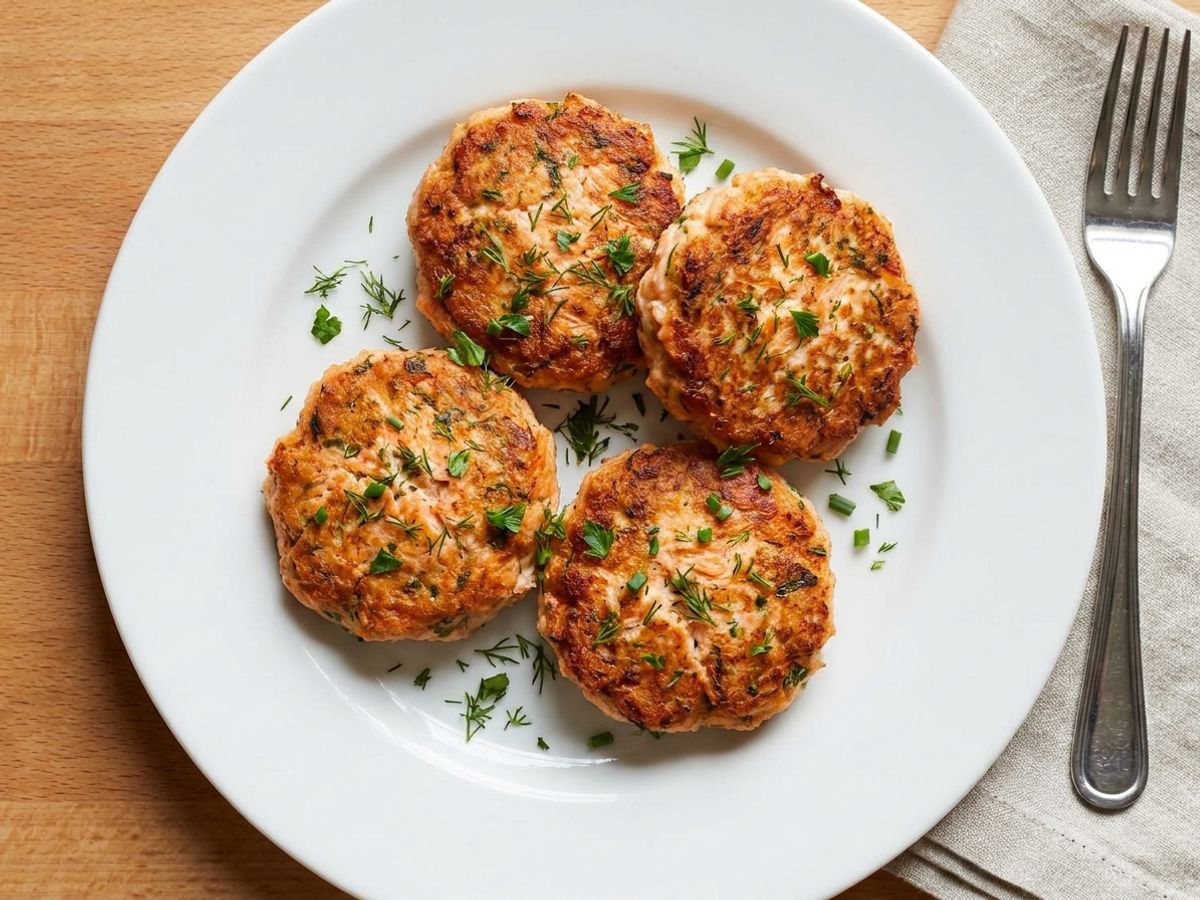
Low histamine salmon cakes made with fresh salmon, egg, cassava flour, dill, parsley, and chives, pan-fried in olive oil.
Ingredients
- 1 pound fresh salmon fillets, skin removed (about 2 fillets)
- 1 large egg
- 4 tablespoons cassava flour, plus more if needed
- 2 tablespoons fresh dill, chopped
- 1 tablespoon fresh parsley, chopped
- 1 teaspoon fresh chives, chopped (optional)
- 1/2 teaspoon sea salt
- 2 tablespoons olive oil, for pan-frying
- Extra olive oil, for cooking the salmon
Instructions
Cook the Salmon
- Preheat your oven to 400°F (200°C) and line a baking sheet with parchment paper.
- Pat the salmon fillets dry with paper towels and place them skin side down on the sheet. Rub lightly with olive oil and sprinkle with a pinch of the salt.
- Bake for 10 to 12 minutes, until the salmon is just cooked through. It can be slightly underdone in the center, since it will cook again in the pan.
- Let the salmon cool for a few minutes, then remove any skin and flake the flesh into small pieces with a fork.
Form the Cakes
- In a bowl, gently combine the flaked salmon, egg, cassava flour, dill, parsley, chives if using, and the remaining salt.
- Press a small amount together. The mixture should hold its shape. If it feels too wet, add more cassava flour one tablespoon at a time.
- Divide the mixture into about 6 portions and shape each into a patty roughly 1/2 inch thick.
Pan-Fry
- Heat the olive oil in a large skillet over medium heat.
- Cook the cakes for 2 to 3 minutes per side, until golden brown and heated through. Work in batches so the pan is not crowded.
- Transfer to a paper-towel-lined plate to drain briefly, then serve immediately.
Tips & Substitutions
- Use fresh salmon, never canned. Canned or tinned fish is high in histamine and is not suitable for this recipe. Buy the freshest salmon you can and cook it the same day, or choose salmon that was frozen right after catch (often labeled "frozen at sea"), since freezing slows the histamine buildup that happens as fish ages. For other ways to use fresh salmon, try salmon in foil or simple baked salmon.
- Cook the salmon fresh for the cakes. Do not use leftover cooked salmon from a previous meal, even if it was refrigerated. Cooked fish keeps building histamine as it sits, so start with fresh fillets, cook them, and form the cakes the same day.
- Make it egg-free. Replace the egg with a flax egg (1 tablespoon ground flaxseed stirred into 3 tablespoons water and rested for 5 minutes). The cakes will be a little more delicate, so handle them gently and add an extra tablespoon of cassava flour if the mixture seems loose.
- Serve with a dip. These are good with dairy-free ranch dressing or a simple herb oil dressing in place of the usual lemon or tartar sauce.
- Swap the herbs. No dill on hand? Use all parsley, or add a little fresh thyme. Fresh herbs are a better choice than dried, whose tolerance can vary with age and storage.
- Skip the lemon. Classic salmon cakes lean on lemon juice, which can act as a histamine liberator for some people. The fresh herbs carry plenty of flavor without it.
 Get the Histamine Recipes app
250+ low histamine recipes, every ingredient rated.


Why This Works
Salmon (fresh). This recipe relies on freshly cooked salmon, not canned. Canned and other preserved fish tend to be high in histamine, while fresh salmon can be a reasonable choice when it is very fresh. Tolerance varies from person to person, and the cold chain and handling tend to matter more than the species. Freshness is critical with fish because histamine builds up rapidly once fish is caught, so cook it the same day you buy it or choose salmon that was frozen immediately after catch.
Cassava flour. A grain-free, gluten-free flour that binds the cakes without breadcrumbs. It is commonly tolerated and keeps the recipe suitable for those who also avoid gluten.
Egg. Eggs contain no histamine and help hold the cakes together. That said, egg whites can trigger reactions in some sensitive people, so use the flax egg option if eggs are a problem for you.
Fresh herbs (dill, parsley, chives). Fresh herbs are commonly tolerated and add flavor without much histamine risk. They are generally a better choice than dried herbs, whose tolerance can vary with age and storage.
Storage
Fish is best eaten immediately after cooking. Seafood accumulates histamine faster than other proteins, so leftovers are not recommended. If you must store some, refrigerate within 30 minutes and eat within 12 hours, keeping in mind that some people react even to refrigerated or frozen fish.
Not sure about an ingredient?
Histamine tolerance is personal, and most of working it out comes down to knowing where individual foods stand. Our low histamine food list rates 4,500+ foods and explains the reasoning behind each rating, including the foods whose level depends on how fresh they are or how they were stored. It is worth a look before you swap anything in this recipe.
Before you eat
A lot of people with histamine intolerance take a DAO enzyme supplement 15 to 30 minutes before a meal. DAO is the enzyme your body uses to break down the histamine in food, and taking it with meals supports that natural process. Curious how it works? See do DAO supplements actually work.
Affiliate link: if you buy through it, we may earn a commission at no extra cost to you. These statements have not been evaluated by the Food and Drug Administration. This product is not intended to diagnose, treat, cure, or prevent any disease.
For educational purposes only. Not medical advice. Consult a healthcare professional for personal guidance.
References
- Low Histamine Fresh Salmon Cake Recipe — Mast Cell 360
- Safer Fish for Histamine Intolerance — Healing Histamine
- Low Histamine Herbs and Spices — Through The Fibro Fog
- Histamine and histamine intolerance — Maintz & Novak (2007)
- Histamine Intolerance: The Current State of the Art — Comas-Basté et al. (2020)
- Biogenic Amines in Plant-Origin Foods: Are They Frequently Underestimated in Low-Histamine Diets? — Sánchez-Pérez et al. (2021)
- Diamine Oxidase Supplementation Improves Symptoms in Patients with Histamine Intolerance — Schnedl et al. (2019)
- Histamine Intolerance — A Comprehensive Review — Jochum (2024)