 Histamine Tracker
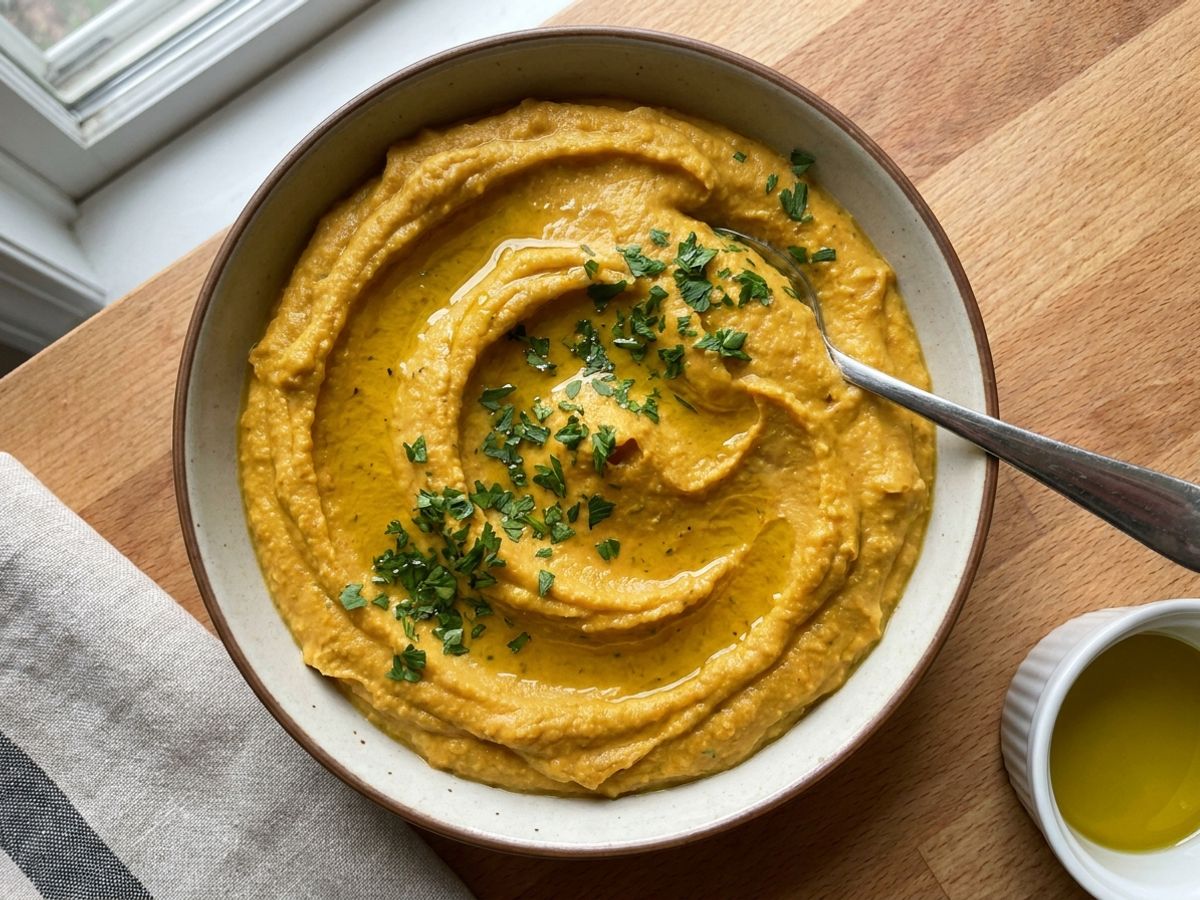
Butternut Squash Hummus

A low histamine chickpea-free hummus made with roasted butternut squash, tahini, garlic, and olive oil.
Ingredients
- 1 small butternut squash (about 2 pounds), peeled, seeded, and cut into 1-inch cubes
- 1 head garlic (optional, see notes)
- 5 tablespoons olive oil, divided
- 3 tablespoons tahini
- 3/4 teaspoon sea salt, divided
- 2 to 3 tablespoons water, to thin
- 1 tablespoon fresh parsley, chopped (for garnish, optional)
- Extra olive oil for drizzling (optional)
Instructions
Roast
- Preheat your oven to 400°F (200°C).
- Toss the butternut squash cubes with 2 tablespoons of the olive oil and 1/4 teaspoon of the salt. Spread on a parchment-lined baking sheet in a single layer.
- Remove most of the papery outer skin from the garlic head, keeping it intact. Slice off the top to expose the cloves, set it on a small piece of foil, drizzle with 1 tablespoon of the olive oil, and wrap loosely.
- Roast the squash for 25 to 30 minutes until tender and lightly caramelized, flipping halfway through. Roast the wrapped garlic alongside it for 30 to 40 minutes until the cloves are soft, golden, and squeeze easily from their skins.
Blend
- Let the squash and garlic cool for 5 minutes.
- Squeeze the soft garlic cloves out of their skins into a food processor or high-speed blender.
- Add the roasted squash, tahini, the remaining 2 tablespoons olive oil, and the remaining 1/2 teaspoon salt.
- Blend on high until completely smooth, scraping down the sides as needed. Add water 1 tablespoon at a time until you reach a smooth, dip-able consistency.
- Transfer to a serving bowl, drizzle with a little olive oil, and sprinkle with fresh parsley. Serve warm or at room temperature.
Tips & Substitutions
- Roast the squash and garlic on the same baking sheet to save time and cleanup. A high-speed blender gives the silkiest texture, though a food processor works too if you scrape down the sides more often.
- Skip the garlic if it is a trigger, or use garlic-infused olive oil instead. The roasted squash carries plenty of flavor on its own. Garlic contains small amounts of quercetin, a compound sometimes discussed in mast cell research, but it can also act as a histamine liberator for some people.
- Serve with fresh dippers. Try warm cassava flour tortillas, a plate of veggie sticks, or freshly cut cucumber and carrot sticks.
- Swap the tahini for macadamia nut butter if you prefer a nut-based version. Sesame is tolerated by many but is a common allergen, so use whichever suits you.
- Want a savory, non-sweet version? Try the cauliflower hummus, which uses roasted cauliflower as the base instead of squash.
 Get the Histamine Recipes app
250+ low histamine recipes, every ingredient rated.


Why This Works
Butternut squash. Naturally low in histamine and generally well tolerated. It roasts down into a sweet, creamy base that replaces the chickpeas used in traditional hummus.
Tahini. Sesame is used by many people on a low histamine diet and is generally well tolerated, though it is a common allergen and individual tolerance varies. Start with a small amount if it is new to you.
Olive oil. Generally well tolerated and gives the dip its rich, smooth mouthfeel.
Roasted garlic. Roasting mellows the flavor and may improve tolerance for some people compared to raw garlic. Garlic can still act as a histamine liberator for some, so it is easy to reduce or leave out.
No chickpeas. Traditional hummus relies on chickpeas, a legume that some people with histamine intolerance find hard to digest. This version skips them entirely, much like the cauliflower hummus.
Storage
Best eaten fresh the same day. Leftovers keep in a sealed container in the fridge for a couple of days, though fresh is always best for keeping histamine as low as possible. The dip firms up when cold, so stir in a splash of water or olive oil to loosen it before serving.
Not sure about an ingredient?
Histamine tolerance is personal, and most of working it out comes down to knowing where individual foods stand. Our low histamine food list rates 4,500+ foods and explains the reasoning behind each rating, including the foods whose level depends on how fresh they are or how they were stored. It is worth a look before you swap anything in this recipe.
Before you eat
A lot of people with histamine intolerance take a DAO enzyme supplement 15 to 30 minutes before a meal. DAO is the enzyme your body uses to break down the histamine in food, and taking it with meals supports that natural process. Curious how it works? See do DAO supplements actually work.
Affiliate link: if you buy through it, we may earn a commission at no extra cost to you. These statements have not been evaluated by the Food and Drug Administration. This product is not intended to diagnose, treat, cure, or prevent any disease.
For educational purposes only. Not medical advice. Consult a healthcare professional for personal guidance.
References
- SIGHI Food Compatibility List — SIGHI (2026)
- Low Histamine Nuts and Seeds — Through The Fibro Fog
- Cauliflower Hummus Recipe (Low Lectin, Histamine & Oxalate) — Mast Cell 360
- Histamine and histamine intolerance — Maintz & Novak (2007)
- Histamine Intolerance: The Current State of the Art — Comas-Basté et al. (2020)
- Biogenic Amines in Plant-Origin Foods: Are They Frequently Underestimated in Low-Histamine Diets? — Sánchez-Pérez et al. (2021)
- Diamine Oxidase Supplementation Improves Symptoms in Patients with Histamine Intolerance — Schnedl et al. (2019)
- Histamine Intolerance — A Comprehensive Review — Jochum (2024)