 Histamine Tracker
Beef and Potato Hash

A low histamine breakfast hash with fresh beef, potatoes, onion, thyme, olive oil, and a fried egg.
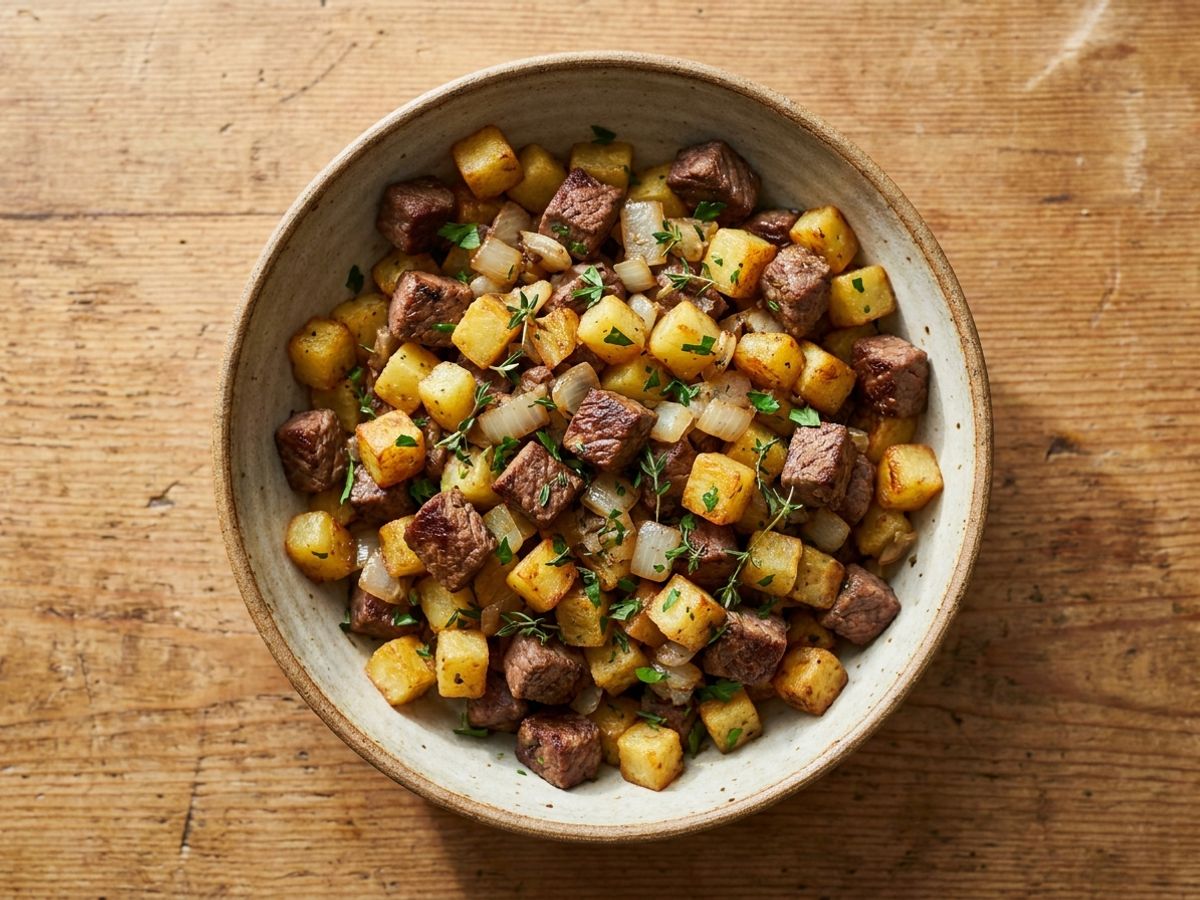
Ingredients
- 1 pound fresh unaged beef sirloin, in one piece, bought and cooked the same day
- 1 1/2 pounds potatoes, diced into 1/2-inch cubes
- 1 medium onion, diced
- 3 tablespoons olive oil, divided
- 2 cloves garlic, minced
- 1 teaspoon fresh thyme leaves (or 1 teaspoon fresh rosemary, minced)
- 3/4 teaspoon salt, divided
- 2 tablespoons fresh parsley, chopped
- 4 eggs, fried (optional)
Instructions
Cut the Beef
- Pat the beef dry and trim off any large pieces of fat or silver skin.
- Slice it into thin strips with a sharp knife, then cut across the strips to make 1/4-inch pieces. Aim for chunks about the size of a pea.
- Keep the beef in the fridge until the moment it goes in the pan.
Brown the Potatoes
- Heat 2 tablespoons of the olive oil in a 12-inch skillet over medium-high heat.
- Add the potatoes in a single layer with 1/2 teaspoon of the salt. Use your widest skillet, or brown them in two batches if they do not fit in one layer. Leave them alone for 5 to 6 minutes so the bottoms brown.
- Stir once, cover the pan, lower the heat to medium, and cook for 8 to 10 minutes until a fork slides into a cube without resistance.
- Uncover, raise the heat again, and stir every couple of minutes until the edges are crisp. Move the potatoes to a plate.
Cook the Beef and Onion
- Add the last tablespoon of oil to the empty skillet, then the onion. Cook for 3 to 4 minutes until it turns translucent.
- Add the garlic and cook for 30 seconds.
- Raise the heat to high, spread the beef in a single layer, and let it sear undisturbed for about 2 minutes.
- Stir and cook another 2 to 3 minutes, until no pink is left. Cook in two batches if the pan looks crowded.
Bring It Together
- Return the potatoes to the skillet with the thyme and the remaining 1/4 teaspoon of salt. Toss for 2 minutes so everything heats through.
- Take the pan off the heat and stir in the parsley.
- Fry the eggs in a separate pan and set one on each serving, if you are using them.
Tips & Substitutions
- Cut the beef yourself, the same day you cook it. Ground meat is the usual problem in a hash. Packaged ground beef sits for hours or days before it reaches your kitchen, and ground meats sit higher on most low histamine lists. Cut a whole piece of fresh sirloin small by hand instead, or grind a fresh piece at home right before cooking.
- Ask the butcher for unaged beef. Most supermarket steak is aged on purpose for flavor, and aged cuts sit in the avoid column of most low histamine lists. Ask for meat that was not aged, then cook it the day you buy it or get it into the freezer within a couple of hours.
- Ghee is an option, with a caveat. Ghee is clarified butter, still dairy, and often tolerated by people who avoid milk. Skip it if you avoid all dairy. Olive oil is the default here, which is what keeps this version dairy-free.
- Swap in sweet potatoes. Diced sweet potato cooks in about the same time and gives a sweeter plate. There is a full version of that in sweet potato hash.
- Give the potatoes room. A crowded pan traps steam and the cubes go soft instead of crisp. Use the widest skillet you own, or brown the potatoes in two batches.
- Put an egg on it. A runny yolk works as the sauce for this dish. See fried eggs with greens for the method.
 Get the Histamine Recipes app
250+ low histamine recipes, every ingredient rated.


Why This Works
Fresh beef. Fresh, unaged beef is generally considered lower in histamine than aged cuts or pre-ground packages. Tolerance varies from person to person, and how fresh the meat is usually matters more than the cut.
Potatoes. Commonly tolerated on a low histamine diet and filling enough to carry a breakfast. Cook them fresh rather than using a refrigerated batch from earlier in the week.
Onion and garlic. Both are generally considered low histamine when used fresh. They give the hash its savory base without the packaged seasoning blends that often hide yeast extract or other additives.
Fresh thyme and parsley. Fresh herbs carry most of the flavor here. If you reach for a dried seasoning blend instead, check the label for yeast extract and other additives. Rosemary works in place of thyme if that is what you have.
Eggs. Eggs are commonly tolerated when fresh; egg white is flagged on some lists, so start with a small portion if you are unsure. They are optional here, and the hash stands on its own without them.
Storage
Eat it the day it is made. Portion any extra and freeze it the same day, within an hour of cooking. Reheat from frozen in a covered pan or a 400°F (200°C) oven until it is steaming hot all the way through. Freshly made is the version most people tolerate best, so cook only what you will eat now and freeze the raw beef you do not need.
Not sure about an ingredient?
Histamine tolerance is personal, and most of working it out comes down to knowing where individual foods stand. Our low histamine food list rates 4,500+ foods and explains the reasoning behind each rating, including the foods whose level depends on how fresh they are or how they were stored. It is worth a look before you swap anything in this recipe.
Before you eat
A lot of people with histamine intolerance take a DAO enzyme supplement 15 to 30 minutes before a meal. DAO is the enzyme your body uses to break down the histamine in food, and taking it with meals supports that natural process. Curious how it works? See do DAO supplements actually work.
Affiliate link: if you buy through it, we may earn a commission at no extra cost to you. These statements have not been evaluated by the Food and Drug Administration. This product is not intended to diagnose, treat, cure, or prevent any disease.
For educational purposes only. Not medical advice. Consult a healthcare professional for personal guidance.
References
- The Best Low Histamine Meat and Seafood Options — Mast Cell 360
- Low Histamine Beef: Pan Seared Filet Mignon — Mast Cell 360
- Are Potatoes High in Histamine? — Histamine Doctor
- Histamine and histamine intolerance — Maintz & Novak (2007)
- Histamine Intolerance: The Current State of the Art — Comas-Basté et al. (2020)
- Biogenic Amines in Plant-Origin Foods: Are They Frequently Underestimated in Low-Histamine Diets? — Sánchez-Pérez et al. (2021)
- Diamine Oxidase Supplementation Improves Symptoms in Patients with Histamine Intolerance — Schnedl et al. (2019)
- Histamine Intolerance — A Comprehensive Review — Jochum (2024)