 Histamine Tracker
Mango Salsa

A bright, fresh salsa that works anywhere you'd use traditional tomato salsa.
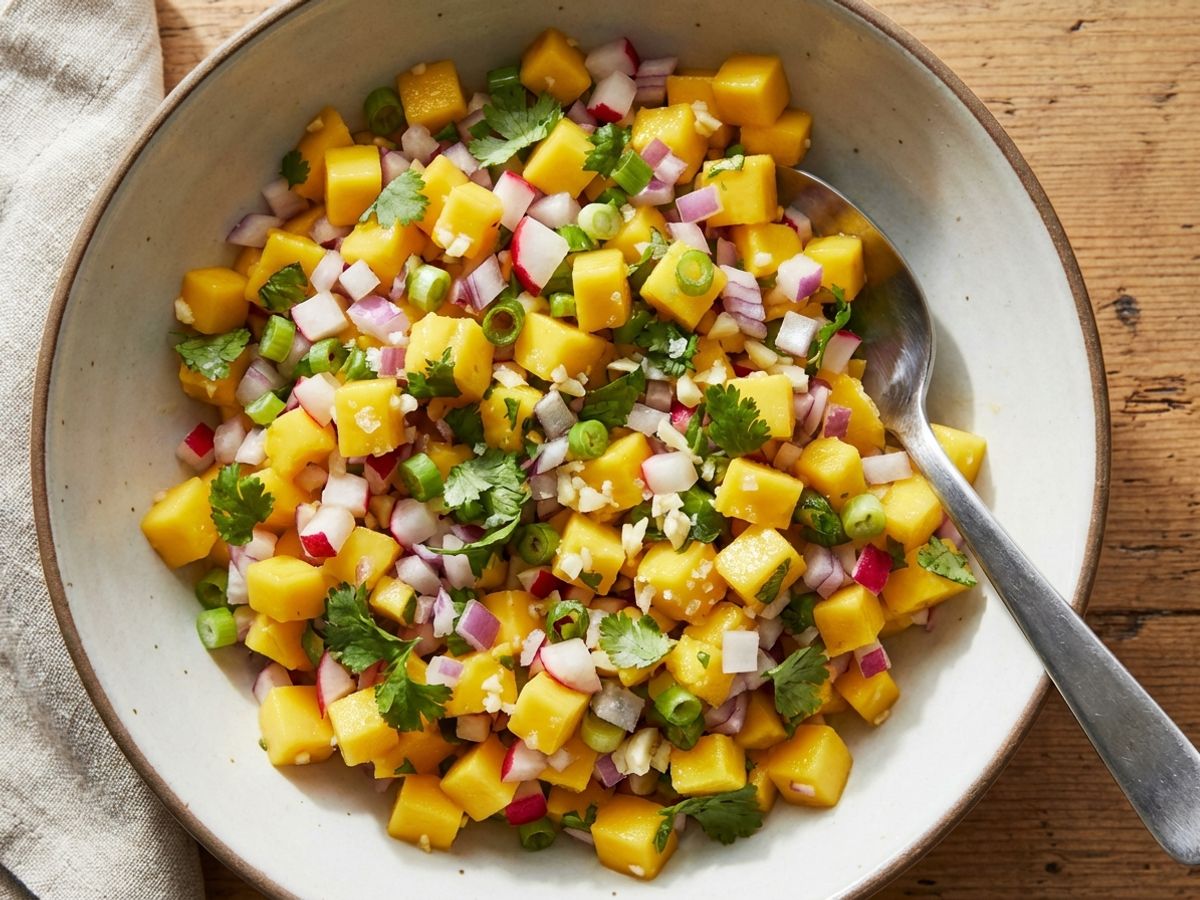
Ingredients
- 2 ripe mangos, peeled and diced
- 3 radishes, finely diced or grated
- 2 tablespoons red onion, finely diced (optional)
- 2 green onions, thinly sliced
- 3 tablespoons fresh cilantro, chopped
- 1 clove garlic, minced
- 1/2 teaspoon sea salt
Instructions
Prepare the Mango
- Peel the mangos with a vegetable peeler or knife.
- Stand the mango on its end and cut down along each side of the flat pit.
- Dice the mango flesh into small cubes, about 1/4 inch.
Combine
- Add the diced mango to a medium bowl.
- Add the radishes, red onion (if using), green onions, cilantro, garlic, and salt.
- Gently toss everything together.
- Taste and adjust salt as needed.
Serve
Serve immediately with homemade tortilla chips, alongside tacos, or over grilled chicken or fish.
Tips & Substitutions
- Choose ripe mangos that give slightly when pressed. They should smell sweet at the stem end. Avoid overripe mangos with brown spots or mushy flesh.
- Radishes add color and crunch. They are a fresh, low histamine way to add texture without relying on peppers.
- Skip the onion if it bothers you. The green onions alone provide enough allium flavor for most people.
- No lime juice needed. This version skips citrus entirely since it can be problematic. The mango provides natural sweetness and brightness on its own.
- Swap cilantro for fresh parsley or basil if cilantro is not your thing. Both work well with mango.
Why This Works
Fresh mango. Generally well tolerated and naturally low in histamine when fresh. It provides the base sweetness and body that replaces tomatoes in this salsa.
Radishes. Low in histamine and commonly tolerated. They add the crunch and color that you would normally get from peppers.
Fresh cilantro. Generally well tolerated and adds a bright, fresh flavor. Using fresh herbs rather than dried keeps the recipe simple and may improve tolerance.
No citrus. Traditional salsas rely on lime juice for acidity. Citrus fruits are histamine liberators for some people, so this version skips them entirely without sacrificing flavor.
No tomatoes. Tomatoes are high in histamine, making them one of the most commonly avoided ingredients. Mango provides a naturally sweet alternative.
Storage
Best eaten fresh the same day. Mango salsa loses its texture and becomes watery if stored overnight. If needed, refrigerate in a sealed container for up to 1 day, but expect the texture to soften. Histamine buildup is generally lower risk than with meat or fish leftovers, but chopped produce can still become more triggering as it sits. Freshness gives the best flavor and crunch.
Not sure if an ingredient is safe? Histamine Tracker includes a database of 1,000+ foods with histamine ratings to help you cook with confidence.


For educational purposes only. Not medical advice. Consult a healthcare professional for personal guidance.
References
- Low Histamine Salsa (Mango Recipe for Salsa) — Mast Cell 360
- 17 Low Histamine Fruits to Add to Your Diet — Low Histamine Eats
- 20 Low Histamine Fruits and Berries (With Recipes) — Through The Fibro Fog
- Histamine and histamine intolerance — Maintz & Novak (2007)
- Histamine Intolerance: The Current State of the Art — Comas-Basté et al. (2020)
- Biogenic Amines in Plant-Origin Foods: Are They Frequently Underestimated in Low-Histamine Diets? — Sánchez-Pérez et al. (2021)
- Diamine Oxidase Supplementation Improves Symptoms in Patients with Histamine Intolerance — Schnedl et al. (2019)
- Histamine Intolerance — A Comprehensive Review — Jochum (2024)