 Histamine Tracker
Vanilla Pudding

A low histamine stovetop vanilla pudding made with coconut milk, maple syrup, tapioca starch, egg yolks, and vanilla powder.
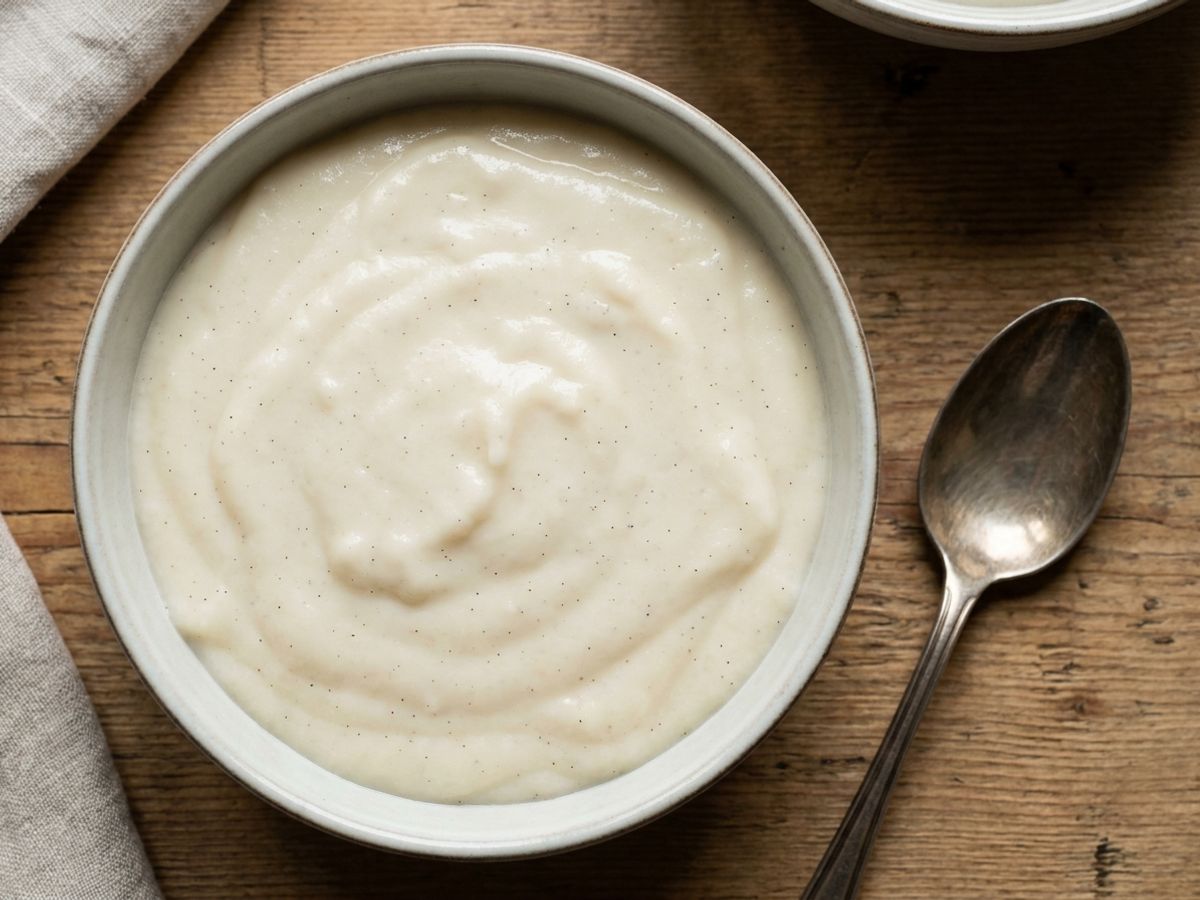
Ingredients
- 1 (13.5 oz) can full-fat coconut milk
- 1/4 cup pure maple syrup
- 3 tablespoons tapioca starch
- 2 large egg yolks
- 1 1/2 teaspoons vanilla powder
- 1/4 teaspoon fine sea salt
- 1 tablespoon coconut oil
Instructions
- Pour the coconut milk into a medium saucepan. Whisk vigorously for about 30 seconds until the cream and watery liquid combine into a smooth mixture.
- Add the tapioca starch and whisk until completely dissolved with no lumps. Doing this off the heat keeps the starch from clumping.
- Whisk in the maple syrup, egg yolks, vanilla powder, and salt until smooth.
- Place the saucepan over medium heat. Whisk constantly as the mixture warms. After about 5 to 7 minutes, the pudding will start to thicken and steam.
- Continue whisking for another 1 to 2 minutes once it begins to bubble gently, until thick enough to coat the back of a spoon.
- Remove from heat and whisk in the coconut oil until fully melted and the pudding looks glossy.
- Pour into 4 small bowls or ramekins. Press a piece of parchment directly onto the surface of each portion to prevent a skin from forming.
- Refrigerate for at least 2 hours, until fully chilled and set.
Tips & Substitutions
- Whisk constantly. Once the pan hits the heat, do not stop whisking. The egg yolks and tapioca thicken fast, and an unattended pan will scramble the eggs or scorch the bottom.
- Pick a clean coconut milk. Look for brands without guar gum, carrageenan, or natural flavors. The pudding sets best with full-fat coconut milk, not light.
- Tapioca vs arrowroot. Arrowroot can also work, but it thickens slightly differently. Keep the heat gentle and avoid a hard boil so it does not thin out. If you tolerate corn, cornstarch works too at the same amount.
- Vanilla powder vs extract. Vanilla powder is alcohol-free, which some people with histamine intolerance prefer. If you tolerate extract, use 1 to 2 teaspoons and stir it in off the heat with the coconut oil.
- Egg yolks only. Whole eggs are commonly tolerated, but egg whites can be triggering for some people with histamine intolerance. The yolks here add richness and body without the whites.
- Sweetness. Maple syrup at 1/4 cup gives a moderately sweet pudding. Cut to 3 tablespoons for less sweet, or add another tablespoon for more.
- Make it extra creamy. Use only the firm cream from the top of a chilled can of coconut milk (set the watery liquid aside for smoothies). Replace the full can in the recipe with 1 cup of cream plus 2/3 cup of water.
- Toppings. Top with fresh blueberries, fresh sliced peach, a drizzle of warm maple syrup, or a dusting of cardamom.
 Get the Histamine Recipes app
250+ low histamine recipes, every ingredient rated.


Why This Works
Full-fat coconut milk. A creamy dairy-free base that gives the pudding its body without dairy. Coconut is generally well tolerated on a low histamine diet, though some people react to additives like guar gum or carrageenan, so check labels.
Tapioca starch. Made from cassava root, tapioca is generally well tolerated and gives the pudding a smooth, glossy set without cornstarch.
Vanilla powder. Pure ground vanilla bean adds the warm flavor without the alcohol used in vanilla extract. Some people with histamine intolerance find alcohol-based extracts triggering.
Maple syrup. A simple sweetener with no preservatives. Generally considered low histamine when pure.
Egg yolks. Add richness and a custardy mouthfeel without the egg whites that some people with histamine intolerance find triggering.
Storage
Vanilla pudding is best within 24 hours of making, while still fresh. Keep covered in the fridge with parchment pressed to the surface to prevent a skin. It firms up further as it chills, so if it feels too thick after a day, whisk gently before serving. Some people are sensitive to leftovers, so pay attention to how you respond.
Not sure about an ingredient?
Histamine tolerance is personal, and most of working it out comes down to knowing where individual foods stand. Our low histamine food list rates 4,500+ foods and explains the reasoning behind each rating, including the foods whose level depends on how fresh they are or how they were stored. It is worth a look before you swap anything in this recipe.
Before you eat
A lot of people with histamine intolerance take a DAO enzyme supplement 15 to 30 minutes before a meal. DAO is the enzyme your body uses to break down the histamine in food, and taking it with meals supports that natural process. Curious how it works? See do DAO supplements actually work.
Affiliate link: if you buy through it, we may earn a commission at no extra cost to you. These statements have not been evaluated by the Food and Drug Administration. This product is not intended to diagnose, treat, cure, or prevent any disease.
For educational purposes only. Not medical advice. Consult a healthcare professional for personal guidance.
References
- Creamy (Dairy Free) Vanilla Pudding — Healing Histamine
- Histamine-Free Vanilla Pudding — Low Histamine Recipe
- SIGHI Food Compatibility List — SIGHI (2026)
- Histamine and histamine intolerance — Maintz & Novak (2007)
- Histamine Intolerance: The Current State of the Art — Comas-Basté et al. (2020)
- Biogenic Amines in Plant-Origin Foods: Are They Frequently Underestimated in Low-Histamine Diets? — Sánchez-Pérez et al. (2021)
- Diamine Oxidase Supplementation Improves Symptoms in Patients with Histamine Intolerance — Schnedl et al. (2019)
- Histamine Intolerance — A Comprehensive Review — Jochum (2024)