 Histamine Tracker
Chicken Pho

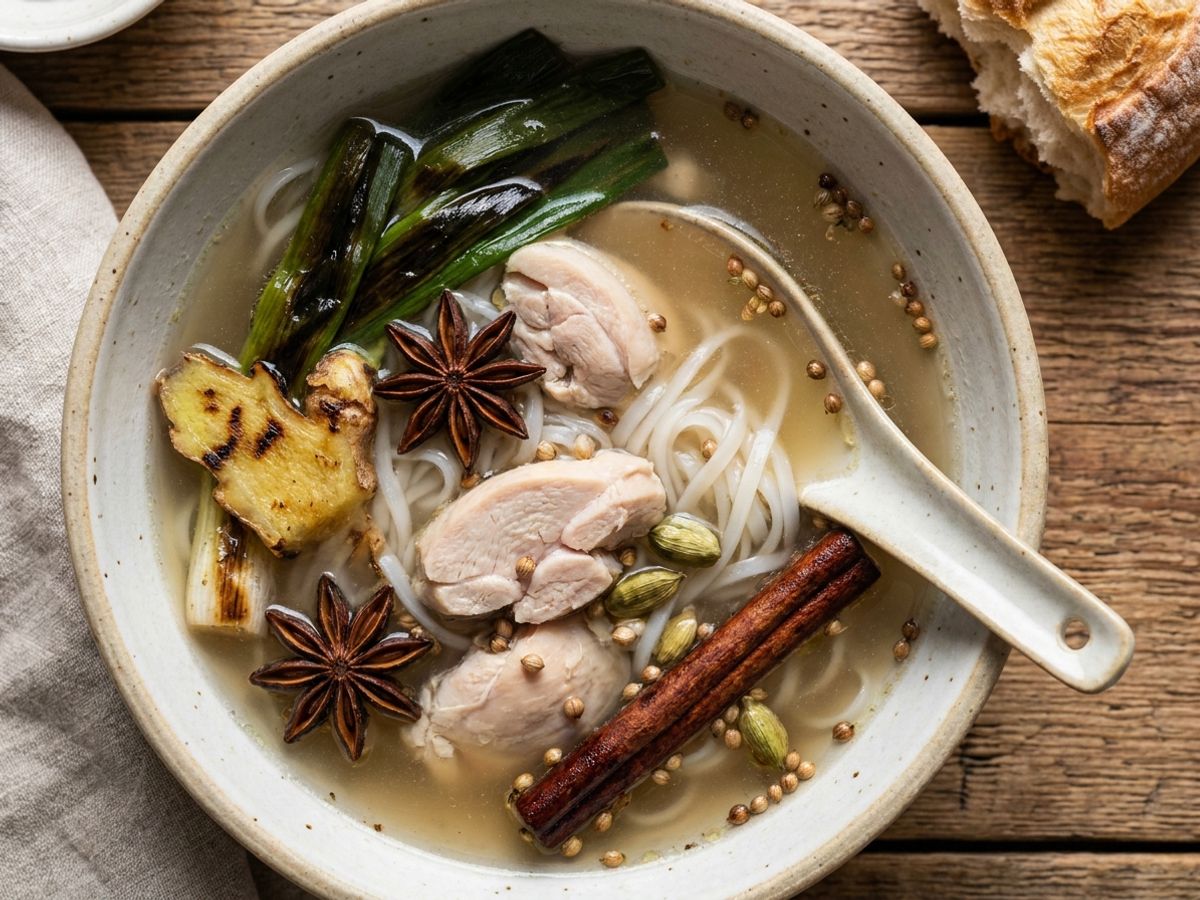
A low histamine chicken pho with charred ginger, star anise, cinnamon, cardamom, rice noodles, Thai basil, cilantro, and mint.
Ingredients
Broth
- 1 pound very fresh boneless, skinless chicken thighs (or breast)
- 8 cups water
- 1 large piece fresh ginger, about 4 inches, halved lengthwise
- 1 bunch green onions, dark green tops only (white bulbs are higher-FODMAP, see tips)
- 2 whole star anise
- 1 cinnamon stick
- 1 teaspoon coriander seeds
- 2 green cardamom pods, lightly crushed
- 1 whole clove (optional, see tips)
- 2 teaspoons sea salt to start, plus more to taste
- 1 tablespoon coconut aminos (optional, for umami, see tips)
Bowls
- 8 oz flat rice noodles (banh pho style)
- The poached chicken from the broth, thinly sliced
Garnishes
- A small handful fresh Thai basil leaves
- A small handful fresh cilantro, chopped
- A small handful fresh mint leaves
- 2 green onion tops, thinly sliced
- 1 fresh red chili, thinly sliced (optional, see tips)
Instructions
Toast spices and char the ginger
- Place the halved ginger and the dark green onion tops directly over a gas flame, under the broiler, or in a dry skillet, until lightly charred on the cut sides, about 2-3 minutes. This deepens the broth flavor. Set aside.
- Warm a dry pot over medium heat. Add the star anise, cinnamon stick, coriander seeds, cardamom pods, and clove if using. Toast for 1-2 minutes, stirring, until fragrant.
Simmer the broth
- Add the water, charred ginger, charred green onion tops, and 2 teaspoons sea salt to the pot with the toasted spices.
- Add the fresh chicken. Bring to a gentle boil, then reduce the heat to low so the broth barely simmers.
- Simmer gently until the chicken is cooked through and reaches 165°F (74°C) at the thickest part, skimming off any foam that rises. Thighs usually take 25-30 minutes. If using breast, start checking at 15-20 minutes so it does not overcook.
- Remove the chicken and set it aside to cool slightly, then thinly slice it.
- Strain the broth through a fine mesh sieve and discard the ginger, green onion tops, and whole spices. Return the strained broth to the pot.
- Taste and add more sea salt as needed. Stir in the coconut aminos if using.
Assemble
- Cook the rice noodles according to package directions, then drain and divide among 4 bowls.
- Top each bowl with sliced chicken.
- Ladle the hot strained broth over the noodles and chicken.
- Finish each bowl with Thai basil, cilantro, mint, sliced green onion tops, and fresh chili if using. Serve right away.
Tips & Substitutions
- Use very fresh chicken. Buy it the same day if you can, or freeze it the day you bring it home and thaw it in the fridge the night before. Skip rotisserie or leftover chicken. This is a chicken pho rather than the usual beef pho, since beef is often aged or sliced thin from older cuts.
- Season with sea salt instead of fish sauce. Traditional pho leans on fish sauce, which is fermented and a common trigger. Sea salt gives the savory backbone, with a little coconut aminos for extra depth. Coconut aminos are often fermented and can be a trigger for some people, so keep them optional, start with a small amount, and test your own tolerance.
- Skip the lime. Pho is usually finished with a lime wedge, but citrus can act as a histamine liberator for sensitive individuals. The charred ginger and the fresh herbs carry the brightness instead.
- Go easy on the warm spices, or skip a few. Star anise, cinnamon, coriander seed, and cardamom are generally tolerated by many people when used as whole spices steeped briefly and strained out. Clove is a stronger histamine liberator for some, so it is optional. Introduce new spices one at a time so you can gauge your own tolerance.
- Use dark green onion tops only. The dark green tops are lower-FODMAP and tend to be better tolerated than the white bulbs.
- The fresh chili is optional. A thinly sliced fresh red chili adds heat, but spice and chili can bother some people. Leave it out if it is not for you.
- Make the broth from scratch. Boxed broths and long-simmered bone broths are often aged or slow-cooked, which can be a trigger. A quick homemade chicken broth keeps it clean. For a simpler everyday version, see this chicken ginger soup.
- Cook the rice noodles separately. Cooking them in their own pot and adding them to bowls keeps them from going mushy and lets you store leftover broth on its own.
 Get the Histamine Recipes app
250+ low histamine recipes, every ingredient rated.


Why This Works
Fresh chicken. Protein cooked fresh and eaten right away keeps histamine levels as low as possible. Poaching it gently in the broth and slicing it just before serving means a short cook time and no reheated leftover meat.
Charred fresh ginger. Ginger is generally well tolerated and is one of the most commonly used aromatics in low histamine cooking. Charring it first builds the deep, fragrant base that pho is known for without needing fish sauce. Some people find ginger soothing for digestion, though individual response varies.
Sea salt instead of fish sauce. Fish sauce is fermented, and fermented foods are a frequent trigger. Seasoning with sea salt, plus an optional splash of coconut aminos, brings savory depth while keeping the broth clean. See more on why freshness matters than relying on lists alone.
Whole warm spices. Star anise, cinnamon, coriander seed, and cardamom are not inherently high in histamine and are generally tolerated by many people, especially as whole spices that are steeped briefly and strained out. Tolerance varies, and clove in particular can be a liberator for some, so it stays optional.
Rice noodles. Naturally low in histamine and generally well tolerated. They give pho its body without gluten concerns.
Storage
This pho is best eaten fresh the same day, and it contains chicken, so leftovers accumulate histamine more quickly than vegetable-only soups. If you plan to save any, remove the chicken from the broth promptly rather than letting it sit warm, and store the broth separately from the noodles, sliced chicken, and herbs so nothing turns mushy and you can reheat only what you need. Cool everything quickly and freeze it the same day in shallow containers, and be aware that some people react even to frozen protein leftovers.
Not sure about an ingredient?
Histamine tolerance is personal, and most of working it out comes down to knowing where individual foods stand. Our low histamine food list rates 4,500+ foods and explains the reasoning behind each rating, including the foods whose level depends on how fresh they are or how they were stored. It is worth a look before you swap anything in this recipe.
Before you eat
A lot of people with histamine intolerance take a DAO enzyme supplement 15 to 30 minutes before a meal. DAO is the enzyme your body uses to break down the histamine in food, and taking it with meals supports that natural process. Curious how it works? See do DAO supplements actually work.
Affiliate link: if you buy through it, we may earn a commission at no extra cost to you. These statements have not been evaluated by the Food and Drug Administration. This product is not intended to diagnose, treat, cure, or prevent any disease.
For educational purposes only. Not medical advice. Consult a healthcare professional for personal guidance.
References
- Low Histamine Chicken Ginger Soup Recipe — Mast Cell 360
- Low Histamine Asian Style Chicken Noodle Soup — Happy Without Histamine
- 19 Low Histamine Spices & Herbs (and How To Use Them) — Low Histamine Eats
- Is Five Spice High in Histamine? — Fig App
- Histamine and histamine intolerance — Maintz & Novak (2007)
- Histamine Intolerance: The Current State of the Art — Comas-Basté et al. (2020)
- Biogenic Amines in Plant-Origin Foods: Are They Frequently Underestimated in Low-Histamine Diets? — Sánchez-Pérez et al. (2021)
- Diamine Oxidase Supplementation Improves Symptoms in Patients with Histamine Intolerance — Schnedl et al. (2019)
- Histamine Intolerance — A Comprehensive Review — Jochum (2024)