 Histamine Tracker
German Pancakes

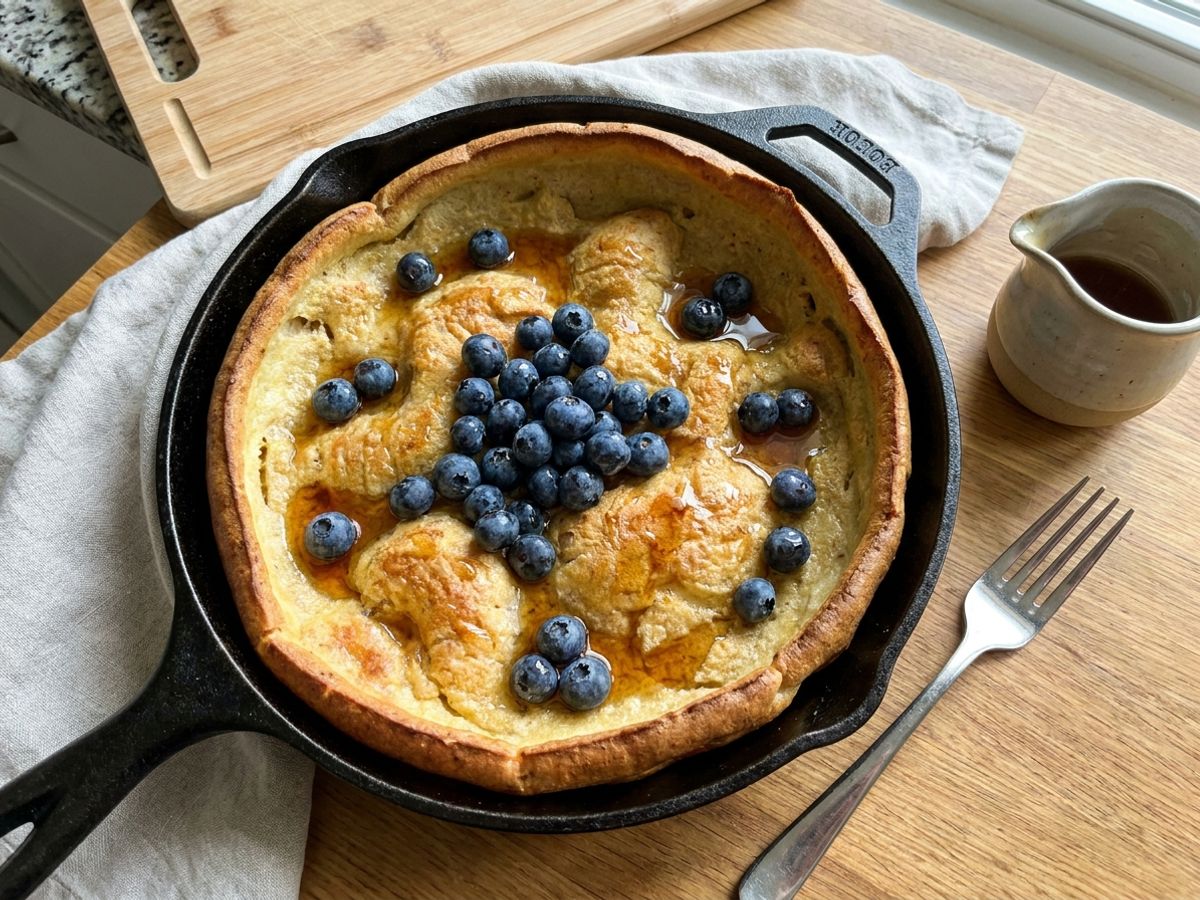
A low histamine oven-baked German pancake made with eggs, oat milk, cassava flour, and tapioca starch, topped with blueberries and maple syrup.
Ingredients
Pancake
- 6 large fresh eggs, room temperature
- 3/4 cup oat milk (or full-fat coconut milk)
- 1/2 cup cassava flour
- 2 tablespoons tapioca starch
- 2 tablespoons pure maple syrup
- 1 teaspoon vanilla powder
- 1/4 teaspoon sea salt
- 3 tablespoons coconut oil (or dairy-free butter) for the pan
Topping
- 1 cup fresh blueberries
- 2 tablespoons pure maple syrup, warmed
- 1 tablespoon melted coconut oil or dairy-free butter (optional)
Instructions
Prep
- Pull the eggs out of the fridge 30 minutes ahead. Cold eggs do not whip up the same way and the pancake will not puff as high.
- Preheat your oven to 425°F (220°C). Place a 10-inch cast iron skillet (or 9-inch pie dish) in the oven while it heats.
Make the Batter
- In a blender, combine the eggs, oat milk, cassava flour, tapioca starch, maple syrup, vanilla powder, and salt.
- Blend on medium for 30 seconds until smooth and slightly frothy. The batter should be thin and pourable.
- Let the batter rest while the oven finishes heating. This gives the flour time to hydrate and the air bubbles time to relax.
Bake
- Carefully remove the hot skillet from the oven. Add the coconut oil and swirl to coat the bottom and sides.
- Pour the batter directly into the hot skillet. It should sizzle on contact.
- Return to the oven and bake for 18 to 22 minutes, until the edges are puffed and deeply golden, and the center is set but still slightly soft.
- Do not open the oven door during the first 15 minutes. The pancake will deflate.
Serve
- Slide the pancake onto a serving plate or cut into wedges directly in the skillet.
- Top with fresh blueberries and a drizzle of warm maple syrup. Brush with melted coconut oil or dairy-free butter if you want a glossier finish.
- Serve immediately. Dutch babies deflate within a few minutes of leaving the oven, but they still taste great once flat.
Tips & Substitutions
- Cast iron is ideal. It holds heat and gives the pancake the crispiest edges. A heavy oven-safe skillet, pie dish, or 9x13 baking dish all work, though deeper pans give a thicker, more custardy result.
- Eggs at room temperature. Cold eggs reduce the lift. If you forgot to take them out, set them in a bowl of warm water for 5 minutes. Pan heat and oven heat matter at least as much, so a very hot skillet helps too.
- Skip warm baking spices. Traditional Dutch babies often include cinnamon, nutmeg, or allspice. Some people with histamine intolerance find these triggering, so the vanilla powder carries the warmth here instead.
- Coconut milk swap. Use full-fat canned coconut milk in place of oat milk for a richer pancake. The center will be more custard-like.
- Topping ideas. Fresh blueberries are the most reliable. Raspberries, sliced peaches, or freshly stewed apples work too if you tolerate them. Skip strawberries (a common trigger for some) and citrus.
- Choose simple-ingredient milks. For oat or coconut milk, look for short ingredient lists (water, oats or coconut, salt). Gums, emulsifiers, and natural flavors can bother sensitive people.
- Save leftovers as is. Slice into wedges and freeze flat with parchment between pieces. Reheat in a 300°F (150°C) oven for 5 to 7 minutes from frozen.
- Pair ideas. Serve alongside breakfast sausage patties, or with a scoop of low histamine vanilla ice cream instead of syrup.
- Want thin, foldable crepes instead? For a lighter, wrappable breakfast from a similar egg batter, make cassava flour crepes and fill them sweet or savory.
 Get the Histamine Recipes app
250+ low histamine recipes, every ingredient rated.


Why This Works
Fresh eggs. Eggs do most of the structural work in a Dutch baby. They create the rise, the custardy interior, and the golden crust as they bake. Freshness matters here, both for histamine reasons and for the rise. Eggs are often tolerated, but some people react, especially to egg whites.
Cassava flour. A starchy gluten-free flour from the cassava root that bakes a lot like wheat flour. It gives the pancake enough structure to hold the puffed shape without wheat.
Tapioca starch. Adds lightness and helps the pancake rise. Without it, a cassava-only batter bakes up dense.
Oat milk. Often well tolerated when the ingredient list is short (water, oats, salt). Skipping dairy helps people who react to milk proteins or to aged dairy products. Coconut milk is a richer alternative if oats bother you.
Vanilla powder, no warm spices. The vanilla brings the cozy warmth that cinnamon and nutmeg usually provide in pancakes. Some people with histamine intolerance find warming baking spices triggering, so the recipe keeps seasoning minimal.
Storage
Best straight from the oven, while the puff is still dramatic and the edges are crisp. Slice and eat within an hour for the best texture. To save extras, cool fully and freeze the same day in a sealed bag with parchment between pieces. Reheat from frozen in a 300°F (150°C) oven for 5 to 7 minutes. Refrigerated leftovers lose their texture and can build up histamine over time, so freezing is the better option past the first hour.
Not sure about an ingredient?
Histamine tolerance is personal, and most of working it out comes down to knowing where individual foods stand. Our low histamine food list rates 4,500+ foods and explains the reasoning behind each rating, including the foods whose level depends on how fresh they are or how they were stored. It is worth a look before you swap anything in this recipe.
Before you eat
A lot of people with histamine intolerance take a DAO enzyme supplement 15 to 30 minutes before a meal. DAO is the enzyme your body uses to break down the histamine in food, and taking it with meals supports that natural process. Curious how it works? See do DAO supplements actually work.
Affiliate link: if you buy through it, we may earn a commission at no extra cost to you. These statements have not been evaluated by the Food and Drug Administration. This product is not intended to diagnose, treat, cure, or prevent any disease.
For educational purposes only. Not medical advice. Consult a healthcare professional for personal guidance.
References
- German Pancakes Brunch Recipe (Low Histamine) — Mast Cell 360
- Gluten-Free Dutch Baby (German Pancake) — Meaningful Eats
- 13+ Low Histamine Flours & Grains — Low Histamine Eats
- Histamine and histamine intolerance — Maintz & Novak (2007)
- Histamine Intolerance: The Current State of the Art — Comas-Basté et al. (2020)
- Biogenic Amines in Plant-Origin Foods: Are They Frequently Underestimated in Low-Histamine Diets? — Sánchez-Pérez et al. (2021)
- Diamine Oxidase Supplementation Improves Symptoms in Patients with Histamine Intolerance — Schnedl et al. (2019)
- Histamine Intolerance — A Comprehensive Review — Jochum (2024)