 Histamine Tracker
Cinnamon Rolls

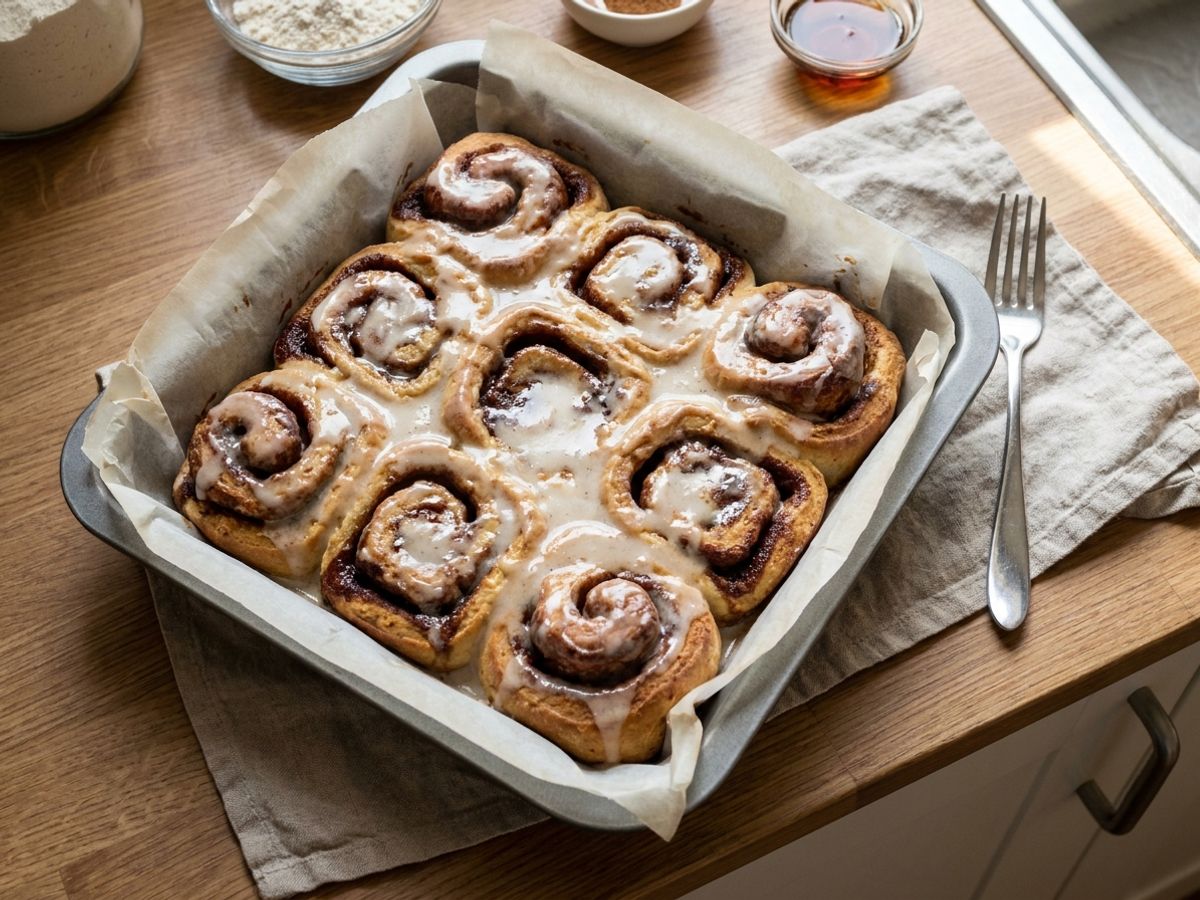
Low histamine yeast-free cinnamon rolls made with cassava and tapioca flour, ghee, maple syrup, and cinnamon, with a coconut cream glaze.
Ingredients
Dough
- 1 1/2 cups cassava flour, plus more for dusting
- 1/2 cup tapioca flour
- 2 teaspoons baking powder
- 1/2 teaspoon fine sea salt
- 1/2 cup full-fat coconut milk, warmed
- 1/4 cup melted ghee (or coconut oil for dairy-free)
- 3 tablespoons pure maple syrup
- 1 large egg
Filling
- 3 tablespoons softened ghee (or coconut oil)
- 1/4 cup pure maple syrup
- 1 tablespoon tapioca flour (helps the filling stay in place)
- 2 teaspoons ground cinnamon (Ceylon if you have it)
- Pinch of fine sea salt
Glaze
- 1/3 cup coconut cream (the firm top of a chilled can of full-fat coconut milk)
- 2 tablespoons pure maple syrup
- 1/4 teaspoon vanilla powder (or 1/2 teaspoon vanilla extract if tolerated)
- Pinch of fine sea salt
Instructions
Make the Dough
- Preheat the oven to 350°F (175°C). Line an 8-inch round or square baking pan with parchment paper.
- In a large bowl, whisk together the cassava flour, tapioca flour, baking powder, and salt.
- In a separate bowl, whisk the warmed coconut milk, melted ghee, maple syrup, and egg until smooth.
- Pour the wet ingredients into the dry and stir with a wooden spoon until a soft dough forms. It should feel slightly tacky but not sticky. If it feels wet, add a tablespoon of cassava flour at a time until it pulls together.
- Turn the dough out onto a piece of parchment paper dusted with cassava flour. Knead gently 4 or 5 times to bring it together into a smooth ball.
Roll and Fill
- Place a second piece of parchment on top of the dough and roll into a rectangle about 10 by 12 inches and 1/4 inch thick.
- Peel off the top parchment. In a small bowl, stir together the softened ghee, maple syrup, tapioca flour, cinnamon, and salt to form a paste.
- Spread the filling evenly across the dough, leaving a 1/2-inch border along one of the long edges.
- Using the bottom parchment to help lift the dough, roll it up tightly from the long edge with filling to the long edge without. Pinch the seam to seal.
- With a sharp knife, slice the log crosswise into 9 equal rolls. Wipe the knife between cuts if filling sticks.
Bake
- Arrange the rolls cut-side up in the prepared pan, leaving a little space between them.
- Bake for 22 to 26 minutes, until the tops are lightly golden and the rolls feel springy when pressed. An instant-read thermometer in the center should read 200°F to 205°F (93°C to 96°C). A toothpick alone can be misleading with tapioca-based doughs since the interior stays slightly tacky even when fully baked.
- Cool in the pan for 10 minutes before glazing.
Glaze
- In a small bowl, whisk together the coconut cream, maple syrup, vanilla powder, and salt until smooth and pourable. If the cream is too firm, warm in a small saucepan over low heat for 30 to 60 seconds, stirring, until pourable.
- Drizzle over the warm rolls and serve.
Tips & Substitutions
- Warm the coconut milk first. Cold coconut milk can seize the melted ghee. A quick 20 seconds in a saucepan over low heat is enough to keep everything smooth.
- Ceylon cinnamon is the better pick. Most grocery-store cinnamon is cassia. Ceylon (sometimes labeled "true cinnamon") tends to be milder.
- Cinnamon is moderate, not low. Some people with histamine intolerance find cinnamon triggering. Swap in 2 teaspoons of ground cardamom plus 1/2 teaspoon ground ginger for a warmer, classic-tasting alternative.
- Skip the egg. Bloom 1 tablespoon gelatin in 3 tablespoons warm water for 2 minutes, then whisk into the wet ingredients. Gelatin gives more reliable structure than applesauce in a yeast-free dough.
- For dairy-free. Use coconut oil in place of ghee in both the dough and the filling.
- Roll tight, but not too tight. A tight roll holds the spiral. Too tight and the filling squeezes out the ends when you slice.
- Best within an hour of baking. Like most gluten-free baked goods, these are at their tender best while still warm.
- More yeast-free baking. If you want another cassava-based breakfast sweet, baked vanilla donuts use the same dough principles in a pan-baked form with a maple-vanilla glaze or cinnamon-sugar coating.
 Get the Histamine Recipes app
250+ low histamine recipes, every ingredient rated.


Why This Works
Cassava and tapioca flour. Both are made from the yuca root, are generally well tolerated on a low histamine diet, and produce a soft, rollable dough without wheat or gluten. Cassava builds structure, tapioca adds stretch.
Baking powder, not yeast. Yeast is a common trigger for people with histamine intolerance. Baking powder gives the rolls a quick rise so the texture stays soft, without any rest or proof time.
Coconut milk and ghee. Coconut milk is generally well tolerated and replaces the milk in a classic dough. Ghee has the butter flavor without most of the milk solids. Both are usually fine on a low histamine diet, though dairy tolerance is individual.
Maple syrup. A natural sweetener that is generally considered low histamine when pure. Used in the dough, filling, and glaze so the flavor stays consistent.
Cinnamon. Appears on many histamine sensitivity lists as moderate rather than high. It is the defining flavor of the recipe, but the cardamom and ginger swap in the Tips section is a workable alternative if you do not tolerate it.
Storage
Best within a few hours of baking, while the dough is still tender. For better tolerance, cool quickly on a wire rack and freeze leftovers unglazed the same day rather than holding them at room temperature. Reheat from thawed in a 300°F (150°C) oven for 5 to 7 minutes, then glaze fresh. Some people are sensitive to leftovers of cooked dishes, so pay attention to how you respond.
Not sure about an ingredient?
Histamine tolerance is personal, and most of working it out comes down to knowing where individual foods stand. Our low histamine food list rates 4,500+ foods and explains the reasoning behind each rating, including the foods whose level depends on how fresh they are or how they were stored. It is worth a look before you swap anything in this recipe.
Before you eat
A lot of people with histamine intolerance take a DAO enzyme supplement 15 to 30 minutes before a meal. DAO is the enzyme your body uses to break down the histamine in food, and taking it with meals supports that natural process. Curious how it works? See do DAO supplements actually work.
Affiliate link: if you buy through it, we may earn a commission at no extra cost to you. These statements have not been evaluated by the Food and Drug Administration. This product is not intended to diagnose, treat, cure, or prevent any disease.
For educational purposes only. Not medical advice. Consult a healthcare professional for personal guidance.
References
- Cassava Flour Cinnamon Rolls — Otto's Naturals
- Low Histamine Ginger Cardamom Breakfast Rolls — Mast Cell 360
- 13+ Low Histamine Flours & Grains — Low Histamine Eats
- Histamine and histamine intolerance — Maintz & Novak (2007)
- Histamine Intolerance: The Current State of the Art — Comas-Basté et al. (2020)
- Biogenic Amines in Plant-Origin Foods: Are They Frequently Underestimated in Low-Histamine Diets? — Sánchez-Pérez et al. (2021)
- Diamine Oxidase Supplementation Improves Symptoms in Patients with Histamine Intolerance — Schnedl et al. (2019)
- Histamine Intolerance — A Comprehensive Review — Jochum (2024)