 Histamine Tracker
Chicken Noodle Soup

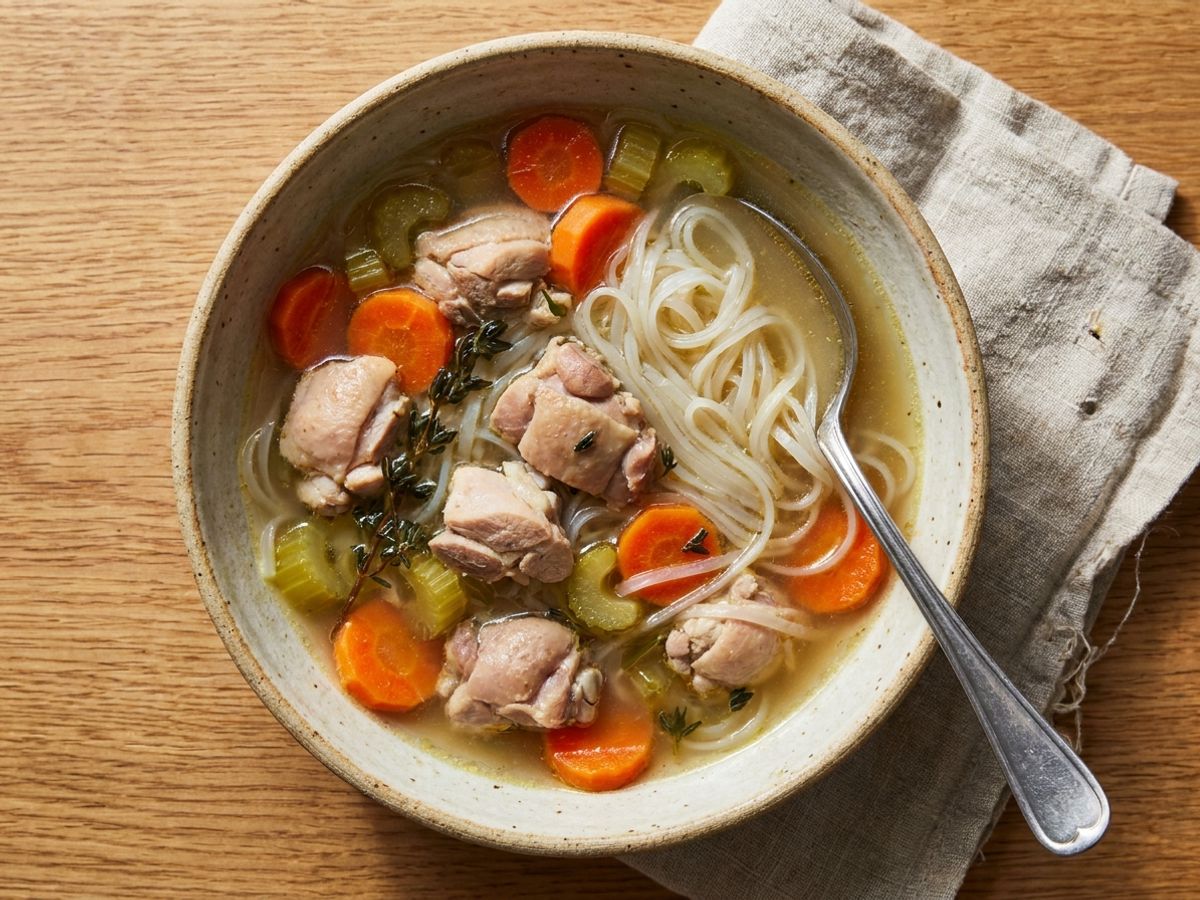
A low histamine chicken noodle soup with rice noodles, carrots, celery, fresh ginger, thyme, and bay leaf.
Ingredients
- 1 pound boneless, skinless chicken thighs (or breast), cut into bite-sized pieces
- 4 oz gluten-free rice noodles
- 8 cups water, or a quick same-day chicken stock (see tips)
- 2 tablespoons olive oil or coconut oil
- 3 medium carrots, sliced into rounds
- 2 celery stalks, sliced
- 1 tablespoon fresh ginger, grated
- 1 teaspoon fresh thyme leaves (or 1/2 teaspoon dried)
- 1 bay leaf
- 1 teaspoon sea salt, or to taste
- Fresh parsley, chopped (for garnish)
Optional
- 1 medium onion, diced (if tolerated, see tips)
- 2 cloves garlic, minced (if tolerated, see tips)
- 2 cups kale, butter lettuce, or mild greens, chopped (added at the end)
Instructions
Prep
- Cut chicken into bite-sized pieces.
- Slice carrots into rounds and celery into half-moons.
- Grate fresh ginger using a microplane or fine grater.
- Dice onion and mince garlic if using.
Build the Soup
- Warm oil in a large pot or Dutch oven over medium heat.
- Add carrots and celery (and onion, if using). Cook for 4-5 minutes until slightly softened.
- Add ginger and garlic, if using. Stir for 1 minute until fragrant.
- Add chicken pieces and cook for 2-3 minutes, stirring occasionally, until the outside turns opaque.
Simmer
- Pour in the water or stock. Add thyme, bay leaf, and salt.
- Bring to a boil, then reduce heat to medium-low.
- Cover and simmer for 20-25 minutes until the chicken is cooked through and the carrots are tender. The chicken should reach an internal temperature of 165°F (74°C).
Cook the Noodles and Finish
- Cook the rice noodles separately according to package directions, then drain.
- Remove the bay leaf from the soup and discard.
- If adding greens, stir them into the soup during the last minute to wilt.
- Taste and adjust salt as needed.
- Add a portion of cooked noodles to each bowl, ladle the soup over the top, and garnish with fresh parsley.
Tips & Substitutions
- Use fresh chicken only. Never use leftover or rotisserie chicken, which has had time for histamine to accumulate.
- Water is the safest base. Many store-bought broths contain yeast extract and additives, and long-simmered bone broth is a common trigger. If you want more flavor, make a quick same-day stock: simmer fresh chicken meat briefly, then cool it fast and use it right away. Our chicken broth recipe gives a simple method.
- Add the noodles per bowl, not to the pot. Rice noodles soak up liquid and turn mushy if they sit in the soup. Keeping them separate also means you can store the broth on its own. See our rice noodles recipe for a basic method.
- Onion and garlic are optional. They can be histamine liberators for some people. Skip them or reduce the amount based on your tolerance.
- Prefer rice over noodles? Try our chicken and rice soup for a heartier grain, or the classic chicken soup without noodles.
 Get the Histamine Recipes app
250+ low histamine recipes, every ingredient rated.


Why This Works
Fresh chicken. Protein that is cooked fresh and eaten right away keeps histamine levels as low as possible. The short cook time in this recipe helps compared to long-simmered bone broths.
Rice noodles. Made from white rice, naturally gluten-free, and generally well tolerated. Choose plain rice noodles with minimal additives, though individual tolerance varies. They add the familiar comfort of chicken soup without gluten concerns.
Carrots and celery. Carrots are naturally low in histamine and generally well tolerated. Celery is tolerated by many but can be a trigger for some people. Together they form a mild, classic soup base.
Fresh ginger. Generally well tolerated and commonly used in low histamine cooking. Some people find it soothing for digestion, though individual response varies.
Onion and garlic. These contain small amounts of quercetin, a compound sometimes discussed in mast cell research, though individual response varies. They can also act as histamine liberators for sensitive individuals.
Storage
Best eaten fresh the same day. This soup contains chicken, so leftovers accumulate histamine more quickly than vegetable-only soups. Store the broth and noodles separately. If you need to save portions, ladle the broth into shallow containers, cool it quickly (an ice bath helps), and freeze it right away rather than refrigerating.
Not sure about an ingredient?
Histamine tolerance is personal, and most of working it out comes down to knowing where individual foods stand. Our low histamine food list rates 4,500+ foods and explains the reasoning behind each rating, including the foods whose level depends on how fresh they are or how they were stored. It is worth a look before you swap anything in this recipe.
Before you eat
A lot of people with histamine intolerance take a DAO enzyme supplement 15 to 30 minutes before a meal. DAO is the enzyme your body uses to break down the histamine in food, and taking it with meals supports that natural process. Curious how it works? See do DAO supplements actually work.
Affiliate link: if you buy through it, we may earn a commission at no extra cost to you. These statements have not been evaluated by the Food and Drug Administration. This product is not intended to diagnose, treat, cure, or prevent any disease.
For educational purposes only. Not medical advice. Consult a healthcare professional for personal guidance.
References
- 35-Minute Chicken Noodle Soup — Low Histamine Eats
- 5 Low-Histamine Noodles to Enjoy — Histamine Doctor
- 11 Best Gluten-Free Pastas (Low Histamine) — Low Histamine Eats
- 5 Steps to Reduce Histamine in Leftover Foods — Fact vs Fitness
- Histamine and histamine intolerance — Maintz & Novak (2007)
- Histamine Intolerance: The Current State of the Art — Comas-Basté et al. (2020)
- Biogenic Amines in Plant-Origin Foods: Are They Frequently Underestimated in Low-Histamine Diets? — Sánchez-Pérez et al. (2021)
- Diamine Oxidase Supplementation Improves Symptoms in Patients with Histamine Intolerance — Schnedl et al. (2019)
- Histamine Intolerance — A Comprehensive Review — Jochum (2024)