 Histamine Tracker
No-Bake Coconut Cashew Cheesecake

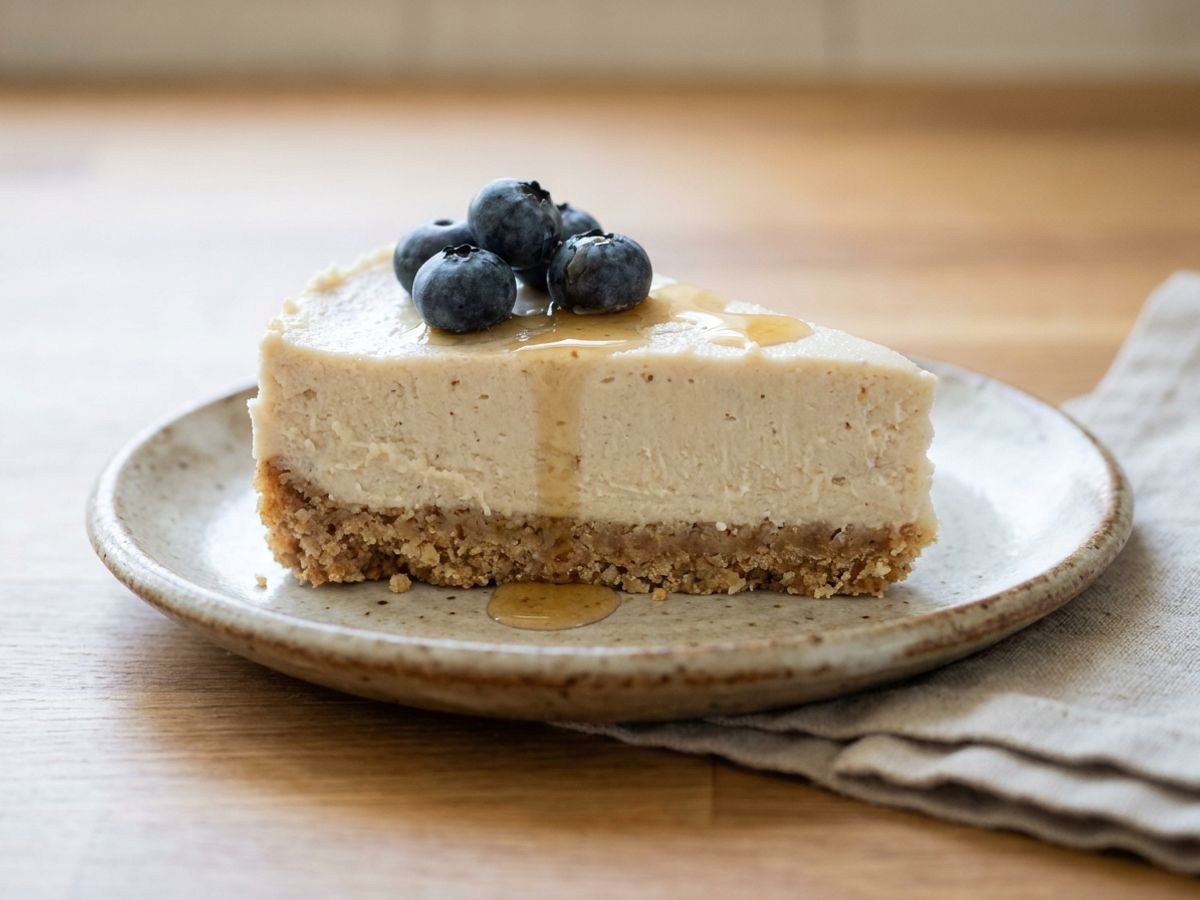
A low histamine no-bake cheesecake made with soaked cashews, coconut cream, and maple syrup on an almond flour crust, topped with blueberries.
Ingredients
Crust
- 1 1/2 cups blanched almond flour
- 1/4 cup tapioca flour
- 3 tablespoons melted coconut oil
- 2 tablespoons pure maple syrup
- 1/4 teaspoon fine sea salt
Filling
- 2 cups raw cashews
- 1/2 cup coconut cream (the firm top of a chilled can of full-fat coconut milk)
- 1/2 cup full-fat coconut milk (the liquid below the cream)
- 1/2 cup pure maple syrup
- 1 tablespoon unflavored gelatin powder
- 3 tablespoons warm water (to bloom the gelatin)
- 1 teaspoon vanilla powder
- 1/4 teaspoon fine sea salt
Topping
- 1 cup fresh blueberries
- 1 tablespoon pure maple syrup
Instructions
Soak the Cashews
- Place the cashews in a bowl and cover with cool water by an inch. Soak in the refrigerator for 4 to 12 hours. For a faster soak, simmer in a small pot of water for 15 minutes, then drain.
- Drain and rinse well before using.
Make the Crust
- Line the bottom of an 8-inch springform pan with parchment paper. Lightly grease the sides with coconut oil.
- In a bowl, stir together the almond flour, tapioca flour, salt, melted coconut oil, and maple syrup until the mixture looks like wet sand and holds together when pressed.
- Tip the mixture into the springform pan and press into an even layer across the bottom. Use the flat bottom of a glass to compact it firmly.
- Freeze while you make the filling.
Make the Filling
- In a small bowl, sprinkle the gelatin over the 3 tablespoons of warm water and let bloom for 5 minutes. It will look thick and rubbery.
- Set the bowl in a small pan with an inch of barely simmering water and stir until the gelatin is fully dissolved and pourable. Remove from heat and keep warm.
- Add the drained cashews, coconut cream, coconut milk, maple syrup, vanilla powder, and salt to a high-speed blender. Blend on high for 2 to 3 minutes, scraping down once or twice, until completely smooth and silky. The mixture should feel slightly warm from the blending.
- With the blender running on low, pour the warm gelatin into the filling in a steady stream. Blend for another 20 seconds to incorporate evenly.
- Pour the filling over the chilled crust and smooth the top with an offset spatula.
Chill and Top
- Refrigerate for at least 4 hours, or until fully set. The cheesecake should feel firm to a gentle tap in the center.
- While the cheesecake chills, stir the blueberries with the 1 tablespoon of maple syrup in a small bowl and let sit at room temperature for 10 to 15 minutes, until the berries release a little juice.
- Unmold the cheesecake by running a thin knife around the edge before releasing the springform.
- Top with the macerated blueberries just before serving.
Tips & Substitutions
- A high-speed blender makes the difference. Cashews need to break down completely for the filling to feel silky rather than grainy. A regular blender works, but plan on a longer blend and scrape down more often.
- Soak the cashews properly. Skipping the soak is the most common reason for a gritty filling. The cashews need to soften enough to break down fully.
- Use a chilled can of coconut milk. Refrigerate the can for at least 6 hours, then open without shaking. The firm cream sits on top and the thinner liquid sits below. Both are used.
- For a tangier filling. Vinegar is fermented and is a common trigger for people with histamine intolerance, so the recipe leaves it out by default. If you want a hint of tang and tolerate it, a teaspoon of apple cider vinegar in the filling will do it.
- Use the same dish set in the fridge. Bringing the filling up over warm gelatin is what gives the slices clean edges. If the gelatin cools too much before blending in, the filling can set unevenly.
- Cherry option. Swap the blueberries for 1 cup fresh sweet cherries, halved and pitted. Same maceration step.
- For a no-blender quick crust. Use 12 vanilla cookies, crushed, in place of the almond flour and tapioca. Mix with 3 tablespoons melted coconut oil and press as directed.
 Get the Histamine Recipes app
250+ low histamine recipes, every ingredient rated.


Why This Works
Soaked cashews. Often tolerated on a low histamine diet, though nuts can be an individual trigger. Use fresh cashews stored cold and soak in the refrigerator (not at room temperature) to keep things stable. Once soaked and blended, they produce the rich, smooth body that does the work of cream cheese in a traditional cheesecake. Cream cheese itself is aged and high in histamine.
Coconut cream and coconut milk. Both are generally well tolerated and replace the heavy cream and butter in a classic cheesecake. Look for a can with no guar gum or carrageenan, since some people react to those additives. Dairy tolerance is highly individual.
Gelatin. Sets the filling without baking, so the cheesecake stays smooth and pale rather than developing the cracks you sometimes get with a baked version. Generally well tolerated.
Maple syrup. A natural sweetener that is generally considered low histamine when pure.
Fresh blueberries. Low in histamine and a source of antioxidants. They lighten the dessert and keep the topping fresh, unlike most cooked fruit toppings that build up over time.
Storage
Best within the first day. If you are very sensitive, slice and freeze the extras the same day you make it, wrapped tightly. Thaw a slice in the fridge for a few hours before serving. Add the blueberry topping fresh, just before serving, rather than storing it on top. Some people are sensitive to leftovers, so pay attention to how you respond.
Not sure about an ingredient?
Histamine tolerance is personal, and most of working it out comes down to knowing where individual foods stand. Our low histamine food list rates 4,500+ foods and explains the reasoning behind each rating, including the foods whose level depends on how fresh they are or how they were stored. It is worth a look before you swap anything in this recipe.
Before you eat
A lot of people with histamine intolerance take a DAO enzyme supplement 15 to 30 minutes before a meal. DAO is the enzyme your body uses to break down the histamine in food, and taking it with meals supports that natural process. Curious how it works? See do DAO supplements actually work.
Affiliate link: if you buy through it, we may earn a commission at no extra cost to you. These statements have not been evaluated by the Food and Drug Administration. This product is not intended to diagnose, treat, cure, or prevent any disease.
For educational purposes only. Not medical advice. Consult a healthcare professional for personal guidance.
References
- Vegan No-Bake Cashew Cheesecake — Minimalist Baker
- Lower Histamine Cheesecake — Betsy Leighton
- 13+ Low Histamine Flours & Grains — Low Histamine Eats
- Histamine and histamine intolerance — Maintz & Novak (2007)
- Histamine Intolerance: The Current State of the Art — Comas-Basté et al. (2020)
- Biogenic Amines in Plant-Origin Foods: Are They Frequently Underestimated in Low-Histamine Diets? — Sánchez-Pérez et al. (2021)
- Diamine Oxidase Supplementation Improves Symptoms in Patients with Histamine Intolerance — Schnedl et al. (2019)
- Histamine Intolerance — A Comprehensive Review — Jochum (2024)