 Histamine Tracker
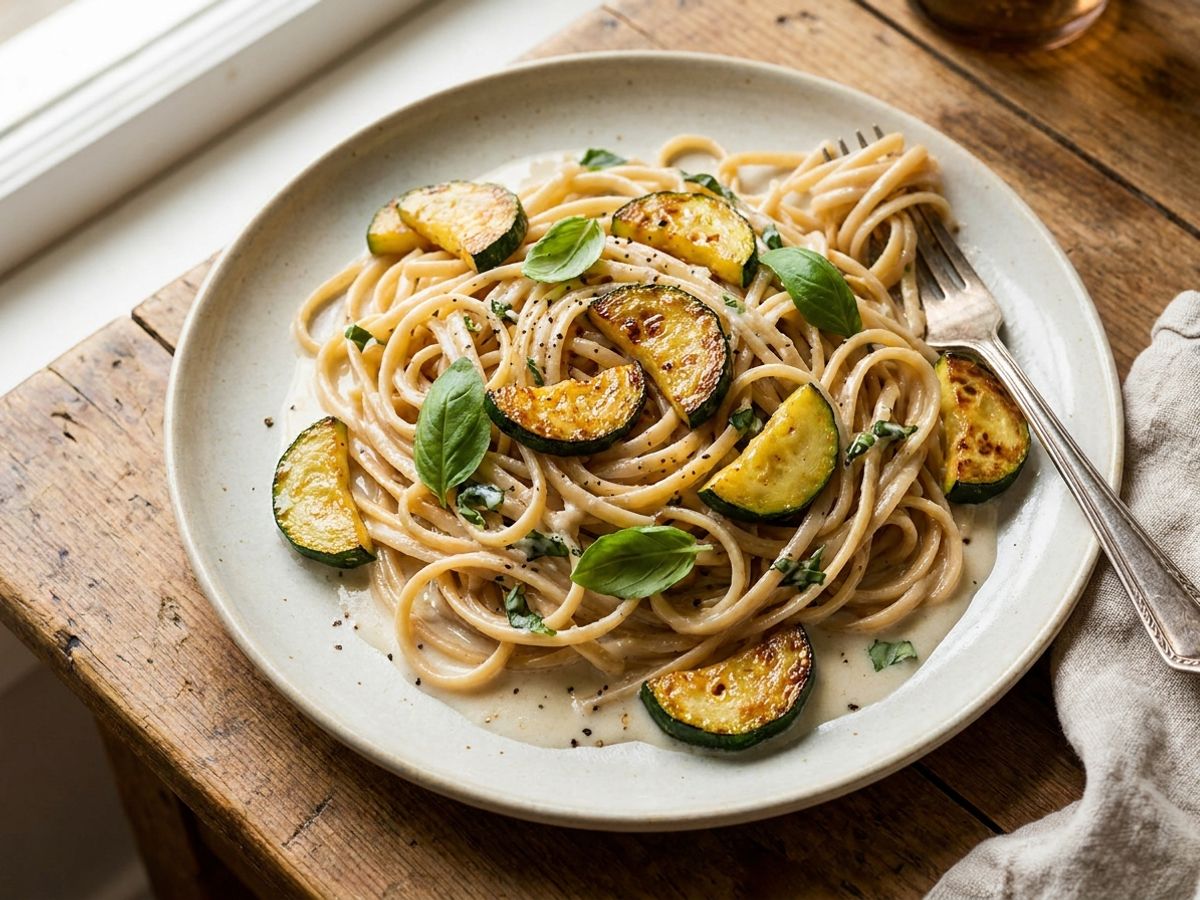
Creamy Coconut Basil Pasta

Low histamine gluten-free pasta in a coconut milk sauce with garlic-infused olive oil and fresh basil.
Ingredients
For the Pasta
- 12 oz gluten-free pasta (brown rice pasta recommended)
- Salt for the pasta water
For the Sauce
- 1 can (13.5 oz) full-fat coconut milk (check for guar gum or carrageenan)
- 3 tablespoons garlic-infused olive oil
- 1/4 cup reserved pasta water
- 1/2 teaspoon sea salt
- Black pepper (optional)
- 1/2 cup fresh basil leaves, chopped (plus a few whole leaves to finish)
Optional Vegetables
- 1 medium zucchini, sliced into half-moons
- 1 tablespoon olive oil
Instructions
Cook the Pasta
- Bring a large pot of salted water to a boil.
- Cook pasta according to package directions until al dente.
- Reserve 1/2 cup pasta water before draining. You will use about 1/4 cup in the sauce and can add the rest to loosen it.
- Drain the pasta and set aside.
Saute the Zucchini (Optional)
- Heat 1 tablespoon olive oil in a skillet over medium heat.
- Add the zucchini and cook for 4-5 minutes, stirring, until tender and lightly golden.
- Set aside.
Make the Sauce
- In the same pot over medium-low heat, warm the garlic-infused olive oil.
- Pour in the coconut milk and stir to combine.
- Add the sea salt and pepper if using.
- Add 1/4 cup of the reserved pasta water and stir until smooth.
- Simmer gently for 3-4 minutes until slightly thickened. Do not boil.
Combine
- Add the drained pasta to the sauce and toss to coat.
- Stir in the chopped fresh basil and the zucchini if using.
- Toss again. If the sauce seems thick, add more pasta water 1 tablespoon at a time.
- Top with a few whole basil leaves and serve immediately.
Tips & Substitutions
- Brown rice pasta is the safest default. It has a neutral flavor and holds its shape well. Cassava and chickpea pasta also work: cassava is the most neutral of the alternatives, while chickpea pasta has a firmer, beanier bite. Chickpea and other legume pastas bother some people, so cassava is the gentler backup.
- Check the coconut milk label. Choose a can with just coconut and water. Additives like guar gum or carrageenan bother some people. Full-fat coconut milk gives the creamiest result.
- Make your own garlic-infused oil by warming olive oil with a few smashed garlic cloves over low heat for about 10 minutes, then removing the garlic before use. Use it the same day and refrigerate any extra, since homemade garlic left in oil at room temperature carries a botulism risk. Skip the garlic and use plain olive oil if garlic is a trigger for you.
- Add vegetables. The sauteed zucchini adds bulk and color. Sauteed yellow squash or steamed broccoli work too. For a similar dish with a different herb profile, see Creamy Garlic Pasta.
- Use fresh basil, stirred in at the end. Adding it off the heat keeps the flavor and color bright. Dried basil is milder, and its tolerance can vary with age and storage.
 Get the Histamine Recipes app
250+ low histamine recipes, every ingredient rated.


Why This Works
Coconut milk. A dairy-free base that is generally well tolerated and gives the sauce its creamy texture. Look for a can with no additives, since thickeners like guar gum or carrageenan bother some people.
Fresh basil. Commonly listed as a low histamine herb and best used fresh. It brings an aromatic, Italian-style flavor without the tomato or aged cheese found in traditional pasta sauces.
Garlic-infused olive oil. Garlic does not contain histamine itself, but it can act as a histamine liberator for some people. Infusing the oil and removing the garlic pieces may be gentler for some people while keeping the flavor, though tolerance varies. Skip it entirely if garlic is a trigger for you.
Gluten-free pasta. Brown rice and cassava pastas are generally well tolerated and avoid the gluten that many people with histamine intolerance are also sensitive to.
Storage
Best eaten fresh, while the sauce is creamy and the pasta is al dente. It reheats reasonably well: refrigerate within 30 minutes and warm gently with a splash of water the next day. Histamine can increase in any leftovers over time, so very sensitive individuals may prefer to eat it fresh.
Not sure about an ingredient?
Histamine tolerance is personal, and most of working it out comes down to knowing where individual foods stand. Our low histamine food list rates 4,500+ foods and explains the reasoning behind each rating, including the foods whose level depends on how fresh they are or how they were stored. It is worth a look before you swap anything in this recipe.
Before you eat
A lot of people with histamine intolerance take a DAO enzyme supplement 15 to 30 minutes before a meal. DAO is the enzyme your body uses to break down the histamine in food, and taking it with meals supports that natural process. Curious how it works? See do DAO supplements actually work.
Affiliate link: if you buy through it, we may earn a commission at no extra cost to you. These statements have not been evaluated by the Food and Drug Administration. This product is not intended to diagnose, treat, cure, or prevent any disease.
For educational purposes only. Not medical advice. Consult a healthcare professional for personal guidance.
References
- SIGHI Food Compatibility List — SIGHI (2026)
- Low Histamine Herbs and Spices (and Recipes to Enjoy!) — Through The Fibro Fog
- Is Garlic High in Histamine — Casa de Sante
- Histamine and histamine intolerance — Maintz & Novak (2007)
- Histamine Intolerance: The Current State of the Art — Comas-Basté et al. (2020)
- Biogenic Amines in Plant-Origin Foods: Are They Frequently Underestimated in Low-Histamine Diets? — Sánchez-Pérez et al. (2021)
- Diamine Oxidase Supplementation Improves Symptoms in Patients with Histamine Intolerance — Schnedl et al. (2019)
- Histamine Intolerance — A Comprehensive Review — Jochum (2024)